Researchers have discovered fossilized tracks in eastern China that provide insight into the life of giant crab-spiders that existed over 240 million years ago. These findings offer new information about marine life recovering after one of Earth's most devastating mass extinctions.
According to information from IOL, researchers found these traces in a geological formation in Chaohu city, Anhui province, China. Nine fossilized tracks and trails were identified, some reaching a length of 5 meters, and featured characteristic parallel scratches, which helped determine the probable animal source.
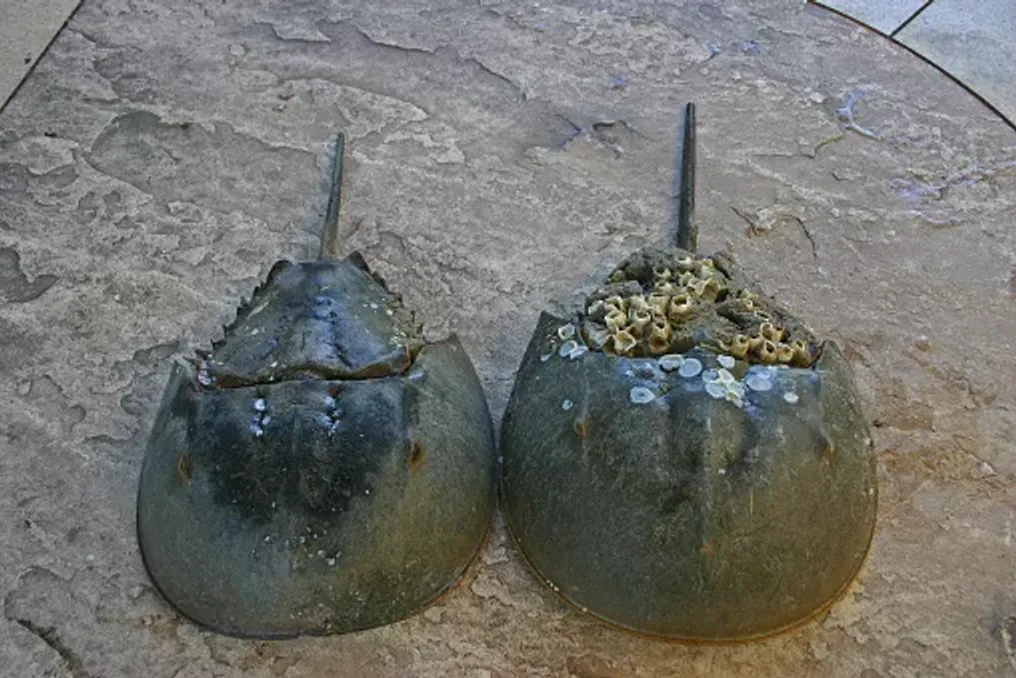
Crab-spiders are marine arthropods with hard exoskeletons and jointed limbs. Despite their name, they are not true crabs but are more closely related to spiders and scorpions. Their basic body structure remained strikingly similar over hundreds of millions of years, leading to them being nicknamed 'living fossils.'
The study, published in the Journal of Paleontology, suggests that the animal leaving the recently discovered tracks could have reached over 70 centimeters in length, placing it among the largest known crab-spiders from paleontological data. Other unusually large ancient crab-spiders have been found previously: prints in France were associated with an animal estimated at 85 cm, and tracks from northern China indicate a size of about 89 cm.
Scientists believe this animal inhabited shallow seas, moving or swimming close to the bottom. Its limbs or body parts sometimes scratched the sediment, leaving marks that were later preserved in the rock. One of the most intriguing discoveries of the study is the swimming posture of this animal.
Modern crab-spiders typically swim on their bellies, meaning the underside is facing up. However, the ancient tracks suggest that the extinct species might have swum on its back, raising questions about differences in its movement compared to modern species.
Co-author Gabriel E. B. de Barros from the Federal University of São Carlos, Brazil, noted that these evidence turned out to be unexpected and highlighted how trace fossils can reveal details about animal behavior that are not preserved in body remains. Trace fossils record the activities of ancient organisms, including their movements, tracks, and burrows, thereby providing evidence of animal interaction with the environment, even if their bodies are not preserved.
This finding also provides understanding of the process of marine ecosystem recovery after the Permian-Triassic mass extinction, which occurred about 250 million years ago and destroyed a significant portion of life on Earth. The Chaohu region was formerly a diverse marine ecosystem in the Early Triassic period. This area, known for its Chaohu fauna, has already provided numerous fossils documenting life in ancient seas.
The recently discovered crab-spider tracks add another element to the picture of this prehistoric environment, suggesting that large marine arthropods were part of the region's biodiversity during the recovery period. Researchers believe that further discoveries may be made in this area, potentially revealing more about the animals that inhabited these ancient waters and how marine ecosystems recovered after the extinction event.