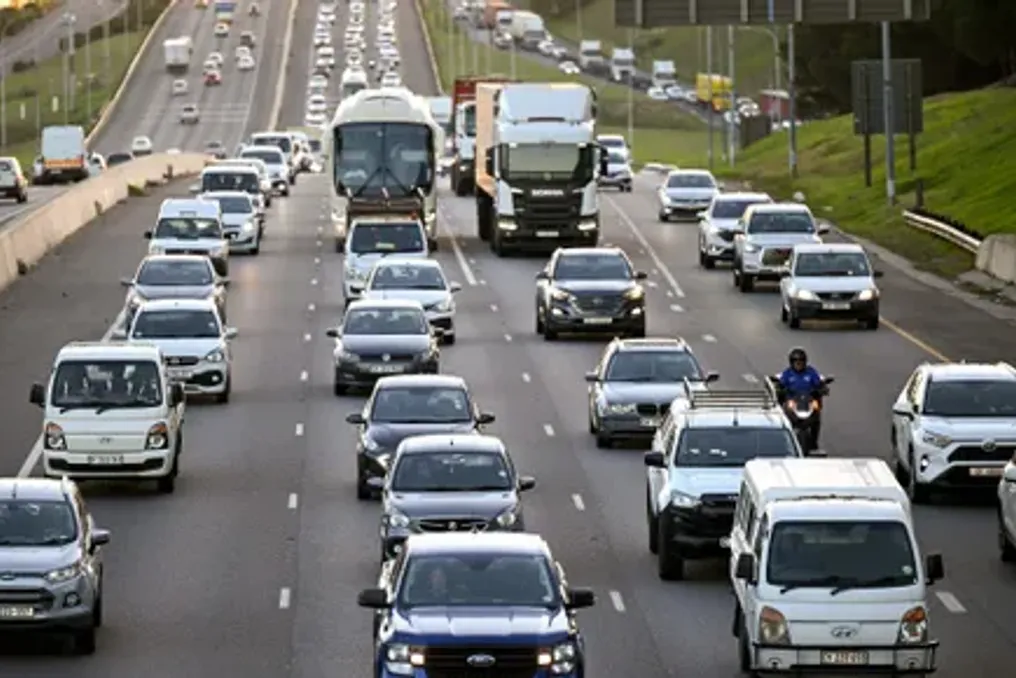
Long commutes exacerbate housing and transport inequality in Cape Town
Read more
IOL
iol.co.za

Long commutes exacerbate housing and transport inequality in Cape Town

Low-income residents of Cape Town are forced to spend over a third of their earnings on commuting because the city's housing crisis prevents them from affording accommodation closer to their workplaces.

According to a report by the housing rights group Ndifuna Ukwazi titled 'Public Land for People, Not for Parking,' the poorest 20% of commuters spend about 35% of their income on transport, compared to only 10% among the highest-paid workers. The report also estimates that an individual who commutes daily from Khayelitsha to the Central Business District (CBD) could spend the equivalent of five years of their working life stuck in traffic.

Leaving home at 4 am for work

Tembisa Yalizo, who travels from Philippi East to the city center, has been making daily commutes for nine years. She often starts her journey from home as early as 4 am. She noted that her area is unsafe due to attacks occurring during her commute.

Octavia Grill from Manenberg has worked in the city for six years. Her concerns about commuting intensified after a recent taxi accident. She is particularly worried because two people died in that crash.

Banati Hala, who lives in Delft and works as a security guard in the city, reported that residents of his area often rely on community police forums due to safety issues. He spends approximately R1,100 per month on transport.

The city's housing crisis keeps workers far from jobs

Bule Bui, head of political organization and campaigns at Ndifuna Ukwazi, explained that the root of the problem lies in decades of spatial planning that placed economic opportunities far from needy communities. He emphasized that this is a legacy of apartheid, not an accident, as apartheid planning reserved well-located land for the white population and displaced Black, Coloured, and Indian residents to the periphery.

According to Bui, after 1994, subsidized housing often prioritized the number of houses built while ignoring their location, while rent in well-located areas remained prohibitively high. The average rent in the Western Cape was R9,730, whereas a studio apartment near Parliament cost between R12,000 and R18,000 per month.

He also noted that about 76% of Cape Town residents earn less than R22,000 per month, yet only 34% of formal housing falls within this price range.

Families pay a high price for long commutes

For many households, moving closer to work seems unrealistic. Instead, workers spend most of their time and income on travel, leaving less time for family duties and meeting other needs.

Professor Stephan Kriegsman from the University of Stellenbosch Logistics Department stated that spatial inequality negatively affects both households and the economy as a whole. He believes that more balanced and equitable cities can reduce transport costs, whereas poorly designed and unequal cities cannot cope with high transport expenses and often suffer from development deficits.

Kriegsman added that long commutes can contribute to a mismatch between workers' skills and the jobs offered to them. Some people might accept work closer to home to avoid the cost of traveling to better-qualified positions. He also mentioned that spending two to three hours a day commuting reduces workers' time for childcare, shopping, and other household chores.

City's housing waiting list

The Ndifuna Ukwazi campaign 'Public Land for People, Not for Parking' proposed the redevelopment of four public properties in central Cape Town: the Parliament parking lot, Top Yard, and two government garages. According to Bui, these sites could accommodate 969 social housing units, 969 market-linked units, and temporary housing for 732 people. He noted that such projects could reduce travel costs, improve access to work, and increase pedestrian traffic for informal traders.

Bui also reported that the City of Cape Town's housing waiting list includes at least 359,277 people. Furthermore, the city forecasts an annual deficit of 22,970 to 27,980 formal homes. He added that the city predicts 53% of homes built between 2020 and 2040 will be informal.

Cape Town has stated it is working on affordable housing through land provision, transit-oriented development, and infrastructure investment. Karl Pfahaim, a city council member for human settlement, reported that land parcels capable of providing over 14,000 affordable units are either in active planning or packaging stages. An additional potential of 7,000 units is estimated on land already allocated to developers. Over the past two years, the city has provided land worth R1.7 billion for affordable housing, which has attracted over R960 million in form of land release discounts, investments in core infrastructure networks, and incentives. Pfahaim specified that 39 sites are in the provision plan, including 11 in the CBD, with a total potential of 40,000 units. The city states that this plan includes 21,000 affordable units and 1,500 social housing units.

Similar stories

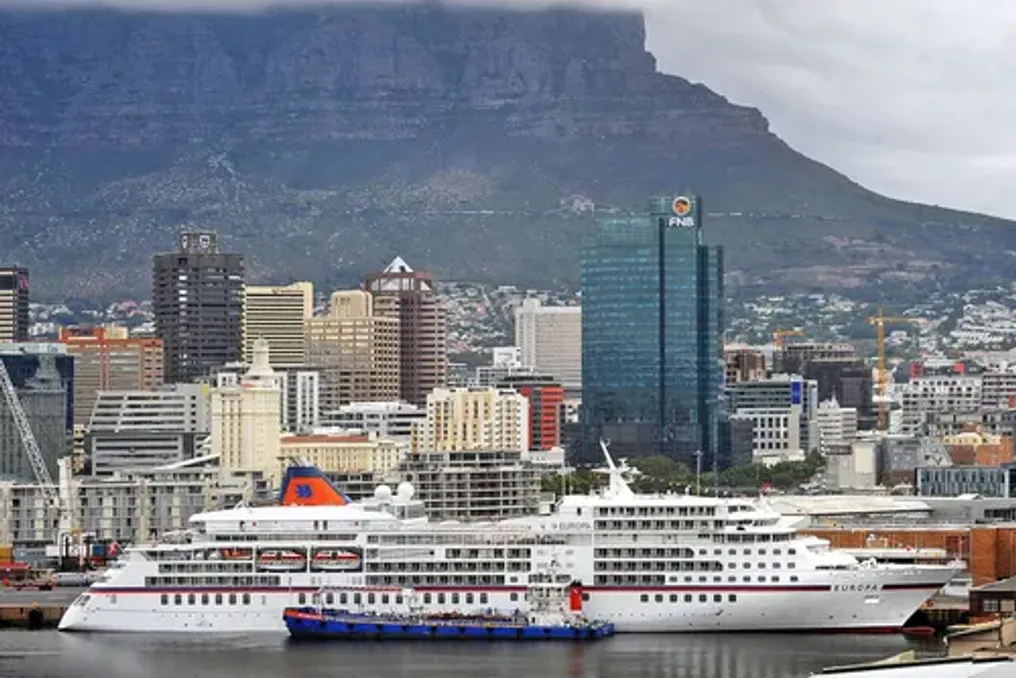
African ports compete for revenue from cruise passengers' onshore spending
Read more
iol.co.za

African ports compete for revenue from cruise passengers' onshore spending

Africa has long struggled to attract cruise liners, and now its focus is on securing the funds spent by passengers after arriving in port.

The port in Cape Town serves as a gateway to Cape Town City and the Waterfront. According to Wesgro, the official agency for promoting tourism, trade, and investment for Cape Town and the Western Cape, the 2026/27 cruise season began on September 17th with the arrival of the Pacific World, carrying 1,397 passengers, predominantly from Japan, and 655 crew members.

This arrival followed three years of rapid growth. In the 2022/23 season, Cape Town hosted 70 cruise ships, carrying approximately 78,000 passengers. By the 2024/25 season, this number increased to 79 ships and 127,000 passengers, according to the Seatrade Africa E-report.

The average annual increase in passenger numbers during this period was 16%, exceeding the industry's global average of 9%. The economic contribution grew parallel to the rise in passenger flow: cruise tourism brought R4.34 billion to the GDP of the Western Cape and R5.32 billion to the South African GDP over three seasons. Furthermore, the sector generated a cumulative income of R3.04 billion in foreign exchange earnings, according to Wesgro.

Tourist spending is not limited to the main terminal. Visitors to the Bo-Kaap area can participate in masterclasses at private kitchens of multi-generational chefs, learning the art of blending Cape Malay spices, rolling rotis, and baking authentic bobotie.

Changing the Onshore Experience

In Mossel Bay, Hermanus, and Saldanha Bay, 32,000 passengers were registered across 26 ship visits in the 2024/25 season, generating R47.5 million in local spending, according to the Seatrade report. This broader reach is becoming increasingly significant as ports invest in infrastructure and destinations develop new products for visitors.

The Cape Town cruise terminal at E-Berth is part of a R20 billion land redevelopment project. In 2025, Mossel Bay opened a new cruise reception area, and Saldanha Bay is moving towards official entry and exit port status.

The onshore experience is also transforming. Passengers can now travel from Cape Town to the heritage areas of Bo-Kaap, or take food and entrepreneurship tours in Lange and Hout Bay, or explore wineries around Stellenbosch and Franschhoek. In Ghana, cruise operators offer tours of the Cape Coast and Elmina heritage sites, including markets and drumming workshops.

This shift is crucial because cruise passengers have limited time ashore. A port capable of linking a ship's arrival with a range of local businesses and attractions has a greater opportunity to retain spending until the vessel departs.

Time Constraints

Kenya is actively developing this link with the country's safari economy. In March, the Kenya Wildlife Service introduced a 30% group incentive for cruise travelers visiting national parks, including Tsavo East, Tsavo West, and Amboseli.

Currently, about 20% of cruise passengers extend their trips to parks and reserves. The government aims to increase this figure to 40%, which could boost total park revenue by up to 40%. The program was developed in collaboration with Pollmans Tours & Safaris to streamline group excursions according to cruise schedules, while international operators such as Abercrombie & Kent are also being attracted to the market.

The economic benefits are already evident. Calculations by the Ministry of Tourism, cited by the Kenya News Agency, showed that a short cruise stop can generate around Sh50 million (equivalent to R6.45 million). A group of 70 tourists heading to Maasai Mara was valued at Sh23 million, injected into the economy in just a few hours. Kenya aims to attract KES 2 billion from 12,000 cruise tourists.

However, time remains the primary constraint. Passengers in Mombasa must clear customs, reach inland areas, and return before the ship departs. The shorter the stay, the more important transport, park access, and excursion planning become.

Opportunities are also changing as cruise itineraries become longer and more specialized. According to Seatrade, the number of expedition calls to Cape Town has risen from five in 2023/24 to 16 in 2024/25. These passengers typically spend more and book extended onshore programs more frequently.

European Cruise Service launched African Cruise Service in Walvis Bay at the end of 2025, another sign that operators see potential in increasing expedition and onshore products around African ports. AmaWaterways added four African safari and wildlife itineraries in August 2026, combining its Chobe River cruise with onshore programs covering destinations like Namibia, Kenya, and Victoria Falls. One itinerary combines a Chobe River cruise with Victoria Falls and the NamibRand Nature Reserve in Namibia, Etosha National Park, and Skeleton Coast. Another links the river cruise with Amboseli and Maasai Mara.

Namibia is working to strengthen Walvis Bay as a tourism gateway. In July, the Namibian Tourism Board and the Ministry of Internal Affairs gathered port authorities, tour operators, state institutions, and private sector players to improve passenger service and promote the country in the cruise sector. Products around Walvis Bay extend beyond wildlife: Harbour Sandwich, the Namib Desert, and other coastal and desert experiences give passengers ways to spend money outside the terminal.

Visa Waivers for Short Stays

West Africa is showing another story of growth. In 2024, Cabo Verde welcomed 110,554 cruise passengers across 250 calls, compared to 86,945 passengers and 171 calls in 2023, according to Seatrade.

Global Ports Holding expanded its African operations to Mindelo in 2025 after initially entering the continent through La Guette in Tunisia. These investments integrate one of Africa's fastest-growing cruise markets into a major global port operator network.

Benin is strengthening its position in the Gulf of Guinea. The arrival of Seabourn Sojourn in 2025 marked a significant return of international cruise tourism after several years of limited activity. Benin is now waiving visa requirements for cruise passengers staying less than 72 hours and plans to create a dedicated cruise berth by 2027. This visa policy removes one of the biggest obstacles to short cruise visits, allowing passengers to quickly transition from the ship to local tourist experiences without undergoing the same entry procedure as long-term guests.

Mozambique is trying to distribute the value of cruise arrivals through Maputo. The port expects 15 cruise calls and nearly 16,000 visitors in 2026. Authorities are coordinating arrivals with the National Tourism Institute and FEIMA, where passengers can purchase local handicrafts and experience Mozambican cuisine and culture. In 2024, Mozambique hosted nine cruise ships carrying 4,492 tourists; approximately 2,069 passengers disembarked to visit attractions and spend money on local experiences.

Tanzania has also shown rapid tourism growth. By April 2025, the country recorded 5.3 million visitors, exceeding the target of five million, and tourist arrivals from January to May reached 794,102 people, a 54.3% increase over pre-pandemic levels. Dar es Salaam and Zanzibar are the country's main cruise gateways, hosting ships such as Seabourn Sojourn, Europa, Norwegian Dawn, and Viking Sky in 2025. From Dar es Salaam, short safari programs can connect cruise passengers with Mikumi and Ngorongoro National Parks.

Seychelles Islands include the economy in its national strategy. The island nation registered 41 cruise calls in the 2025/26 season, up from 35 in the previous season, including eight first-time calls. Its tourism authorities are targeting smaller, premium, and expedition vessels as part of a drive toward higher-yield cruise tourism. A UNECA cost-benefit analysis estimates that cruise tourism could directly contribute US$531 million to the Seychelles GDP between 2026 and 2033, and US$1.247 billion when considering multiplier effects. The analysis also identifies environmental costs of US$35.2 million and social costs of US$86 million over this period. It defines reducing economic leakage as one way to increase retained benefits. This is becoming a central business issue for African cruise destinations.

Red Sea Disruption Creates Opportunities

A passenger arriving in Africa does not guarantee that most of their spending will remain in Africa. Cruise operators, international suppliers, and other parts of the global tourism chain may capture a significant share before the money reaches local businesses. Connecting passengers with local guides, transport operators, restaurants, accommodation, crafts, cultural attractions, and national parks gives destinations a better chance to retain these expenditures.

The Red Sea disruption opens another opportunity. MSC Cruises changed the MSC Magnifica's itinerary for 2026 to avoid the Red Sea, adding calls to the Seychelles, Mauritius, Reunion, Durban, Cape Town, Walvis Bay, and Cabo Verde. This change incorporates more African ports into long-haul cruise routes as operators reroute to bypass Red Sea security risks. Mombasa is included in another Indian Ocean cruise itinerary following the end of the previous season in April. Kenya anticipates additional calls before the current itinerary concludes.

South Africans' real incomes are falling: average wage statistics
Read more
iol.co.za

South Africans' real incomes are falling: average wage statistics

In August, South Africans received less money in real terms as inflation continued to reduce workers' purchasing power. The average net wage fell to 21,622 rand.

According to the PayInc Net Wage Index, the nominal average net wage decreased by 0.1% compared to July (to 21,662 rand), but it remained 1.9% higher than a year ago. This index tracks the net wages of about 2.1 million South Africans whose income ranges from 5,000 to 100,000 rand per month.

However, when accounting for inflation, the decline was significantly sharper: real net wages decreased by 0.5% month-on-month, reaching 20,164 rand, which is 2.6% lower than a year ago. Over the year to date, average net wages have fallen by 2.1% and 2.6% in real terms, despite nominal wage growth of 1.6%.

Adverse Trend

Independent economist Eliza Kruger noted that after a rise in July, which was the first in nine months, the index fell by 0.5% in real terms. She emphasized that for households, this leads to an erosion of purchasing power, a reduction in discretionary spending, and decreased confidence.

Wage pressure is intensifying due to rising borrowing costs and forecasts of renewed inflationary pressure. PayInc reported that the benchmark interest rate increased by 0.5 percentage points this year, further burdening household budgets.

Furthermore, the expected new conflict in the Middle East is anticipated to push overall inflation above 5% in October and keep it high for several months. Kruger added that this expected upward trend and the risk of rising inflation expectations triggered another interest rate hike.

Sectoral Differences

National average figures also conceal significant differences in South Africans' incomes depending on their place of employment. According to the latest Quarterly Labour Force Survey from Statistics South Africa, the average gross monthly income in the non-agricultural formal sector was 32,828 rand in the first half of the year.

Workers in the wholesale and retail trade, construction, and manufacturing sectors earned less than the average across the entire economy. Most other sectors showed an average monthly income ranging from 37,107 rand in transport and communications to 39,492 rand in public, social, and personal services.

Above Average

However, workers in the electricity, gas, and water supply sectors significantly exceeded the average level, earning an average of 62,454 rand per month—approximately 90% more than the economic average. Internal data from Eskom showed that the company's average employee earned 941,933 rand per year, or 78,494 rand per month, while the median income was 858,580 rand per year, equivalent to 71,548 rand per month.

Incomes in the energy and water supply sectors also grew by 9% in the first half of the year compared to the same period last year, while the overall growth across the economy was 5.3%. Workers in the financial sector recorded the lowest increase at 3.5%.

Kruger concluded that these differences demonstrate that workers are experiencing the current economic situation very differently. Nevertheless, the broader PayInc Net Wage Index indicates persistent pressure, and rising inflation is likely to delay the recovery of real purchasing power.

Popular