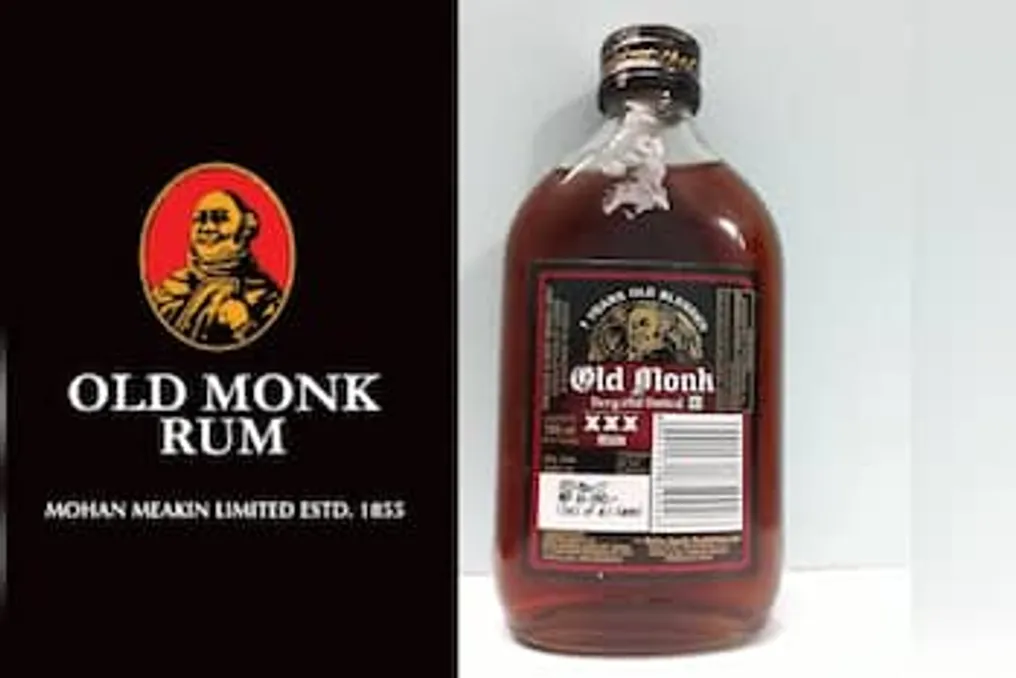
The producer of the alcoholic beverage Old Monk informed the Bombay High Court that the restriction on sales from the manufacturing facility in Maharashtra resulted in company losses exceeding 500 crore rupees, while for the state government, it amounted to a loss of about 350 crore rupees in export revenue.
This statement was made on Monday as the company challenges the prohibitive order issued by the Food Safety and Standards Authority of India (FSSAI) regarding the recipe and labeling of the popular rum.
The producer also noted that the same recipe continues to be sold from other production sites of the company in Maharashtra.
The court is scheduled for its next hearing on October 23.
What did the company state to the court?
Senior Advocate Venkatesh Dond, representing Mohan Rocky Springwater, told the bench presided over by Chief Justice Mahesh Chandra Tripathi and Judge Advait Sethna that the sales restriction led to losses for the company exceeding 500 crore rupees. Dond also emphasized that the state's export revenue lost about 350 crore rupees.
The company added that its other divisions in Maharashtra continue to sell the same rum recipe, while sales from the affected facility remain restricted. The alcohol producer argued that the rules permit the use of approved additives in neutral spirits, and stated that competing brands using similar processes were not subjected to such measures.
Additional Government Solicitor General Anil Singh, speaking on behalf of the authorities, reiterated that sales would be permitted if the producer agreed to change the product description from 'rum' to 'rum-like'.
Previously, the High Court refused an immediate temporary suspension of the ban. Following this, the producer agreed to submit revised labels excluding controversial age descriptions and clearly indicating 'added flavor'. However, the regulator did not approve these modified labels.
Where did the dispute arise?
This case followed an inspection of the company's plant in Hopli, Maharashtra, after which FSSAI raised objections regarding the composition and labeling of the product. The regulator questioned the use of added rum flavoring in spirits sold under the standard product name, as well as descriptions such as '7 years aged in blend' and 'very old barrel'.
Age claims also raised questions about whether consumers might mistakenly believe that the entire mixture was aged for the specified period.
Why does FSSAI insist on labeling Old Monk as 'rum-like'?
The regulator's objection centers on whether alcohol made using neutral spirit and added rum flavoring can simply be sold as rum. According to FSSAI, artificial or natural-like rum flavoring can mask the natural characteristics of the spirit and alter its identity. In FSSAI's view, such products should be designated as flavored spirits, not sold under a standard name without proper disclosure.
FSSAI insists that the product label must accurately reflect its composition and not mislead consumers.