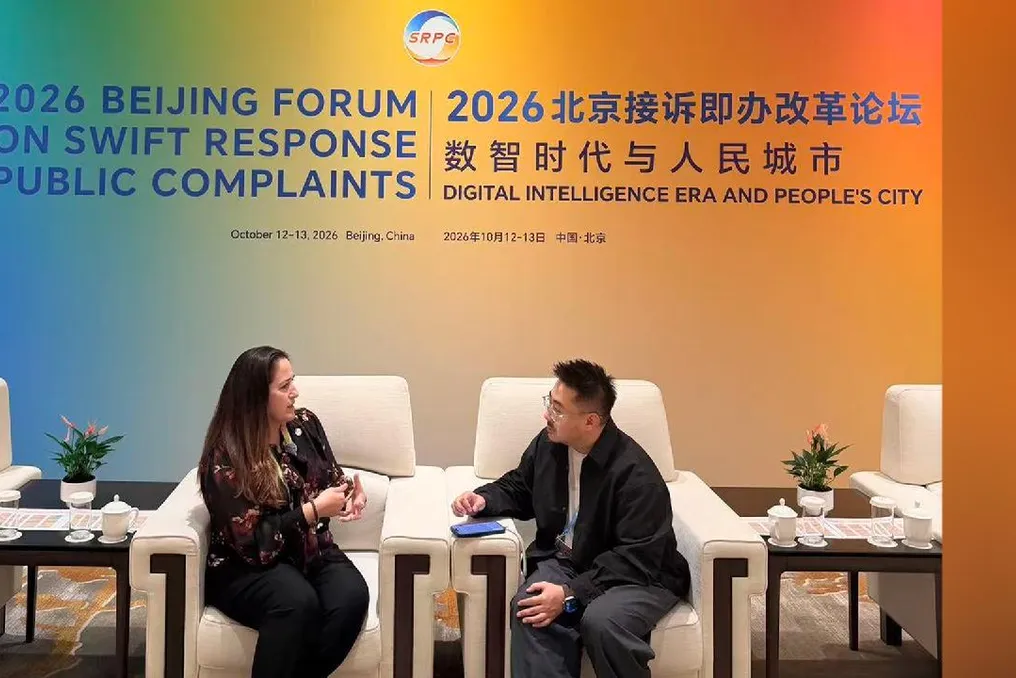
Mindy Romero, founder and director of the Center for Inclusive Democracy at the University of Southern California, stated that Beijing's hotline 12345 serves as a useful example of how cities can integrate public participation into city governance.
Speaking to CGTN on Monday at the Beijing 2026 Forum on Citizen Complaint Rapid Response, Romero emphasized that inclusive governance mechanisms help governments better understand and address the needs of the population while giving citizens the feeling that their opinions are heard and valued.
According to her, this hotline demonstrates that public engagement benefits not only those seeking solutions to their problems but also the neighborhoods, communities, and the city as a whole.
Romero noted: 'When government hears from people what their needs and wants are, it truly cares better,' adding that effective public interaction can also strengthen people's trust in authority.
She characterized this mechanism as a potentially strong example for other municipalities, especially megacities striving to find effective ways to involve ordinary citizens in governance.
Romero pointed out that China and the United States share a common interest in meeting residents' needs, creating opportunities for cities in both countries to exchange experiences and learn from each other. She observed that the scale of Beijing's hotline and the subsequent response process can offer valuable lessons to other cities, although Beijing could also benefit from practices developed elsewhere.
The expert also highlighted the importance of continuous learning. Cities can move beyond simply resolving individual complaints to preventing problems by using public feedback to improve systems and policies.
However, implementing such programs requires more than just technology and data. Romero pointed to the need for personnel, funding, and other resources, as well as a sustained commitment to prioritizing people's needs.
For cities considering similar initiatives, the key question is not only how to create a hotline but also what level of commitment and investment governments are willing to make to ensure that people's concerns are addressed. Romero concluded that discussions on urban governance can prompt governments worldwide to reconsider resource allocation and strengthen their commitment to public service.