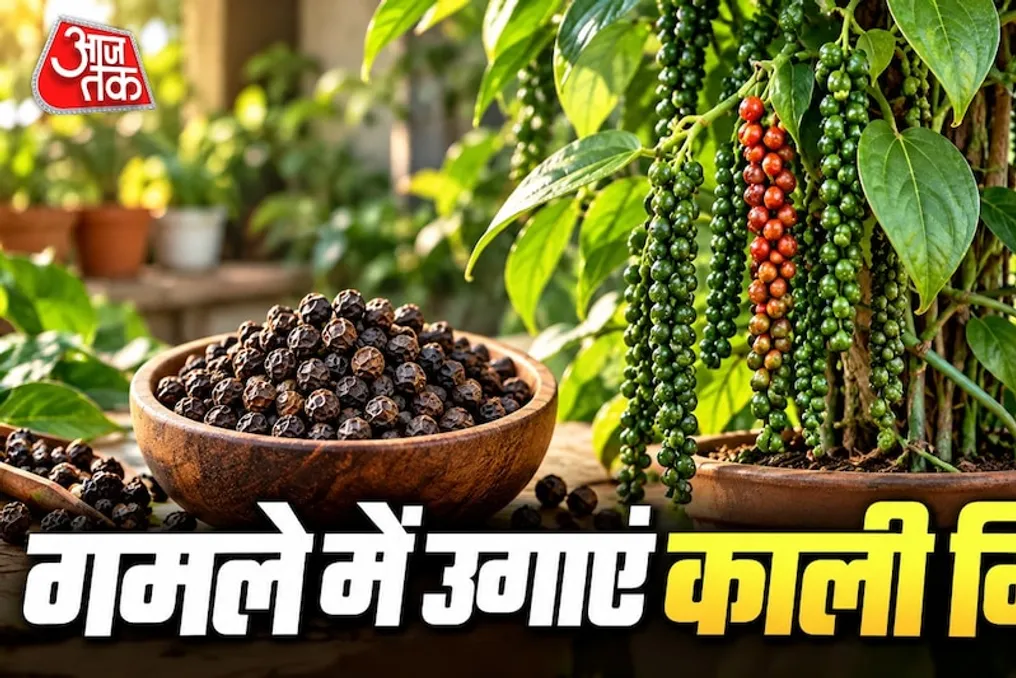
Many different spices are used in the kitchen, such as cumin or bay leaves, which give dishes a special flavor. Among them, black pepper holds a special place, as it is used when making tea, enhancing the taste of vegetable dishes, or enjoying soup in winter. Even a small amount of black pepper significantly improves the taste of food. Although it is usually bought in stores, there is a possibility to grow the black pepper plant at home.
This does not require a large garden or field; it is enough to plant its climbing form in a pot placed on a balcony, roof, or in a small home garden. If you enjoy gardening and want to try something new, the climbing form of black pepper can be a good choice. However, successful cultivation requires suitable seeds, quality soil, and some care.
Cultivating black pepper indoors will not require many materials. You will need a medium or large pot, high-quality soil, sand, vermicompost, and fresh black pepper seeds. Additionally, for the climbing form to grow upwards, a wooden stick or some sturdy support must be installed.
Be careful when choosing seeds: dry black pepper grains sold in stores are generally not suitable for sowing because they have been processed. Therefore, it is recommended to purchase seeds from a nursery or garden store. Alternatively, for beginners, it may be easier to start with a ready-made plant purchased from a nursery.
The first step is preparing the potting soil. Choose a pot with drainage holes at the bottom. Then mix regular garden soil, a little sand, and vermicompost to create nutrient-rich soil that ensures good drainage. It is important to ensure that water does not stagnate in the soil, as an overly moist environment can damage the plant's roots.
After preparing the soil, lightly moisten it. Then sow the seeds at a depth of about 1–2 centimeters, covering them with a thin layer of soil. Do not bury the seeds too deeply and leave a small distance between them. Gently water the seeds to keep them in place. Place the pot in a warm place where intense direct sunlight does not reach, as a certain temperature and humidity are required for seed germination. Under these conditions, sprouts may appear after a few weeks, although the process may take longer.
Black pepper grows not as a typical shrub but as a climbing form, so it is crucial to provide support as the plant grows. A wooden stick in the pot or a small net can be used. Allow the climbing form to slowly grow up the support; this gives the plant space to develop and simplifies care. Thus, even without a large garden, this climbing form can be successfully grown in a pot.
The black pepper plant develops well in a warm and humid climate. It should be placed where it receives diffused or filtered light. It is best to protect young plants from strong midday sun. Choose a location on a balcony or roof where there is good light, but the plant will not be exposed to excessive heat. When watering, check the moisture level of the topsoil. Water when the surface begins to dry out, but avoid complete dryness as well as overwatering, which can lead to root rot.
If you aim for the plant to develop well and yield an abundant harvest of black pepper, you need to fertilize it regularly. You can use vermicompost or well-rotted organic compost for this. Apply a small amount of fertilizer every 30–40 days, depending on the plant's needs and growth rate. After applying fertilizer, you can lightly loosen the soil to ensure air circulation. Keep in mind that excessive fertilization can harm the plant. Regularly inspect the leaves and stem: if the leaves begin to yellow or growth slows down, check the watering conditions, lighting, and soil condition.
When can one expect a black pepper harvest at home? One should not expect to get fruit immediately after planting. A plant grown from seeds may take several years to reach the fruiting stage. This requires a warm and humid environment, careful care, and patience. Usually, cuttings are used for black pepper cultivation in agriculture, whereas growing from seeds can be a longer process.