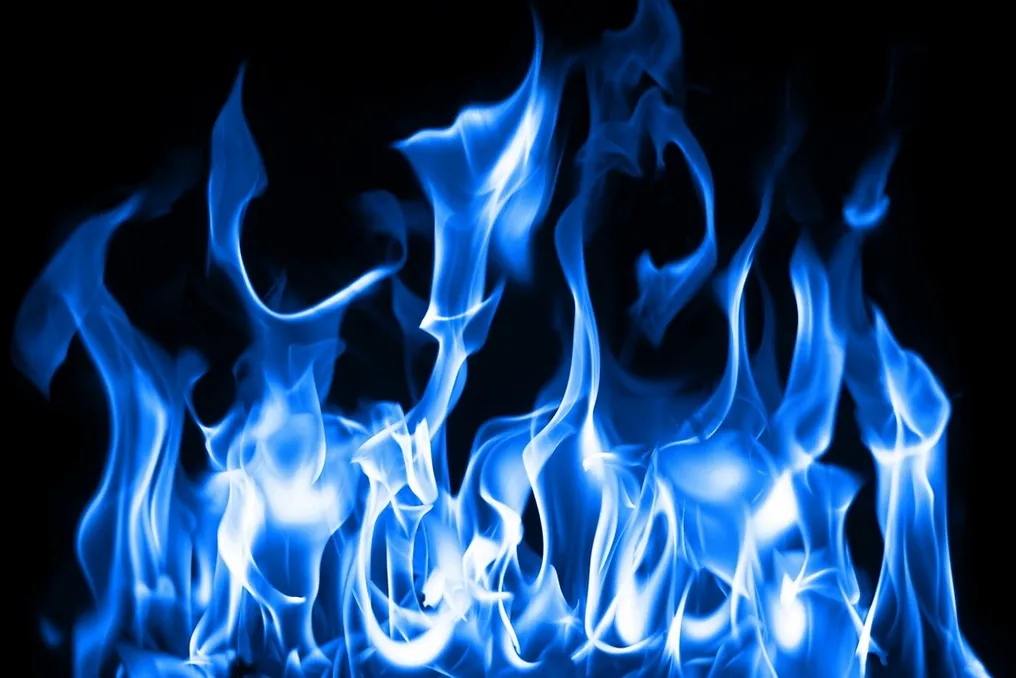
The will-o'-the-wisp is a visually striking natural event that can be observed in swamps and cemeteries. It is characterized by the appearance of enigmatic blue flames that briefly appear on the surface and disappear without a trace.
This phenomenon has fascinated humanity for centuries, serving as the basis for ancient narratives about spirits and magical creatures of nature. However, science offers a logical explanation for these manifestations.
The cause of the will-o'-the-wisp is linked to the decomposition of living organisms. In this biological process, bacteria decompose organic matter, releasing gases such as methane and phosphine. These gases accumulate and, when pressurized, escape from the soil through small fissures, rising to the surface.
Upon encountering atmospheric oxygen, methane and phosphine initiate spontaneous combustion. Chemist Luiz Henrique Ferreira, from the Federal University of São Carlos (Ufscar), explains that 'a small explosion occurs and the bluish flame is accompanied by a bang that scares those nearby.'
This reaction is extremely fast, lasting only a few seconds. It is notable that if a person moves abruptly near the phenomenon, the displacement of air can give the impression that the flame is following the individual, intensifying the mystical aspect.
Due to this unusual spectacle, the will-o'-the-wisp frequently inspires legends of hauntings, ghosts, and lost souls in different cultures. In Brazil, it gave rise to the indigenous myth of the boitatá, a giant fire serpent that, according to popular tradition, protects the forests and punishes those who destroy them.
The Portuguese Jesuit José de Anchieta recorded the will-o'-the-wisp in 1560, relating it to the boitatá: 'Near the sea and rivers, nothing else is seen but the boitatá, the shimmering torch of fire that quickly attacks the Indians and kills them.' This historical mention evidences the longevity and power of the myth generated by this intriguing natural phenomenon.