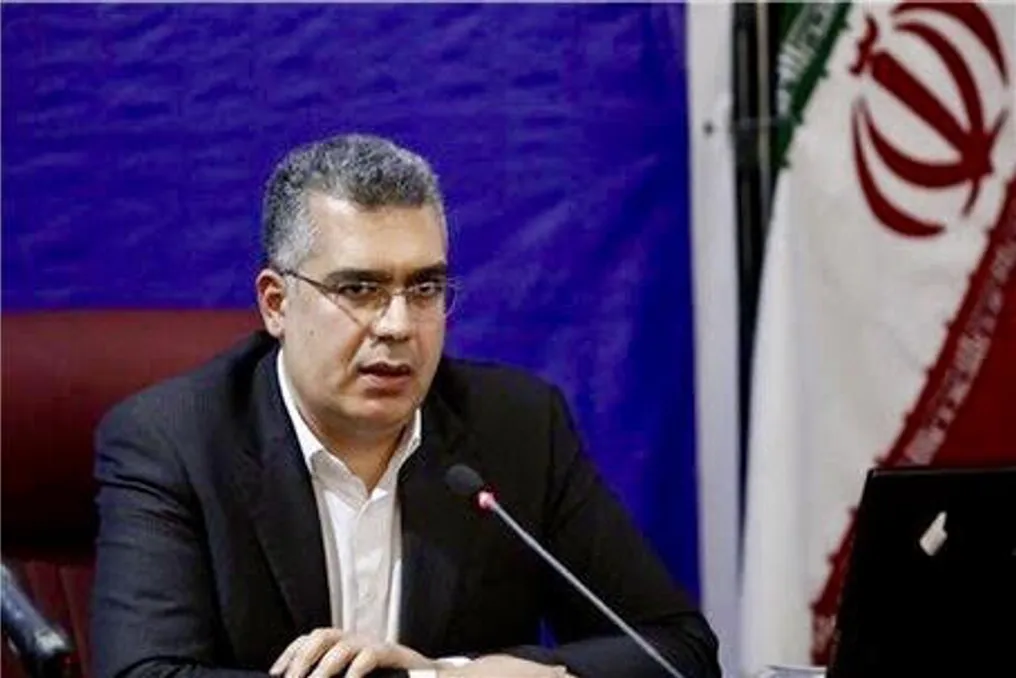
The Head of the Trade Promotion Organization (TPO) commented on the impact of trade restrictions and the 34% decrease in the country's foreign trade volume during the first six months of the current year. He noted that some export operations continue by sea, while another part is carried out through land and rail corridors. Furthermore, he denied rumors about the closure of some of the country's borders.
According to ISNA, Mohammad Ali Dehghan Dehnavi, head of the Iranian Trade Promotion Organization, stated at the ceremony of the 30th National Export Day, dedicated to honoring exemplary exporters. He emphasized the importance of economic and trade diplomacy in the current situation, noting that high activity in this area is necessary to solve problems caused by the blockade and restrictions. Discussions with neighboring, important trading partners and friendly states are critically important for utilizing communication opportunities and partially compensating for lost capacities.
The Head of the Iranian Trade Promotion Organization added that despite the decline in trade volume, the use of alternative transport routes and import management allowed a significant portion of foreign trade to be maintained. Considering the country's special conditions, trade statistics details are published cautiously, but an analysis of available data provides insight into the situation.
He specified that about 75% of the foreign trade volume last year was conducted by sea, with most of these exchanges passing through the Persian Gulf and the Arabian Sea. Consequently, maritime restrictions affected a significant part of the country's exports and imports.
Dehghan Dehnavi reported that, according to estimates, the country's foreign trade volume decreased by approximately 34% in the first half of this year. Nevertheless, exports continue via both sea, land, and rail routes.
He warned that the use of alternative routes has increased transportation costs, as land and rail transport is more expensive than sea transport even under normal conditions. Moreover, the increased demand for road and rail lines has led to congestion at some borders.
Addressing the difference between the decrease in weight and the cost of exports, the head of the TPO explained that while the weight of foreign trade decreased by approximately 34%, the drop in export value was about 20%. This difference indicates that goods with a higher unit value were able to withstand increased transport costs and continued to be exported.
He explained that paying transportation costs of $50 per ton can make the export of low-value goods unprofitable, but for goods worth several thousand dollars, such costs are more acceptable. For this reason, some goods whose exports have ceased have lost their economic justification due to rising costs.
Dehghan Dehnavi also spoke about the import situation: the weight of imports decreased by approximately 20%. A significant share of imports consists of essential goods, which, despite having a lower unit value, constitute a large share of the import volume. Statistical analysis showed that essential goods are supplied in sufficient quantities. Simultaneously, the cost of imports fell by 35%, indicating a sharper decrease in import cost compared to its weight.
Referring to the policy of the Ministry of Industry, Mining, and Trade in managing imports, he noted that restrictions on the import of certain goods were introduced since the beginning of the year, and a demand management system was introduced for others, including production equipment. The goal was to direct currency resources towards meeting basic needs and raw material requirements. This approach resulted in the fall in import cost exceeding the fall in weight, meaning less foreign currency consumption while maintaining the import of essential goods and raw materials.
Emphasizing that the country's foreign trade is being managed under current conditions, Dehghan Dehnavi added that this does not mean the situation is ideal; the decline in exports and imports puts a strain on the economy and can affect production activities. He mentioned that about 85% of the country's imports consist of raw materials and intermediate goods, including machinery, and the reduction in the import of these goods negatively affects production, so efforts are being made to ensure their supply through alternative resources and routes. There is hope that thanks to support measures and greater export support, some losses will be compensated in the remaining part of the year, and the stability of the country's foreign trade will be maintained.
In another part of his speech, the head of the TPO focused on the importance of developing non-resource exports. On the 29th of Mehr every year, National Export Day is celebrated, which allows not only to honor exemplary exporters but also to provide an opportunity to voice their problems, difficulties, and suggestions, and to form a national consensus between state bodies and the private sector regarding the development of non-resource exports.
He reported that the Iranian Trade Promotion Organization, as the main organizer of this event, has tried in recent years to conduct the National Export Day ceremony in the best possible way. The purpose of holding this ceremony is to demonstrate support for exporters and create a basis for expressing problems and finding solutions for export development.
Dehghan Dehnavi mentioned the initiative to hold a National Export Week, launched last year. Since export development is a multifaceted problem influenced by many structures, all relevant sectors must participate to achieve this goal. Accordingly, seven working days this year are dedicated to export issues, and programs are planned for each day.
The Head of the TPO noted that the first day of the programs was dedicated to infrastructure and trade corridors. Trade corridors have always been important, but under current conditions and due to the maritime blockade, they have gained even greater significance. In recent months, much has been done to activate corridors capable of compensating for restrictions in other sectors. The Ministry of Roads and Urban Development and other responsible bodies have made great efforts in this direction. The program concerning infrastructure and trade corridors will take place with the participation of the Minister of Roads and Urban Development in the Railways of the Islamic Republic of Iran, and a memorandum of understanding will be signed within this program to ensure uninterrupted movement, especially in the railway sector.
Regarding upcoming programs, he said that on Tuesday, the topic of creating value through knowledge and service exports will be discussed, and the Vice Presidency for Science, Technology, and Knowledge-Based Economy has been invited to this program. This year, an effort was made to hold more programs with partners to convey the message that all departments support the development of non-resource exports, in addition to recognizing their merits. On Wednesday, the issue of exporting technical and engineering services will be considered with the participation of companies engaged in exporting these services, as well as representatives of the Ministry of Roads and Urban Development and the Ministry of Energy.
He stated that export management companies are an important tool for the country's export development. A program is scheduled for next Saturday in cooperation with the Tehran Chamber of Commerce, dedicated to export management companies and their potential. On the same day, issues of legislation and export will be raised, and legislative issues in the field of export will be reviewed with the participation of heads of some parliamentary commissions to consider parliamentary support for export development.
Concerning the program for next Sunday, he announced that the issue of facilitating exports will be discussed, and exporters who fulfilled their currency obligations on time will be awarded. Exports play an important role in the country's economy due to their impact on GDP and employment. Fulfilling currency obligations and repatriating export revenues, along with export activities, is a commendable act, and on this occasion, companies that have shown exemplary results in fulfilling their currency obligations will be recognized in the presence of regulatory officials.
Furthermore, he continued that on Monday, the issue of associations and trade events in the field of export will be discussed in cooperation with the Iranian Chamber of Commerce and with the participation of associations and the Export Confederation, to create a basis for greater activity of private associations in exports. Tuesday is dedicated to trade diplomacy, and this program will take place with the participation and presence of representatives of the Ministry of Foreign Affairs. Throughout these seven days, various executive bodies, collective organizations, state institutions, as well as representatives of the private sector and chambers of commerce will participate.
According to him, the goal of these programs is that, given the country's particular need to generate foreign currency this year, all departments will cooperate to help the private sector, remove obstacles, and increase the country's exports to largely compensate for the losses caused by war and blockade. The main ceremony of National Export Day will take place next Wednesday, the 29th of Mehr, and it is planned to be held with the participation of the president, according to past procedures.
The Head of the Iranian Trade Promotion Organization presented a report on the process of selecting exemplary exporters. This process began several months ago in the Trade Promotion Organization after the announcement of a call. Companies that applied for selection as exemplary exporters participated in this process. The selection of exemplary exporters is based on specific guidelines: a total of 365 companies registered in this process, and after verification, 275 dossiers were finalized, as some applicants did not complete their documents or did not meet the necessary conditions to receive the required points.
Dehghan Dehnavi continued, noting that one of the positive aspects this year was the systematization of the exemplary exporter selection process so that the selection would be conducted without interference or personal preferences of individuals and based on evaluation criteria. In total, 43 individuals or legal entities were selected as national exemplary exporters, and 13 companies as national outstanding exporters.
The Head of the Iranian Trade Promotion Organization, explaining the criteria for selecting outstanding exporters, stated that outstanding exporters are exporters who...