
Heavy rains in Delhi-NCR lowered temperature and improved air quality, breaking four-year record in October
Read more
Aaj Tak
www.aajtak.in

Heavy rains in Delhi-NCR lowered temperature and improved air quality, breaking four-year record in October

Heavy downpours in the Delhi-NCR region led to a drop in temperature and broke the four-year rainfall record for October. After the rain, the capital's temperature fell below normal, and air quality reached the satisfactory category for the first time this month.

According to data from the India Meteorological Department (IMD), 41.6 mm of precipitation was recorded at Safdarjung weather station over the last 24 hours by 8:30 AM on Monday. Earlier in October, Delhi had recorded more rainfall on October 9, 2022, when about 74 mm of rain poured down in Safdarjung.

Out of five Delhi weather stations, Ridge registered the highest amount of precipitation (49 mm). This was followed by Safdarjung (41.6 mm), Lodhi Road (41.4 mm), Ayangar (39 mm), and Palm (31 mm). Between 8:30 AM and 5:30 PM, an additional 1.4 mm of rain fell in Ridge, while no rain fell in Safdarjung, Palm, Lodhi Road, and Ayangar during this period.

Flooding was observed in some areas of South Delhi, such as Sainik Farm and Mahipalpur. Rains also passed through RK Puram, Kartavya Path, and other parts of southeast and west Delhi. The Delhi Police reported via X that traffic on both lanes of Ansari Road between Dhaarmpura and Iron Bridge was diverted due to flooding.

According to weather experts, the rains are caused by a western depression over northern Pakistan, cyclonic circulation over Haryana, winds coming from the Bay of Bengal, and southwest winds from the Arabian Sea. Mahesh Palawat from SkyMet noted that this is consistent with the usual weather pattern, and that the rains are normal after the monsoon season. He predicts the possibility of intermittent rain over the next three days.

According to the IMD automatic weather station network, Kamala Nehru Nagar in Ghaziabad recorded the highest amount of precipitation—52 mm. This was followed by Pusa (42 mm), Narayana (40 mm), Janakpuri (35 mm), and Pragati Maidan (35.2 mm). Rainfall was also noted in Pitampure (24.5 mm), Chhatarpur (19 mm), Mayur Vihar (20.5 mm), Jhroda Kalan (19.5 mm), Zafarpur (4.5 mm), Najafgarh, and Mahawali (0.5 mm) and Hindan in Ghaziabad (3 mm).

Following the rains, temperatures in Delhi also remained below normal. The maximum temperature in Safdarjung was 30.2 degrees Celsius, which was 4 degrees below normal. The maximum temperature in Palm was 28.4 degrees, in Lodhi Road was 29.8 degrees, in Ridge was 29.1 degrees, and in Ayangar was 29.5 degrees Celsius.

The rains contributed to the improvement of air quality in Delhi. According to the Central Pollution Control Board (CPCB), the average Air Quality Index (AQI) in Delhi on Monday was 83, which falls into the 'Satisfactory' category. This was the first instance where Delhi's air quality reached this category this month. AQI categories are defined as follows: 0 to 50 — 'Good', 51 to 100 — 'Satisfactory', 101 to 200 — 'Moderate', 201 to 300 — 'Poor', 301 to 400 — 'Very Poor', and 401 to 500 — 'Severe'.
Similar stories

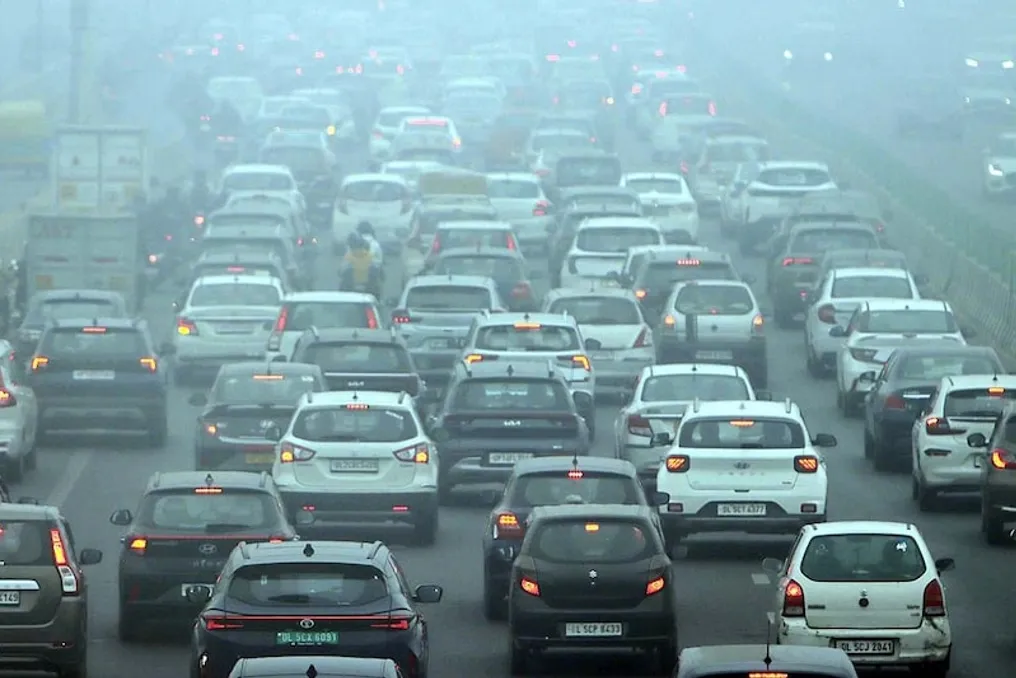
Despite the rains, air quality in Delhi remains poor: only one 'good' weather day recorded in 92 days
Read more
www.aajtak.in

Despite the rains, air quality in Delhi remains poor: only one 'good' weather day recorded in 92 days

Despite heavy monsoon rains in Delhi, the air has not remained clean for long periods. According to a new study by the Centre for Science and Environment (CSE), during the period from June 1 to August 31, 2026, the air quality in Delhi was 'good' on only one out of 92 days.

During this period, the total rainfall registered in Safdarjung and Palme was 576.9 mm. Nevertheless, for 53 days, which accounts for 57.6 percent, the air quality was in the 'moderate' category.

The study showed that although PM2.5 levels decreased during the rain, they began to rise again as soon as the rain stopped. The average PM2.5 level during precipitation was 32.7 micrograms per cubic meter. However, 24 hours after the rain stopped, it reached 36.2, and after 48 hours, it reached 45.1 micrograms per cubic meter, indicating a 37.9 percent increase in PM2.5 levels over 48 hours.

CSE compared the air quality in Delhi in April-May and in June-August 2026. In April-May, the average PM2.5 level in Delhi was 60.2 micrograms per cubic meter, whereas during the monsoon season, it dropped to 40.2 micrograms, representing a decrease of approximately 33.2 percent. Analyzing six individual rain events during the monsoon season, CSE noted that the average PM2.5 level before the rain started was 40.6 micrograms. During the precipitation, it decreased to 32.7 micrograms, which is a reduction of approximately 19.5 percent. But after the rain stopped, PM2.5 started rising again: after 24 hours, it reached 36.2 micrograms, and after 48 hours, it reached 45.1 micrograms, which was 11.1 percent higher than the 40.6 micrograms recorded before the rain started.

For the entire monsoon period of 92 days, the air in Delhi was 'good' only on July 9. On this day, the average rainfall in Safdarjung and Palme was 67.75 mm. Furthermore, August 8 saw the highest daily rainfall of the monsoon season—101.05 mm—but on that day, the air quality was only 'satisfactory'.

Overall, during the monsoon season, 53 days had 'moderate' quality, 35 days had 'satisfactory' quality, and three days had 'poor' quality. Compared to April-May, where 38 out of 61 days were 'moderate', 17 were 'poor', and six were 'satisfactory', the monsoon season showed a higher proportion of 'moderate' conditions.

According to CSE, the 'moderate' category does not mean completely clean air; in this category, the 24-hour average PM2.5 can reach between 61 and 90 micrograms per cubic meter, exceeding the national standard of 60 micrograms.

Rain helps settle fine particles such as PM2.5 and PM10 present in the air. However, some gaseous pollutants do not disappear under the influence of precipitation. Therefore, during many rainy days, major air quality degrading pollutants included ozone, nitrogen dioxide, and carbon monoxide.

Ground-level ozone was the main pollutant on 20 days during the monsoon season, and also on 49 percent of days during the summer period. Nitrogen dioxide was the dominant pollutant on 10 monsoon days, compared to only 3 percent in the summer period. Carbon monoxide was the main pollutant on 7 percent of monsoon days.

CSE explains that some gases emitted by vehicles, diesel generators, and industry remain in the air even during rain. When sunlight breaks through the clouds, these gases can undergo chemical reactions, leading to the formation of ground-level ozone.

The natural help provided by weather conditions will weaken. After this, due to reduced wind speed in winter and the sinking of upper air layers, pollution may increase. CSE emphasizes that Delhi-NCR cannot rely solely on emergency measures during the winter; year-round pollution reduction efforts are necessary. To achieve this, it is critically important to reduce emissions from transport, industry, construction, waste burning, and diesel generators. Furthermore, coordinated action is required across the entire NCR.

Popular