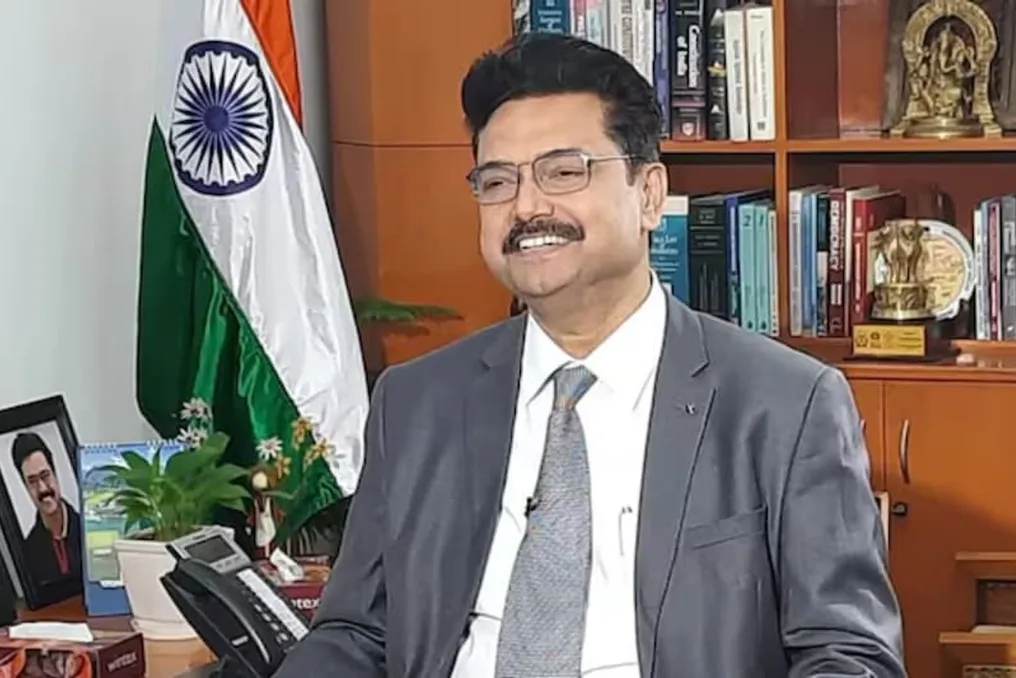
News from Delhi University (DU) has caused a stir in the education sector across the country. Professor Yogesh Singh has accepted the leadership of DU for a second term. This move is seen as a change to its 77-year history.
In the history of independent India, this is the first instance where the rector of Delhi University has been elected for a full two-year term consecutively. Furthermore, Professor Yogesh Singh currently serves as the chairman of AICTE (All India Council for Technical Education).
The question arises as to why Delhi University had to change its 77-year regulation. According to official data, during the British rule, Sir Morris Gwyther held the post of rector for about 12 years (from 1938 to 1950). After him, starting with C.N. Sen (1950-1953), no rector was able to stay in office for more than five years.
However, Professor Yogesh Singh's new term could extend his tenure as head of DU until October 2031, which is a full ten-year period. Previously, DU rules (Statute 11-F(4)) did not provide for the possibility of reappointing a rector. But in October 2023, the central government amended this law, paving the way for reappointment. Professor Yogesh Singh became the first rector to receive a second term under this new legislation.
Professor Yogesh Singh's strength also lies in his strong academic and technical foundation. He holds an M.Tech degree in Electronics and Communication and a PhD in Computer Engineering from NIT Kurukshetra. Before taking up the post at DU, he was already the rector of MS University of Baroda (2011-2014) and Delhi Technological University (DTU). Interestingly, in both these institutions, he was granted a second term based on the evaluation of his work.
Since Yogesh Singh took charge of DU on October 8, 2021, he has radically changed the face of the university. In 2022, he abolished the controversial entrance score system based on 12th-grade certificates and introduced 'CUET (Common University Entrance Test)' for the entire country. At the same time, he acknowledged that because the test is based on the NCERT curriculum, CBSE students have some advantage.
Under the National Education Policy (NEP 2020), he also introduced a four-year undergraduate course (UGCF 2022) at DU, which provides students with excellent opportunities for research and multiple entries and exits from the program.