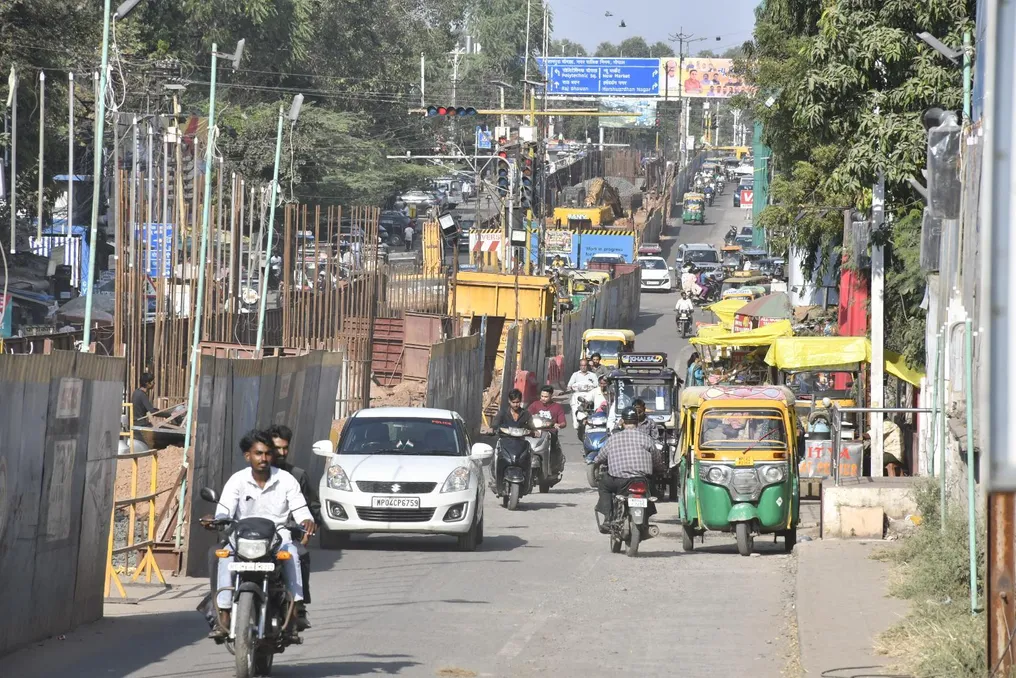
Study shows diversity of modes of transport in India, depending on region, type of settlement, and gender
Read more
The times of India
timesofindia.indiatimes.com

Study shows diversity of modes of transport in India, depending on region, type of settlement, and gender

A quarter of a century ago, advertising campaigns presented two-wheeled transport as a symbol of the 'New Image of India'. However, the question remains: is India in 2026 still moving predominantly by two-wheeled bicycles, has it switched to cars, or are more people walking? The answer to this question is largely determined by which states people live in, whether they live in a village or a city, and their gender. These three factors influence the way people travel and how much they pay for it to varying degrees.

According to the National Household Transport Survey of India, in Puducherry, 92.7% of workers use two-wheeled transport as their primary mode of travel. In Nagaland, more than seven out of ten people walk, while West Bengal shows the highest rate of bicycle usage among all published data, Ladakh stands out for its use of buses, and Sikkim for cars.

The survey, conducted from July 2025 to June 2026, covered 492,023 households and 1,844,179 people aged six years and older. Nationally, the image of two-wheeled transport remains relevant, although average figures conceal significant regional differences. Among workers who commute at least 1 km, 42.6% use two-wheeled transport, 28.3% walk, and 10.7% cycle. The average one-way trip to a permanent workplace takes 25 minutes, and travel expenses amount to about 785 rupees per month per worker.

Differences between rural and urban areas

Comparing India and Bharat reveals a substantial change in statistics. In rural areas, workers are distributed almost evenly between two-wheeled vehicles (37.1%) and walking (36.6%). In cities, the situation shifts towards motorized transport, presumably due to longer distances: the share of two-wheeled transport increases to 52.3%, while the share of walking decreases to 13.5%. Cars, buses, and taxis also account for a larger share.

The situation with metros and local trains predominates in urban settings. The 'Train/Monorail/Tram' category, which includes metro and suburban or local trains, is used by 5% of urban workers but only 0.4% of rural workers. In urban Maharashtra, where the Mumbai suburban railway is located, this share is 20.7%. In urban West Bengal, it reaches 16.5%, and in Delhi, known for its metro network, it is 14.4%. The separately accounted category 'Rail Transport' accounts for only 0.2% of workers nationwide, 0.2% in rural India, and 0.3% in urban India.

Students use buses, workers use bicycles

Students and workers travel very differently. In villages, 40.5% of students walk and 18.9% cycle. In cities, buses (33.7%) and auto-rickshaws (14.4%) play a larger role. Nationally, 37% of students walk, 29.5% use buses, and 15.8% cycle, with only 6.7% using two-wheeled transport. Among workers, buses account for only 6.7%, matching the share of two-wheeled transport among students.

The contrast is most noticeable in Kerala, where buses carry 72% of students but only 24.9% of workers. Age also influences the picture: students aged 15 to 29 walk significantly less than those aged 6 to 14 (22.2% versus 47.3%), and cycle more often (21.4% versus 11.9%).

Men drive, women walk

Among workers, 47.1% of men use two-wheeled transport for commuting, while this figure is 18.4% among women. Approximately half of female workers (50.6%) walk, compared to 24.1% of men. Women also use buses much more often (14%) than men (5.3%).

This can easily be attributed to rural India, where more people walk. However, this gap persists in cities. There, 57% of working men use two-wheeled transport, compared to 25.8% of women, while women walk twice as often as men (24% versus 11.6%). The difference in bicycle usage is even more apparent: among workers, 12.3% of men cycle to work, whereas only 1.7% of women do so.

However, gender differences are much less pronounced among students. About 17.7% of male students cycle, compared to 13.4% of female students. Odisha makes this contrast particularly noticeable: female students there cycle almost as often as male students (32.8% versus 34%). But among workers, the gap widens in Odisha: about 25.5% of men cycle to work, compared to 5.8% of women.

Short trips, high urban costs

Most work trips take less than half an hour. About 83.4% of workers heading to a permanent workplace arrive within 30 minutes. Students perform even better: 87.6% reach school or college within half an hour.

Nevertheless, trips in cities cost significantly more. The average city commute to work takes 27 minutes, just four minutes more than in villages, but costs 1,044 rupees per month compared to 612 rupees, which is 71% more expensive. City students also pay approximately 71% more, although their average trip is slightly shorter—22 minutes versus 23 minutes in villages.

Even within cities, there are sharp differences. Workers in urban areas of West Bengal and Delhi spend roughly the same time commuting to work—an average of 36 and 35 minutes, respectively. However, a worker in urban West Bengal spends about 825 rupees per month, while a worker in Delhi spends about 2,081 rupees, which is about two and a half times more. Urban West Bengal also shows a longer tail of long trips: about 13% require a journey of more than an hour, compared to 4.1% across urban India. Consequently, lower monthly costs there do not necessarily mean faster travel.

Work schedule

Across India, 56.5% start work between 8 am and 10 am. In Mizoram and Ladakh, about 97.1% and 95.1% of passengers depart during this time. Evenings change even more drastically: across India, 31.1% leave work at 6 pm or later. In Tamil Nadu, this figure is close to half (48.9%), in Gujarat—45.2%, and in Delhi—44.6%. Men leave late more than twice as often as women (34.1% versus 16%).

Excluding work and study, very few people go out. During the day, 18.7% of people aged six and older traveled at least 1 km for some other reason: 23.8% of men and 13.3% of women. They also travel differently. Among men making such trips, 40.1% use two-wheeled transport, compared to 17.6% of women. Among women, 30.4% use cars or auto-rickshaws, compared to 12.7% of men. For women, cars and auto-rickshaws play the same role as two-wheeled transport for men.

Bus still dominates long-distance travel

In the 28 days preceding the survey, 11.3% of households made a night trip of 50 km or more, keeping a family member away from home for more than 24 hours. More than half of such households, 55.8%, used the bus as their primary mode of transport. The next most popular category is the separately accounted 'Rail Transport' with a rate of 17.7%. Cars account for 15.1%, and two-wheeled transport for 8.8%. Another 3.3% belong to the 'Train/Monorail/Tram' category, and only 0.6% traveled by air.

Some of these trips were not work-related. About 70.2% of households making night trips did so for social, communication, or religious purposes.

How far do people travel? This answer was not provided in the published details. The survey collected data on travel distance, as well as information on driving licenses, household vehicles, and bus or train passes, but none of this is presented in the published evaluation tables. A quarter of a century after the presentation of the 'New India' concept, two-wheeled transport still leads the national picture. However, the survey demonstrates how much this picture conceals reality, and the most crucial missing element is information on travel distance. While there is demand for metro in every second-tier city, and road and rail infrastructure is improving, complete data will help policymakers make more informed decisions about India's transport needs.

3
Similar stories

Musician Dhirendra receives 'Hanuman ANSH' project after visiting Kainty Dham temple
Read more
www.aajtak.in

Musician Dhirendra receives 'Hanuman ANSH' project after visiting Kainty Dham temple

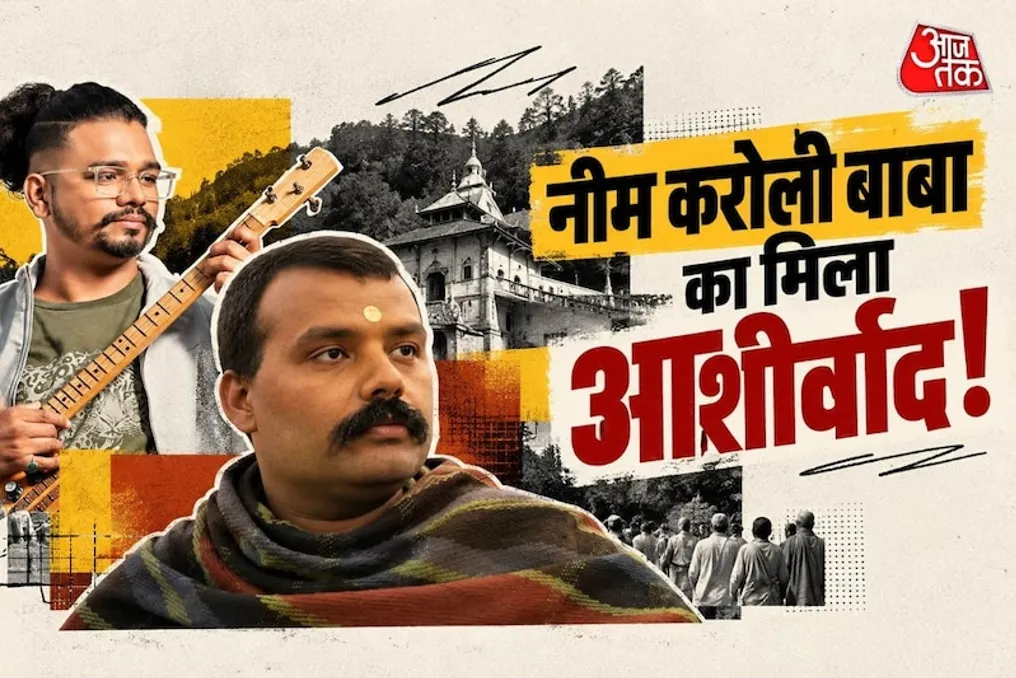
The fate of musician Dhirendra Mulkavar, who previously created jingles, changed with the acquisition of the 'Hanuman ANSH' project, which many consider a miracle. He had long tried to visit the Kainty Dham temple and finally managed to reach the Nim Karoli Baba ashram last April. Just a few months later, he received an offer that fulfilled a long-held dream.

Director Vishal Chaturvedi invited him to compose music for his film 'Hanuman ANSH'. For Dhirendra, this was not just a movie, but something akin to a miracle. In an interview with India Today/Aajtak, he shared his story.

Dhirendra Mulkavar's connection with Nim Karoli Baba dates back to a much earlier period, preceding the creation of this film. Around 2010, he saw a video of the American spiritual teacher Rama Das, who was a disciple of Nim Karoli Baba. It was then that Dhirendra developed an interest in Baba.

He began researching information about Baba, listening to stories about his influence and followers worldwide. His curiosity grew with stories about Baba linked to names such as Steve Jobs and Julia Roberts. However, achieving the goal of visiting Kainty Dham took about four years. Finally, he arrived there in April. He did not suspect that this journey would open the next big door in his life.

Approximately two months after the trip to Kainty Dham, Dhirendra contacted director Vishal Chaturvedi, who offered him the opportunity to compose music for a film about Nim Karoli Baba. Dhirendra himself recalls the entire process, considering it a miracle. The link from the trip to Kainty Dham to the music for the film was so direct that it was difficult for Dhirendra to consider it mere coincidence.

The most special song in the film, 'Siavar Ramchandra Ki Jai', was also not created according to plan. In fact, Dhirendra was working on background music for an important scene in the film. In this scene, the revolutionary takes the guise of a sadhu to avoid persecution by the English, and Nim Karoli Baba helps him.

While working on this scene, an idea suddenly occurred to Dhirendra—chants in honor of Sita and Rama. He presented this idea to Vishal Chaturvedi, who approved it. Thus, what was initially just part of the background music later became a full-fledged song. This song, combining patriotism and spirituality, became the film's signature piece.

The musician, whose name is now associated with 'Hanuman ANSH', did not begin his journey in a big city or within a film family. Dhirendra grew up in Chandrapur, Maharashtra, and his childhood was spent in very modest conditions with limited resources. Music was not a direct path to a career for him.

His mentor, the late drummer Rajiv Pillai, introduced him to music. Furthermore, his older brother showed him music that awakened in Dhirendra a dream of doing something great. Gradually, he began to think that he could become a music director.

After moving to Mumbai, Dhirendra mastered audio engineering. He worked in radio for about a year, but his dream did not stop there. After his day job, he prepared his musical demos at night and met with people. Then, he was offered a job creating jingles for advertisements. Soon, he worked on over 500 commercials and jingles, but the dream of recognition in cinema as a composer remained unfulfilled.

Dhirendra's story also holds another beautiful connection—with nature. The area near Chandrapur, around the Tadoba-Andhari sanctuary, was part of his childhood. He was also involved in wildlife rescue and conservation. The time spent in the forest gave his music a unique perspective. According to him, sounds were sometimes heard in the forest that rivaled a symphony. He would close his eyes and feel these natural sounds as music.

Perhaps this is why nature, spirituality, and emotion are so naturally combined in his music.

It took Dhirendra about two decades to realize his dream of becoming a film composer. He said that he knew how to play music, but understanding the business of the film industry was entirely different. Because he was from a small town, it took him time to master this aspect of the industry.

During this time, his work was featured in films such as 'Uri: The Surgical Strike' and 'Article 15'. It was this work that attracted the attention of Vishal Chaturvedi, leading to the 'Hanuman ANSH' project. The film 'Hanuman ANSH', released in August, received more positive reviews from audiences than expected. Even during screenings, the team realized that an emotional connection was forming with the audience.

Now, 'Hanuman ANSH' has opened new opportunities. According to Dhirendra, some viewers were so moved during the preview that the team felt the film's spiritual message had reached the public. But the commercial success of the film exceeded his expectations. Now, following this success, Dhirendra has started receiving calls about new projects, and negotiations are underway for several films.

Mewar's Kumbalgarh Attraction: An Ideal Two-Day Trip Alternative to Jaipur and Udaipur
Read more
www.aajtak.in

Mewar's Kumbalgarh Attraction: An Ideal Two-Day Trip Alternative to Jaipur and Udaipur

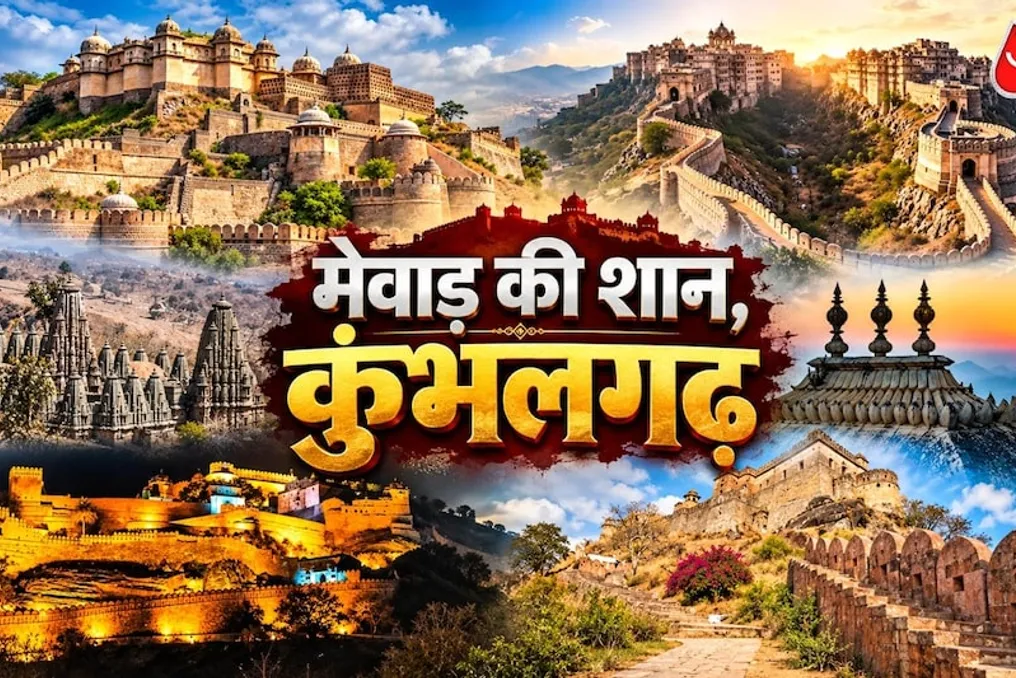
If you are planning a trip to Rajasthan but want to explore something different from popular spots like Jaipur and Udaipur, Kumbalgarh might be the best choice for you. This small town, nestled among the Aravalli hills, offers a wonderful blend of history, nature, and tranquility. Here you can see magnificent forts, ancient temples, lush valleys, and wildlife. Furthermore, visiting Kumbalgarh allows you to experience Rajasthani culture up close. If you are planning a relaxing two-day weekend getaway, you should include Kumbalgarh in your travel list.

Kumbalgarh Attractions

The main attraction in Kumbalgarh is the famous Kumbalgarh Fort. This fort was built by the Mewar ruler Rana Kumbha in the 15th century. Its massive wall, stretching approximately 36 kilometers, is considered one of the longest continuous walls in the world after the Great Wall of China. This makes the place particularly interesting for history lovers. Inside the fort, there are numerous ancient temples and historical buildings that offer picturesque views of the surrounding Aravalli hills.

For lovers of forests and wildlife, it is recommended to visit the Kumbalgarh Wildlife Sanctuary. This area, spread out around the fort, is surrounded by greenery and mountainous landscapes. Here you can enjoy jeep rides, trekking, or horseback riding. During a walk, you might encounter animals such as sambar, nilgai, chinkara, and chausinga.

Not far from Kumbalgarh is the village of Molela, known for its unique terracotta art. Local artisans create beautiful clay figures depicting deities and scenes from folk tales. If you are interested in culture and art, visiting this village can make your trip even more special.

What to try in Kumbalgarh? The cuisine of Kumbalgarh strongly reflects Mewar culture. Here you can taste traditional Rajasthani dishes such as dal bati churma, gatta ki sabzi, pithod ki sabzi, lal maans, and panchmel dal.

Kumbalgarh is located about 84 kilometers from Udaipur. To get there, you can first fly or take a bus to Udaipur, and then travel to Kumbalgarh along the way. The journey from Udaipur to Kumbalgarh takes about two hours. There is no railway station in Kumbalgarh, but it is easy to reach by road.

Where to stay? Various accommodation options are available in Kumbalgarh, from budget hotels to luxury resorts. The peaceful atmosphere and beautiful views of the hills make the stay here special. If you wish, you can also include Udaipur in your trip along with Kumbalgarh.

Popular