After fuel prices in South Africa officially exceeded the threshold of 30 rand per liter, local drivers and commercial fleets are forced to reconsider their decisions regarding the purchase of electric vehicles (EVs).
The unprecedented rise in the cost of gasoline and diesel has drawn attention to owning electric vehicles. As fuel prices continue to rise—reaching a record high in October 2026—South African consumers are seeking long-term financial relief, given that one liter of gasoline or diesel now costs more than 30 rand.
According to official automotive industry data from Naamsa, there is a significant increase in sales of new energy vehicles (NEVs). This category includes battery electric vehicles (BEVs), plug-in hybrids (PHEVs), and traditional hybrids (HEVs). From January to April 2026, NEV sales increased by 53% compared to the previous year, reaching 7,065 units. BEV sales showed an even sharper jump during the same period, registering a growth of 135%.
Grant Locke, Managing Director of Volvo Car South Africa, notes that rising fuel prices are transforming purchasing models. According to him, South African drivers are now looking beyond the initial purchase price and paying more attention to the total cost of ownership when choosing an EV. They are beginning to factor in lower energy costs, reduced routine maintenance expenses, and overall running costs.
Locke sees a clear shift in consumer attitudes. While environmental sustainability remains an important factor, the primary drivers for considering EVs have become daily operational efficiency and cost savings. Despite record fuel prices pushing drivers toward alternative powertrains, Locke acknowledges that many are not yet ready to switch immediately to fully electric models.
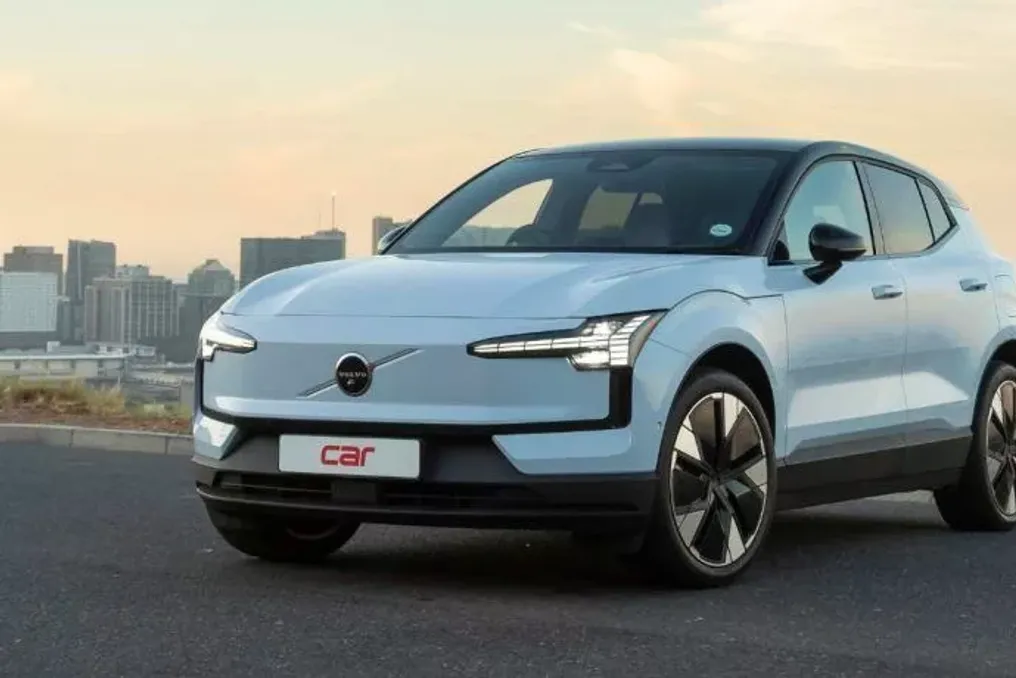
Volvo South Africa offers six fully electric models aimed at the premium segment. The base EX30 starts from 735,500 rand. Additional options include the XC40 Recharge and EC40 coupé crossover—the first starting from 1,108,000 rand, and the second from 1,396,800 rand. The upcoming EX60 will be the brand's mid-range offering from Gothenburg. The ES90 and EX90 occupy the top positions in the company's sedan and SUV lineups, with starting prices of 1,590,000 rand and 1,855,000 rand, respectively.
Although Volvo's electric lineup targets the high end, Naamsa's September 2026 report shows that Chinese manufacturers are capturing demand in the mass market in South Africa. In September, Volvo registered 30 local EV sales (excluding XC40 vehicles, as powertrain sales are consolidated in reporting). In contrast, affordable Chinese offerings are gaining rapid popularity among local buyers. Last month, the Chery Q (from 349,900 rand) sold 214 units, and 150 units of the BYD Dolphin Surf (from 341,900 rand) found new owners. The Geely E2, which ranks first among the most affordable EVs in SA, entered the market at a competitive price of 339,900 rand, although its sales figures are not yet reported to Naamsa.