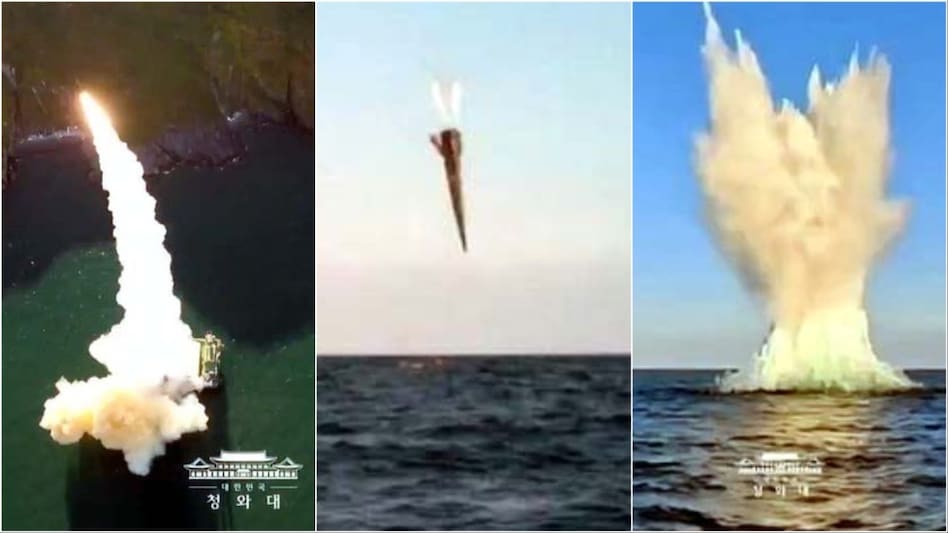
South Korea conducted the first successful test of its domestically developed hypersonic glide vehicle (HGV). The test took place in October 2026, during which the missile demonstrated maneuvering at a speed exceeding 6174 km/h and accurately struck a target at sea. This success is considered an important step in strengthening the country's strategic defense capabilities.
During the testing, the hypersonic glide vehicle completed its planned flight after separating from the booster. It reached the target while changing both horizontal and vertical direction, descending from altitude. This test was conducted to verify materials capable of withstanding high temperatures, as well as guidance systems and control technologies.
President Lee Jae-moon personally attended this test. South Korea views this technology as a strategic asset that allows for sudden and precise attacks on critical targets on the peninsula. It should be noted that North Korea conducted its first successful HGV test in 2022 and has carried out two tests in the last month, indicating an improvement in its potential.
South Korea's test comes against the backdrop of growing North Korean capabilities. The hypersonic missile race between the two countries affects the regional security balance. Hypersonic glide vehicles differ from traditional ballistic missiles in that they can change their flight trajectory and move at high speed at low altitudes, making them difficult to intercept. South Korea is incorporating this technology into its target destruction system and defensive strategy, moving towards ensuring its own security.
This test could intensify the arms race in East Asia. South Korea plans further development and prompt deployment of this technology. Experts warn that despite the successful test, achieving full operational readiness will take time. Diplomatic efforts are also necessary to maintain peace in the region. Overall, this achievement demonstrates South Korea's technological progress and policy of self-sufficient defense, and further research and development in this area will continue.