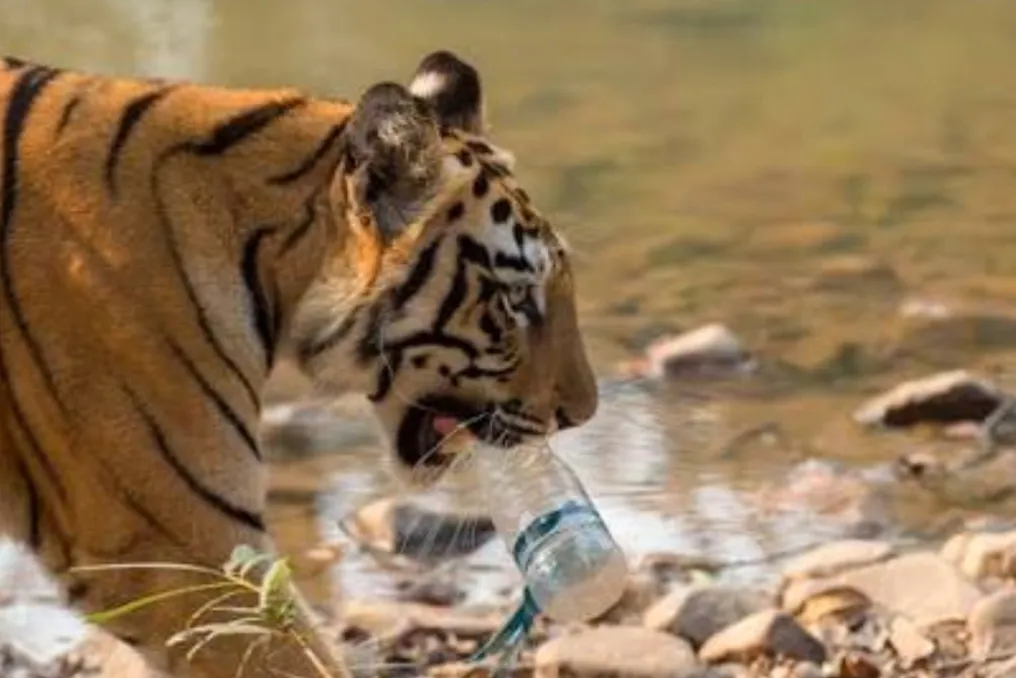
A small plastic container floating in the Ramganga River might seem like ordinary trash. However, in January 2020, tourists at the Corbett Tiger Reserve observed a tigress and two cubs eating such an item. Photographs taken in the Dhikala area were submitted to the reserve authorities on January 30. Corbett staff began investigating how the plastic container entered the reserve. At that time, the reserve was already a plastic-free zone, and officials speculated that it might have entered via the river from upstream settlements.
Six years later, India is approaching this issue in a completely different way. On September 25, 2026, the National Tiger Conservation Authority (NTCA), in collaboration with the Wildlife Institute of India (WII), launched the sixth cycle of the Tiger Reserve Management Effectiveness Evaluation (MEE-TR).
Key changes in the evaluation
The MEE-TR 2026 established 14 assessment groups to check 58 tiger reserves across India. Among the key innovations is the introduction of a new criterion for solid waste management and the inclusion of active tiger management in the reserves, which strengthens the overall evaluation system.
For the first time, solid waste management has become a separate evaluation criterion. The inspection will cover all 58 Indian reserves and will examine waste generated at forest posts, as a result of tourism, and in wildlife rescue centers, including biomedical waste. Independent interdisciplinary teams will assess reserve management methods using a comprehensive approach that considers everything: from planning and resources to actual conservation outcomes.
It is important to note that this is not a new tiger population count. Results have not yet been published, and the process itself does not report on an increase or decrease in tiger numbers. This raises the question: if a reserve cannot manage what people leave behind, how effectively is it managing the wildlife habitat?
The plastic problem was evident earlier
The garbage situation was not unique to Corbett. In July 2024, The Indian Express reported that the Amravati Tiger Reserve in Telangana collected 17,000 kg of recyclable and 33,000 kg of non-recyclable waste during the 2023–2024 period. The reserve was combating plastic entering through tourism, roadside trade, and settlements.
Departmental assessments showed that a significant portion of this waste consisted of small plastic water bottles and multilayer food and snack packaging. Forest staff began checking vehicles at entry points, and waste was sorted for recycling or other disposal. However, the scale of the collected waste also demonstrates that not all waste comes from tourists.
Landfills can become a food source for wildlife
In 2024, researchers from WII studied what happens around landfills in the western part of Rajaji Tiger Reserve in Uttarakhand. Shashank Nagarale, along with WII researchers Bilal Habib, Shivam Shrotriye, and Bivashesh Pandava, used camera traps at 10 garbage accumulation sites and recorded 437 nights of observation. Their study revealed that wild mammals regularly visit these areas. Sabar had the highest number of visits, followed by Indian hedgehogs and spotted deer. Macaques and wild pigs also visited the sites. Researchers found food packaging, disposable items, food waste, religious offerings, sanitary waste, pharmaceutical waste, plastic, and other materials in the dumps.
This changes the understanding of the word 'waste'. A plastic bottle chewed by a tiger shows how plastic pollution has penetrated core wildlife habitats. It is not just trash; it is a threat to biodiversity. Data shows that macroplastics cause internal blockages, while microplastics pollute the food chain from the soil. Through biomagnification, these toxins accumulate inside top predators, causing serious health problems. As apex predators, tigers are the foundation of the food chain and support the entire ecological balance. To protect their habitat, we must remember plastic pollution and stop littering in the wild.
A landfill near a forest is not necessarily just an empty place waiting to be cleaned up. For some animals, it can become a food source. The problem lies in the consequences. Animals may start spending more time near human settlements and roads. Their movements may change. Species that usually avoid humans may become accustomed to their presence. And food waste can attract domestic animals and other opportunistic species, creating new points of contact between wildlife, livestock, dogs, and humans.
A tiger reserve is more than its tigers
Another indicator is found in India's own management assessments. The previous MEE structure already identified garbage as a management problem in individual reserves. For example, in Satpura Tiger Reserve, the assessment noted issues with waste generated in hotels and restaurants around the reserve, calling for improved waste management in tourist areas such as Churna and Madhai.
In other locations, reserves have employed various approaches. Periyar runs a long-standing plastic reduction program, while Corbett requires visitors to take away non-biodegradable waste. The new MEE criterion integrates these everyday measures into the official management effectiveness evaluation.
This matters because nature conservation is not just about counting tigers. A reserve needs functioning patrols, healthy prey populations, connected ranges, controlled tourism, community participation, and wildlife monitoring. It also needs to cope with the material footprint left by people working in and visiting these landscapes. The new evaluation does not claim that garbage is the biggest threat to India's tigers. It recognizes that a plastic bottle at a forest post, food packaging at a tourist camp, or biomedical waste from a rescue center are all part of protected area management. And this is what will be measured in this evaluation cycle.