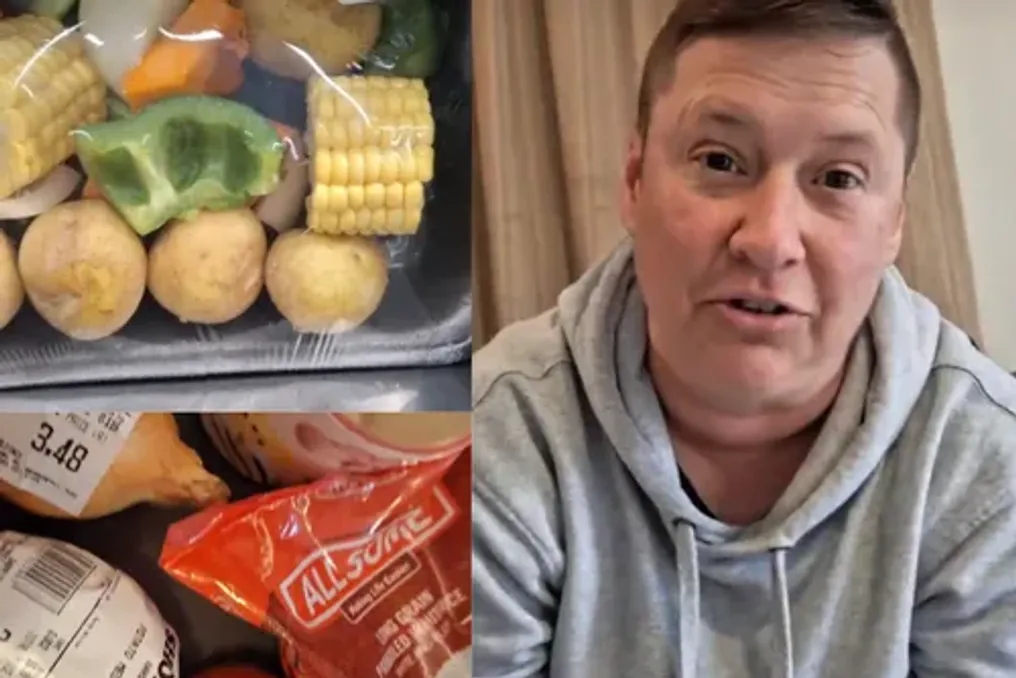
Culinary blogger shares how R40 budget meals help families save money
Read more
IOL
iol.co.za

Culinary blogger shares how R40 budget meals help families save money

What started as preparing a budget meal for two costing R40 has turned into a mission to assist needy residents of South Africa with nutrition. Olivia Vilgatzis, known as Olive Foodie, shares how her initiative and affordable recipes help people cope with financial difficulties.

Living in Richwood, Cape Town, Vilgatzis cooks in her kitchen. She never expected her home culinary creations to resonate so deeply with pensioners, students, young adults, and families struggling to cover expenses.

However, after publishing the first budget meal for R40 for two, the reaction from followers was overwhelming. These comments made her realize that even such a simple activity as cooking can have a significant impact on people's lives.

Vilgatzis noted: «It all started when I cooked my first budget meal for R40 for two people. The reaction I received from my followers was simply amazing. Pensioners, young people, families in difficult situations, and especially students loved these dishes. That's when I realized that sharing what I cook has a positive influence on people with limited budgets.»

What began as an exchange of recipes has transformed into a platform based on accessibility, compassion, and the understanding that food is more than just satisfying hunger. For Vilgatzis, cooking is a source of joy, but it also serves as a reminder that even during periods of severe financial pressure, small changes can ease daily life.

A Meal That Makes a Difference

Behind every budget-friendly recipe is an understanding of how food costs determine a household's comfort throughout the month. Vilgatzis carefully calculates ingredient prices, specials, and portions when preparing dishes. Her goal is to make recipes accessible to people with different financial capabilities, including those who cannot buy groceries in bulk.

She also acknowledges that the price of an ingredient is not always the only obstacle; sometimes product packaging makes it difficult to stick to a strict budget for someone cooking for one or two people. Therefore, she advises people to divide ingredients into portions and use them across several meals to extend the shelf life of supplies.

One story particularly touched her: a mother and daughter who started following her videos discovered that the recipes helped them manage their monthly budget by reducing food expenses. As Vilgatzis said: «They were also able to cut their grocery bill by R1,500 per month, which slightly eased their situation regarding other expenses. It is stories like these that support me.»

For a household struggling to pay for food, electricity, transport, and other essential needs, saving R1,500 monthly means having some extra time. Knowing that her recipes can bring such benefit motivates Vilgatzis to continue creating content.

"No One Should Go Hungry"

Her desire to help extends beyond the kitchen and social media. Together with her wife Veronica, affectionately called Wifey on social media, and her followers, Vilgatzis helped create a community initiative called "No One Should Go Hungry." This initiative supports vulnerable people, including day workers, pensioners receiving benefits from the South African Social Security Agency (SASSA), orphanages, and shelters.

The project reflects the belief that help does not always require a grand gesture; sometimes it starts with sharing what you have. Vilgatzis recalls a specific food distribution drive that left a lasting impression on her. One day worker thanked the team and then explained how hungry he was. She recounted: «The memory that will stay with me forever is the day we distributed food, and the day worker said thank you, and then replied: 'You cannot imagine how hungry I am, and when I last ate something.' I will never forget that gratitude and relief he felt just by being able to sit down and eat. That's why we keep doing this, because no one should go hungry.»

For Vilgatzis, this encounter was a reminder that hunger is not always obvious. Behind the people she meets on the street are circumstances that others may know nothing about, including how long a person has gone without proper food.

When the Need Became Impossible to Ignore

The reality of food insecurity became particularly evident to Vilgatzis during the Covid-19 pandemic. At the time, she participated in a WhatsApp group in Richwood where she asked residents to donate whatever they could. She personally collected donations, moving them from one house to another, opening the trunk of her car while residents left items. Even one packet of instant noodles could contribute to a food parcel.

Upon returning home, the donations were sanitized, unpacked, and divided into parcels for needy families in the community. Photos of these parcels were then published so donors could see how their contributions were being used. The residents' reaction demonstrated how collective generosity could support people during an exceptionally difficult period. For Vilgatzis, this was an experience that reinforced the importance of giving what you can, rather than considering a small contribution insignificant. Her message is simple: people do not need to have much to help others. Food, a sandwich, or even a bottle of water can ease the plight of someone having a hard day.

More Than Food on a Plate

While accessibility remains a central theme of her cooking, Vilgatzis believes that food also carries cultural, social, and emotional significance. Meals can bring families together, encourage conversation, and create memories that last long after the plates are empty. At home, she and Veronica try to eat dinner together at the table without interruptions, using this time to talk about the day and discuss what they might cook next.

She describes her wife as her rock and safe place, a person with whom she can share quiet moments away from cameras. The couple also enjoys cooking together, turning the kitchen into a place of connection and shared happiness. For Vilgatzis, this feeling of closeness is as important as ensuring a recipe remains accessible.

She wants people to be able to cook dishes from simple, affordable ingredients without losing the pleasure of sharing a meal. And when she needs comfort herself, her choice is simple: Bolognese spaghetti, a dish she calls her perfect comfort food, regardless of the season.

Staying True to Herself

As her online presence grows, Vilgatzis has gotten used to people recognizing her in public and stopping to talk. She says that the attention has not fundamentally changed her, although she has had to learn to handle the interactions that come with recognition. Instead, she hopes that her journey will inspire other content creators to define what fascinates them and remain consistent.

Looking back, she regrets not starting to share budget meals and highlight charitable work sooner, especially given the need she saw during the pandemic. She also wants to remind people that kindness should never depend on a person's financial status or perceived social standing. She concluded: «Life is hard for many people, and who are we to judge? Instead of judging someone's circumstances, perhaps we should try to lend a hand if we can. Even if it's just a sandwich, food, or a bottle of water, any small act of kindness can make a difference.»

Ultimately, Vilgatzis hopes to continue using her platform to promote affordable cooking while encouraging people to look beyond their own circumstances and consider how they can help others. Her journey, from sharing an R40 meal online to feeding vulnerable people through community initiatives, illustrates how a simple act can turn into something meaningful when it reaches those who need it most.
Similar stories

Food accessibility problem in South Africa forces households to choose between price and nutritional value
Read more
iol.co.za

Food accessibility problem in South Africa forces households to choose between price and nutritional value

The food accessibility crisis in South Africa is increasingly forcing families to choose between the cost of food and its nutritional value. Financially strained households tend to purchase cheaper and more filling foods, even if they offer less dietary variety.

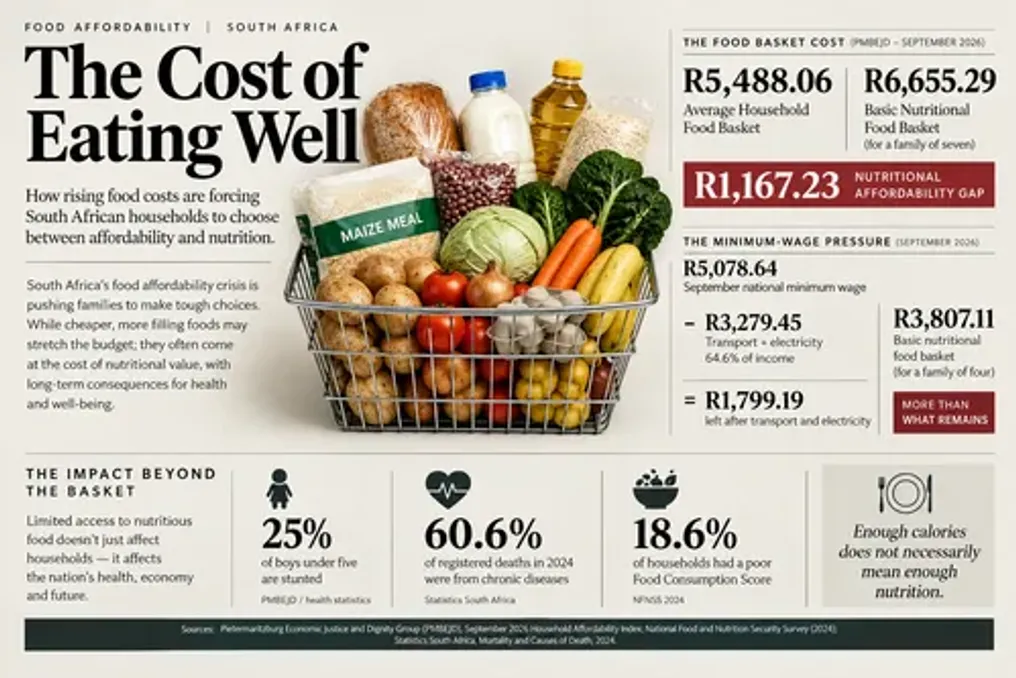
According to the Household Food Accessibility Index for September, prepared by the Pietermaritzburg Economic Justice and Dignity Group (PMBEJD), it is evident how financial status affects family nutrition monthly. The average cost of a household's food basket was R5,488.06, while the basic nutritional basket for a family of seven cost R6,655.29, which is R1,167.23 more.

Mervyn Abraham from PMBEJD noted that the rising cost of living is reflected in consumer decisions. He stated that people are starting to buy less food and lower-quality products, becoming more selective in their choices to manage their budget.

PMBEJD found that transport and electricity expenses amounted to R3,279.45, or 64.6% of the national minimum wage in September, which reached R5,078.64. This leaves R1,799.19, less than half, while the basic nutritional basket for a family of four requires R3,807.11.

Abraham emphasized that health statistics demonstrate the consequences of households being unable to afford sufficient and nutritious food. He pointed to a very high rate of growth stunting in children in South Africa, noting that twenty-five percent of boys under five suffer from this, which is a direct consequence of protein deficiency.

Furthermore, high rates of diabetes and non-communicable diseases are observed, which are directly linked to prolonged inadequate nutrition. Abraham added that the problem affects the entire country, as the South African economy is forced to spend more on healthcare to treat problems caused by insufficient or low-quality food.

Dr. Heinrich Vollmink, CEO of the South African Association of Nutrition Doctors, considers it critically important to distinguish between consuming enough calories and receiving adequate nutrition. He explained that with limited budgets, people may naturally prefer affordable, filling, and practical food, but calorie saturation does not guarantee nutritional adequacy. A diet can provide enough energy without having sufficient variety, fiber, vitamins, minerals, and other essential substances.

Vollmink warned that regular consumption of high-energy, low-nutrient foods can hinder the achievement of a healthy eating pattern. When foods high in added sugar, salt, and unhealthy fats regularly replace healthier alternatives, it contributes to excessive energy intake and increases the risk of obesity, hypertension, type 2 diabetes, and cardiovascular diseases.

According to the National Report on Food and Nutrition Security for 2024, 58.1% of households had an acceptable food consumption score, while 23.3% were classified as borderline, and 18.6% as poor. Vollmink cautioned that a poor score does not prove nutrient deficiency, but limited dietary diversity can increase the risk of malnutrition.

Statistics South Africa registered 474,366 deaths in 2024, with chronic diseases accounting for 60.6% of all deaths. Diabetes accounted for 6.1%, followed by hypertensive diseases (5.5%) and cerebrovascular diseases (5.4%).

The National Department of Health has identified unhealthy eating as one of the risk factors contributing to the burden of non-communicable diseases (NCDs) in South Africa, including excessive consumption of salt and sugar, as well as high-fat foods. The department's latest mortality data shows that NCDs accounted for 60.6% of registered deaths in South Africa in 2024. Minister of Health MP Joe Pahla noted that preventing these diseases largely depends on a healthy lifestyle, which includes a balanced diet.

Access to nutritious food is a problem for parents in Africa, despite expert recommendations
Read more
iol.co.za

Access to nutritious food is a problem for parents in Africa, despite expert recommendations

Experts note that stronger support, accessible nutrient-rich foods, and more effective policies are needed to improve child nutrition in Africa.

Across Sub-Saharan Africa, parents are often advised on what to feed their children: it is recommended to consume more protein, fruits, vegetables, dairy products, and other nutrient-rich foods. However, for millions of households, the problem is not just a lack of nutritional knowledge. Even if parents understand which foods their children need, the recommended dishes may be unavailable or difficult to access.

According to Professor Christine Tyard-Krugel, an associate professor at the Center of Excellence in Nutrition at Northwestern University (NWU) and a certified dietitian, the concept of accessibility varies depending on the specific household. She emphasizes that accessibility depends on the family's financial capacity, not the product itself, although some foods provide significantly more nutrients or energy per unit of money spent than others.

Children need energy for growth, protein for tissue formation, as well as a reliable source of vitamins and minerals. Iron, zinc, vitamin A, and iodine are particularly important for brain and immune development. While staple foods usually provide energy, obtaining sufficient protein and micronutrients creates financial pressure on family budgets.

Tyard-Krugel points out that dark leafy greens, pumpkin, orange sweet potatoes, mangoes, and papaya can relatively affordably provide Vitamin A. Legumes, peas, and peanuts are among the cheapest sources of iron, zinc, and folate in the region. In South Africa, where products were compared directly, legumes showed the best nutrient-to-rand ratio.

Small dried fish, eaten whole including bones, are particularly valuable as they contain protein, iron, calcium, and Vitamin B12 in one affordable product.

Nevertheless, the accessibility problem remains serious. Even the cheapest nutritious foods cost two to ten times more per calorie than maize meal. Eggs, chicken, and beef remain out of reach for African households because they are too expensive.

This does not mean that families should completely give up maize, rice, cassava, or other common staple foods. These foods remain the basis of the diet because they are accessible and provide the energy children need. The greatest improvement can be achieved by what is served with them. It is advised to cook legumes with the staple food, such as beans, peas, or ground peanuts, add a spoonful of oil to increase energy and Vitamin A absorption, and add leaves at the end of cooking rather than boiling them into a puree.

Families should also remove moldy or discolored maize and peanuts before cooking, as mold can contain toxins linked to poor child growth. For children under two years old, breastfeeding remains critical: exclusively for the first six months, and then with complementary feeding until two years and beyond. Furthermore, mothers need adequate nutrition, time, and workplace protection for this to be possible.

When porridge is introduced at six months, it must be mixed correctly to ensure adequate nutrition. Tyard-Krugel warns that liquid porridge fills a small stomach but does not nourish a growing child.

Cost remains the main obstacle to dietary diversification. Last year, two-thirds of Africa's population could not afford a healthy diet, with animal products contributing significantly to this increased cost. Moreover, different foods create various practical barriers. Legumes are a separate issue: they are cheap to buy but expensive to prepare, requiring hours of fuel, which costs either money or the woman's time. Fruits and vegetables are cheap in season but spoil quickly without refrigeration equipment.

Rural communities face greater distances, limited choices, and higher prices. Within households, the person controlling the income can also determine whether the child receives nutritious food.

Tyard-Krugel argues that African governments must focus on making existing policies work. Many countries require the fortification of wheat flour or salt, but these rules mainly apply to industrial producers. Poorer households often buy products at small local mills that are not part of these systems.

Similarly, there are methods capable of reducing aflatoxin contamination in maize and peanuts by over 90% in field trials. Data on whether farmers adopt these measures is scarce, and existing evidence indicates a very low rate of adoption. The technology works, but delivery is lacking.

Governments must also develop dietary guidelines. Only 12 African countries have them, although implementing them is relatively inexpensive. Child allowances and cash transfers should be assessed based on the actual cost of a healthy diet, not 'what the budget allows.' She believes that the zero VAT rate on food should be reviewed, as the benefits are more likely to go to wealthier households, and savings do not necessarily reach consumers.

School feeding programs can make a significant contribution. The number of African children receiving school meals has increased from 66 million in 2022 to 87 million in 2024. Programs that procure goods from local farmers can simultaneously improve children's diets and strengthen the local economy.

However, school meals usually start when children are five or six years old, which is long after the critical first 1000 days of life. They cannot compensate for lost growth.

Ultimately, the responsibility cannot rest solely on parents. Parents do not always lack nutritional knowledge. While providing parents with sound nutritional advice is necessary, issues such as lack of money, time, and opportunity are barriers that must be addressed. Advice that ignores these realities can be harmful in itself. Advice that a family cannot afford does not just fail to help; it subtly shifts the blame onto the person with the least ability to change anything.

Popular