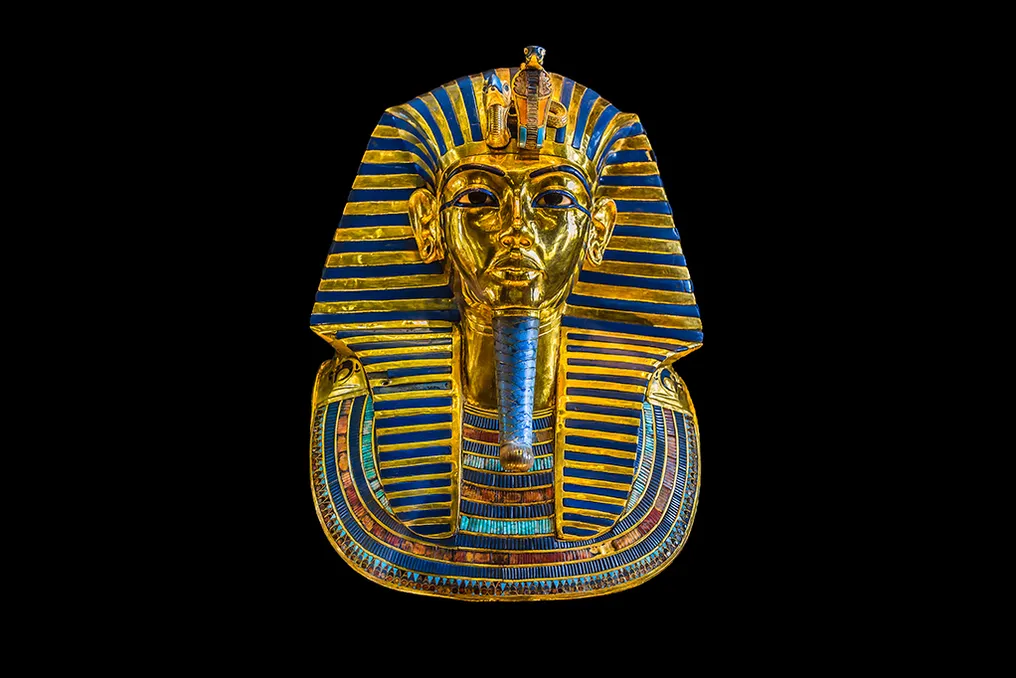
A growing number of studies has reignited interest in possible hidden chambers beyond the ornate walls of Pharaoh Tutankhamun's tomb, located in Egypt.
Some specialists have raised the possibility that such hidden chambers, if they exist, might contain the burial site of Nefertiti, who was Tutankhamun's stepmother and mother-in-law. Nefertiti gained notoriety due to a painted bust of her head, found in Tell el-Amarna, Egypt, in 1912.
The theory of secret chambers was initially presented more than ten years ago. One of the main proponents of this idea, archaeologist Nicholas Reeves, points to clues that, according to him, may indicate that Nefertiti's tomb is nearby. Among these clues are hieroglyphs considered 'hidden' that were painted on the north wall of Tutankhamun's tomb.
Recently, a team of scientists released an analysis of the archaeological and geophysical investigations conducted in Tutankhamun's funerary chamber (known as KV62), including the results of a survey carried out between 2023 and 2024. Lead researcher Mamdouh Eldamaty informed the scientific journal Nature that the findings suggest the presence of unseen structures beyond KV62. A decision on the feasibility of carefully drilling into the north wall and installing miniature cameras may be made in the coming months, although other specialists maintain a cautious stance regarding the new discoveries.
There is a delicate balance between mere speculation, hypothesis testing, and actual scientific discovery. Many significant archaeological and scientific advances have resulted from researchers willing to question established models and explore ideas derived from vague or improbable historical traces.
However, limited evidence combined with high expectations can lead to premature conclusions. The issue of hidden chambers outside Tutankhamun's tomb lies precisely at this intersection point. Differentiating and separating the evidence of unexplored spaces from the evidence of Nefertiti's burial remains a considerable challenge. The focus should not be on what is expected to be found, but on objectively assessing what the current evidence confirms and what it does not.
The press often tends to quickly accept the most sensational conclusions. The search for Cleopatra's tomb in Taposiris Magna serves as an instructive example. Previously looted tombs, artifacts, and even the reanalysis of an underground hydraulic tunnel were frequently presented as signs that the discovery of Cleopatra's tomb was near. However, the existence of an aqueduct compatible with Hellenistic urban infrastructure (of Greek influence) does not constitute proof of an actual burial.
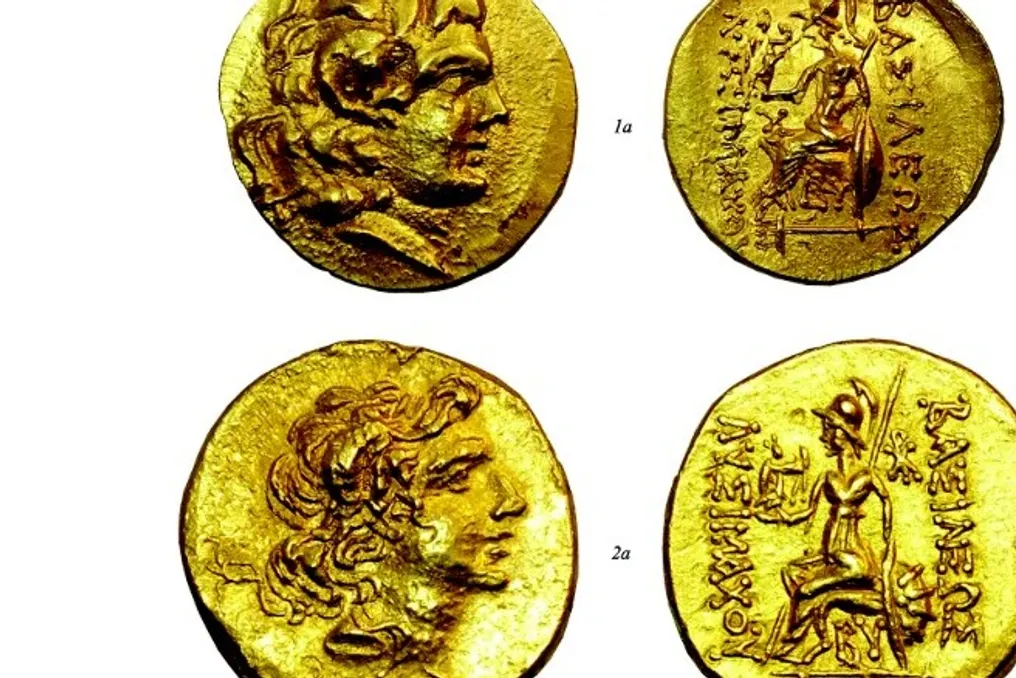
A more measured approach can be seen in the work of Greek archaeologist Calliope Papakosta, in Alexandria, Egypt. During a visit to her excavations, she presented evidence indicating the possible proximity of Alexander the Great's tomb. The most persuasive element was a marble statue of a young warrior that, according to her—and the author agrees—could represent Alexander. The style of the piece was consistent with the school of Lysippus, sculptor of Alexander's court. Unfortunately, the sculpture had been discarded in a Roman fill layer and thus removed from its original context.
Papakosta recognized both the potential and the limitations of the evidence. Although she hoped her work could elucidate the whereabouts of Alexander's tomb, she always framed her findings within the limits demonstrated by the data.
The debate surrounding Tutankhamun's tomb raises similar questions. The burial site is exceptionally small to accommodate a pharaoh, and Nicholas Reeves argued that it represents only the external portion of a larger funerary complex from the Amarna period (approximately 1350–1325 BC). The anomaly of the tomb is widely accepted, and it is presumed to be a small private mausoleum adapted hastily for the king due to his early death.
The suggestion of door jambs on the decorated north wall of the funerary chamber spurred the theory of a larger funerary complex, but damaging the wall to investigate it would be unfeasible. Progress, therefore, depends on geophysics providing a method to inspect the wall without causing damage.
Initial investigations used a relatively low-frequency ground-penetrating radar (GPR), focusing mainly on the 400 to 900 megahertz (MHz) range. These frequencies allow for greater penetration into the surrounding limestone compared to higher-frequency radars, although this comes at the expense of spatial resolution. Subsequent research expanded this range and incorporated frequencies up to 3 gigahertz (GHz).
The author expressed that their personal preference would be to place special emphasis on higher-frequency radar antennas (components of the GPR system that emit and receive electromagnetic pulses), given that determining whether the north wall has indications of a door jamb is a crucial initial step in answering other important questions. High-frequency systems offer lower penetration capacity but are generally better suited to detecting subtle structural discontinuities immediately behind the wall surface.
More recent research included microgravity surveys conducted over the hypothetical complex. These surveys measure minimal variations in the Earth's gravitational field caused by density differences in the subsoil. High-frequency GPR was also integrated into the team's toolkit. This was a prudent evolution of the research strategy. The obstacle was that, to preserve the wall paintings, the GPR antennas could not be placed directly against the decorated surfaces. The resulting air gap weakened the coupling between the antenna and the wall, reducing signal quality and hindering interpretation. In the case of GPR, the further the antenna is from the surface, the more difficult it becomes to identify discrete architectural features.
Microgravity surveys are not subject to this restriction. They can identify anomalies in the limestone beneath the sensor. The challenge faced by both investigative methods is that they have not produced definitive proof of a large open chamber immediately behind the wall. To justify this, proponents of the hidden chamber hypothesis suggested that any passages might have been intentionally filled with debris, masking the void signals that investigators expected to detect. This is plausible and warrants further testing, but it remains an interpretation, not a fact.
Some researchers argued that the currently available geophysical evidence does not prove the presence of hidden chambers. This led to the next logical stage of the scientific process: direct testing. The current proposal to make a small hole and insert miniature cameras into one of the detected anomalies has the potential to transform the discussion from inference to direct observation. Regardless of the outcome, the investigations conducted by Eldamaty and his colleagues represent the most comprehensive scientific assessment on the matter to date. Currently, the hidden chamber theory remains what a good scientific hypothesis should be: intriguing, testable, and worthy of investigation. What it is not yet, at least, a discovery.