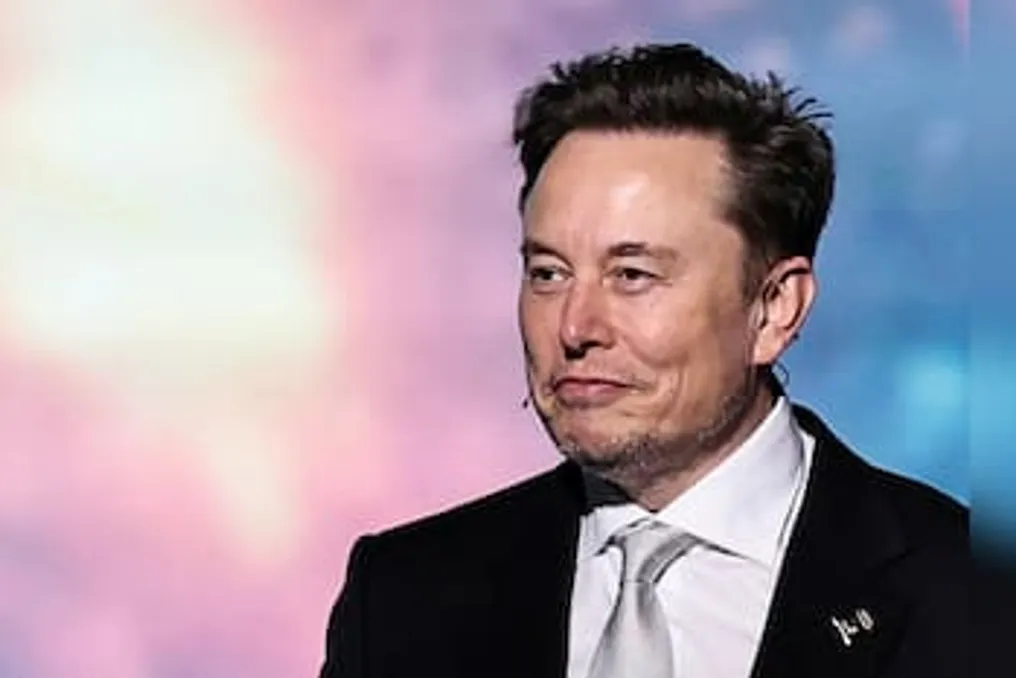
Elon Musk, founder of SpaceX, stated that Starlink services should be accessible to more people in India, and that the emergence of competition will benefit customers. He noted that even if Reliance Jio earns less money, the company will not go bankrupt.
These statements came shortly before the expected Initial Public Offering (IPO) of Jio, which could be the largest in India and value the company at over $100 billion. Musk once again spoke out against the Reliance group, calling it a 'de facto monopolist in India.'
In his post on his social media platform X, in response to user messages that he claimed supported Reliance Industries Ltd (RIL), Musk criticized the arguments put forth by the 'army of internet propagandists of Ambani.' He called them 'absurd hypocrisy and hyperbole,' pointing out the contradiction: first they claim Starlink cannot compete with the monopolist's low prices, and then they state that Starlink will be too strong a competitor.
Musk emphasized that competition always benefits the average citizen of India by providing them with more options. He added that if Starlink turns out to be too expensive in India, no one will use it, so SpaceX must make the prices affordable.
His comments followed a series of messages questioning delays in the approval of Starlink services in India and suggesting that some large business conglomerates, particularly the Reliance group, are hindering Starlink's entry into the Indian market.
Earlier, on Saturday, Musk addressed Prime Minister Ambani, apologizing for not realizing that he was the 'real boss of India.' He asked whether Ambani was willing to allow Starlink to compete despite the preference for maintaining 'monopolistic exploitation of the great people of India.'
He also pointed out that Starlink could be useful to users, including small businesses and children's education, in areas of India lacking internet access, and could save lives during natural disasters when other communication systems fail.
However, Musk's accusations drew sharp criticism. Nishikant Dubey, Chairman of the Parliamentary Committee on Communications and Information Technology, responded that the government is aware of the problems faced by the country's security services through Starlink since 2013–2014, and that the Ministry of Defence, the Ministry of Home Affairs, and investigative agencies suffer from these threats' dangerous games. He called for providing internet access to the poor in their own country, America, at affordable rates first, before making accusations, noting that India is a healthy democratic sovereign nation that does not change its security policy under pressure or on social media.
Rajiv Kumar, former Vice Chairman of NITI Aayog, stated that India should challenge Musk's monopoly in space communications by using the $145 billion USO fund. He proposed using these funds to assist Indian telecom operators such as Airtel and Reliance Jio so they can urgently deploy their satellite networks to compete with Elon Musk's Starlink. He believes this would be a better use of funds than endlessly waiting for BSNL to develop the necessary capacity for universal coverage.
Eutelsat OneWeb (now Eutelsat Group), supported by the Bharti group, and Jio Satellite Communications, a subsidiary of Reliance Jio, have received licenses, but they are still awaiting security clearances. Starlink received its latest approval in 2025, while Eutelsat and Jio received theirs earlier.
Jio is independently building its constellation of Low Earth Orbit (LEO) satellites, which will compete with global players like Starlink and Amazon Leo.
The government refuted Musk's claims last week, stating that all satellite broadband providers must comply with safety regulations to operate in India. The Ministry of Communications stated that the country's authorization system for telecommunication and satellite services is 'fair and non-discriminatory,' and any suggestion of its selective application is 'unfounded and erroneous.'
Telecom Minister Jyotiraditya Singh 'clarified the situation' on Friday, stating that India does not permit monopolies in any sector, including satellite communications, and that licenses were issued to all three companies—Reliance Jio, OneWeb, and Starlink—that applied. He also mentioned that the fourth interested party, Amazon Leo, must undergo the same process. Security clearance is conducted by the Ministry of Home Affairs, which will also issue final approvals. Singh added that the government is in discussions with the Telecom Regulatory Authority of India regarding satellite spectrum pricing, and only after all entities meet or comply with the security conditions can they begin operations.