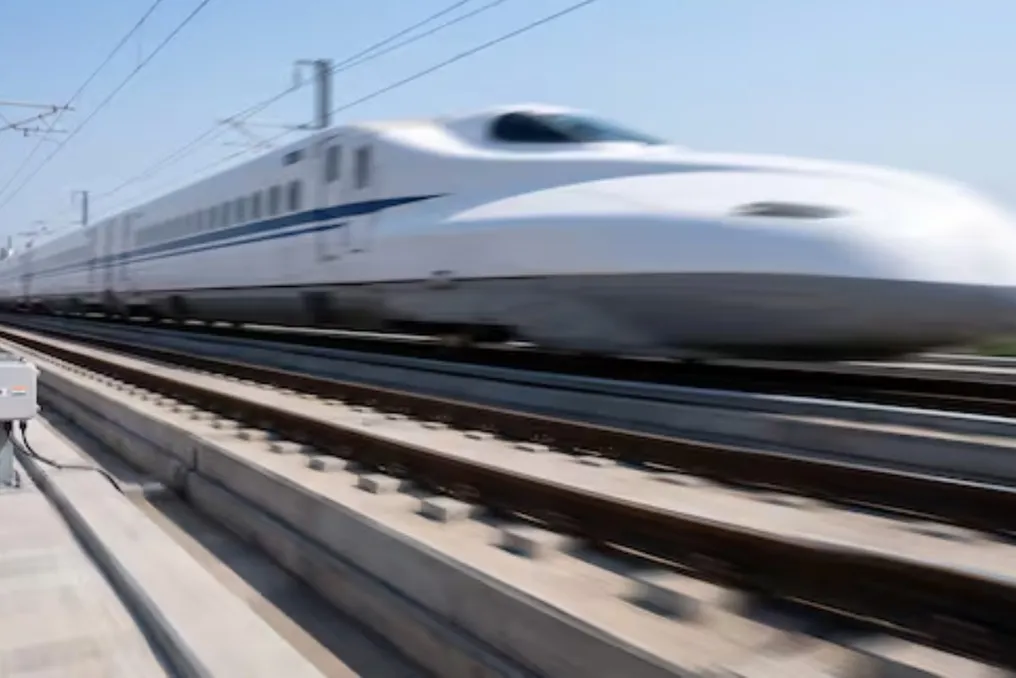
Launch of seven high-speed rail lines planned in India, including Mumbai-Pune and Delhi-Varanasi routes
Read more
Aaj Tak
www.aajtak.in

Launch of seven high-speed rail lines planned in India, including Mumbai-Pune and Delhi-Varanasi routes

Indian Railways plans to expand its high-speed rail network by proposing seven corridors that will run between major cities across the country. This initiative aims to significantly reduce travel time and improve passenger convenience.

These new high-speed lines will operate on routes such as Delhi-Varanasi, Mumbai-Pune, and Chennai-Bengaluru. Forecasts indicate that travel on these routes will become much faster. These corridors were announced as part of the Central Budget for 2026-27 and are intended to facilitate passenger movement, strengthen connections between economic hubs, and stimulate regional development.

Finance Minister Nirmala Sitharaman announced these seven corridors while presenting the central budget. The proposed routes include Delhi-Varanasi, Mumbai-Pune, Pune-Hyderabad, Hyderabad-Bengaluru, Hyderabad-Chennai, Chennai-Bengaluru, and Varanasi-Siliguri. The goal of this program is to promote eco-friendly passenger transport and enhance connectivity between major settlements and surrounding areas.

It is expected that the travel time on the Delhi-Varanasi corridor will be reduced to approximately three hours and 50 minutes, connecting the national capital with the city in Uttar Pradesh. On the Mumbai-Pune route, travel time is anticipated to decrease to approximately 48 minutes. Faster rail connectivity should also help foster business travel and reduce the load on existing transport arteries, although this depends on the project design, stations, and operational system.

Travel Time on Pune-Hyderabad and Hyderabad-Bengaluru Routes

The proposed Pune-Hyderabad corridor is expected to reduce travel time to approximately one hour and 55 minutes, thereby accelerating the link between Maharashtra and Telangana. Regarding the Hyderabad-Bengaluru corridor, the journey is projected to take about two hours.

Time Reduction on Other Routes

On the Hyderabad-Chennai route, travel time is expected to be reduced to approximately two hours and 55 minutes, and on the Chennai-Bengaluru corridor—to one hour and 13 minutes. The seventh corridor, Varanasi-Siliguri via Patna, should also reduce travel time by approximately two hours and 55 minutes.

It is separately noted that the Mumbai-Ahmedabad high-speed train project is currently under implementation using diesel fuel, and its operation is planned to begin next year. The Mumbai-Ahmedabad high-speed rail corridor is designed for trains traveling at speeds of up to 320 kilometers per hour.
Similar stories

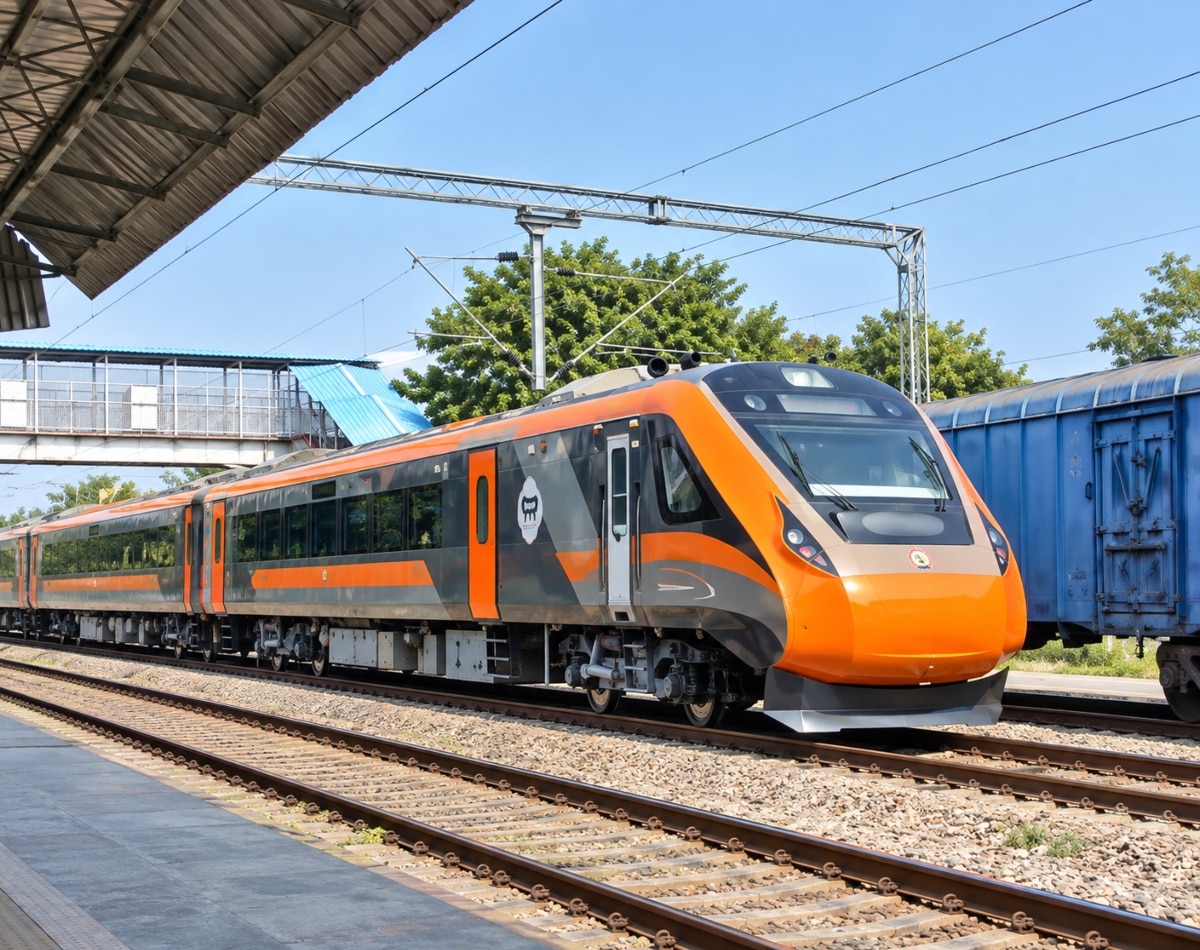
New 16-Car Vande Bharat Train Successfully Passes 180 km/h Speed Tests
Read more
www.aajtak.in

New 16-Car Vande Bharat Train Successfully Passes 180 km/h Speed Tests

The new Vande Bharat Chair Car from Indian Railways has successfully completed a trial run on the Mathura-Nagada section at a speed of 180 km/h. This 16-car train was manufactured at the RCF railway factory in Kapurthala, Punjab.

According to the Ministry of Railways, this test was conducted on October 8, 2026, under the observation of the Chief Commissioner of Railway Safety (CCRS). The operational capability, safety, and performance of the train equipped with an advanced power unit were tested, marking an important stage in the modernization of India's railway production.

It is important to note that the completion of the 180 km/h speed tests does not mean the train will operate at this speed during regular passenger services. Currently, the Vande Bharat will travel at speeds ranging from 130 to 160 km/h, but reaching 180 km/h is planned for the future.

The new Vande Bharat train is equipped with comfortable seats that have a reclining function, providing ample legroom. It is also fitted with large windows that ensure a good view of the external landscape and lighting. Furthermore, it includes toilets with a zero-discharge bio-vacuum system, which prevents waste emission.

The train composition includes automatic sliding doors and a smooth suspension system that minimizes the sensation of jolts and vibrations. The air-conditioned coaches are designed to maintain a comfortable temperature throughout the journey, adjusting it based on the number of passengers.

Special toilets designed for wheelchair users are provided for passengers with disabilities. Special attention is paid to cleanliness, and staff are present in every coach to provide any necessary assistance.

First steel bridge installed in Mumbai-Ahmedabad high-speed train project in Maharashtra
Read more
www.aajtak.in

First steel bridge installed in Mumbai-Ahmedabad high-speed train project in Maharashtra

Work on the high-speed train project in Gujarat is progressing rapidly, and construction pace has become noticeable in Maharashtra as well. The first steel bridge was installed within the Mumbai-Ahmedabad high-speed train project in Maharashtra.

This 100-meter bridge weighing approximately 1,405 metric tons was assembled in the Bhivandi, Thane area, over National Highway-3. The total high-speed rail line between Mumbai and Ahmedabad spans 508 kilometers, and numerous large bridges and other structures are being built along this entire route. The installation of the first steel bridge in Maharashtra is considered a significant achievement in this segment of the project.

According to data from the National High Speed Rail Corporation (NHSRCL), this steel bridge was installed in the village of Dive-Anjur in Bhivandi on Monday. The bridge measures 100 meters in length, 14 meters in height, and 14 meters in width. Approximately 1,405 metric tons of steel were used for its construction.

Notably, this bridge was manufactured not in Maharashtra, but in a specialized workshop in Trichy, Tamil Nadu. After manufacturing, it traveled about 1,300 kilometers and was transported to Thane on a trailer. Its sections were joined and erected at the designated site. Project representatives noted that this demonstrates the utilization of technologies and production capacities available in the country.

The bridge installation was carried out at night during a planned closure of traffic on the highway to minimize impact on traffic flow. NHSRCL reported that an automated crane was used to launch the steel bridge. This system allowed the finished steel structure to be slowly delivered to the installation site. Safety of the structure and people traveling on the highway was ensured throughout all operations.

Special painting work was performed to ensure the bridge's durability, and elastomeric bearings were installed. These bearings help cope with vibrations and other loads affecting the bridge structure, extending its service life.

With the launch of the first steel bridge in Maharashtra, the total number of completed steel bridges on the Mumbai-Ahmedabad high-speed rail corridor has reached 16 out of 28. Of these, 15 bridges have been constructed in the Gujarat section of the high-speed rail corridor. Thus, more than half of the work related to steel bridges is complete. Construction and installation of the remaining 12 steel bridges will continue.

Although the majority of the Mumbai-Ahmedabad project is located in Gujarat, the construction pace is also accelerating in Maharashtra. This 508-kilometer high-speed corridor is intended to connect Mumbai and Ahmedabad, significantly reducing travel time between the two cities. As bridges, tracks, and other necessary structures become ready, the project work will become even more apparent.

As of the end of July 2026, the overall construction volume of the Mumbai-Ahmedabad high-speed train project was completed at 62.16%. In response to an RTI request, NHSRCL reported that the land parcel of 1,389.49 hectares for the 508-kilometer corridor has been fully acquired. This area includes 959.04 hectares in Gujarat and Dadra and Nagar Haveli, as well as 430.45 hectares in Maharashtra.

Currently, beams spanning 366 kilometers have been installed on the viaduct, and beams have been poured for approximately 380 kilometers. Furthermore, foundation work is complete over an area of 459.90 kilometers, and pylon work is complete over 455.10 kilometers. Foundations and upper structures are ready at all stations in Gujarat, while station construction in Maharashtra is ongoing. The project also includes a 21-kilometer tunnel, about 7 kilometers of which passes under the sea. Tunnel construction is being carried out using a tunneling complex and a new Austrian tunneling method, and 4.88 kilometers of the tunnel have been completed to date.

Of the eight mountain tunnels, four have been completely breached. Work at Sabarmati depot is 32.28% complete, and at Thane depot, it is 17.23% complete. As of August 27, 2026, track sleepers have been laid on 97 kilometers of the route. Work is also advancing on rolling stock; BEML has received an order to design, construct, and commission two high-speed trains, and construction of the first train has already begun.

Popular