Few anime have managed to impact a generation as much as Naruto. The journey of the young man who aspired to become Hokage captivated audiences globally and, naturally, found representation in video games. The franchise adaptations covered virtually all available platforms at the time, resulting in dozens of titles.
Over time, the franchise explored various genres, including 2D and 3D fighting, action-adventure, RPGs, and even mobile games. Certain of these titles became classics, being particularly popular in Brazil, where many users dedicated long hours to the PlayStation 2. For this reason, this article revisits the main Naruto games.
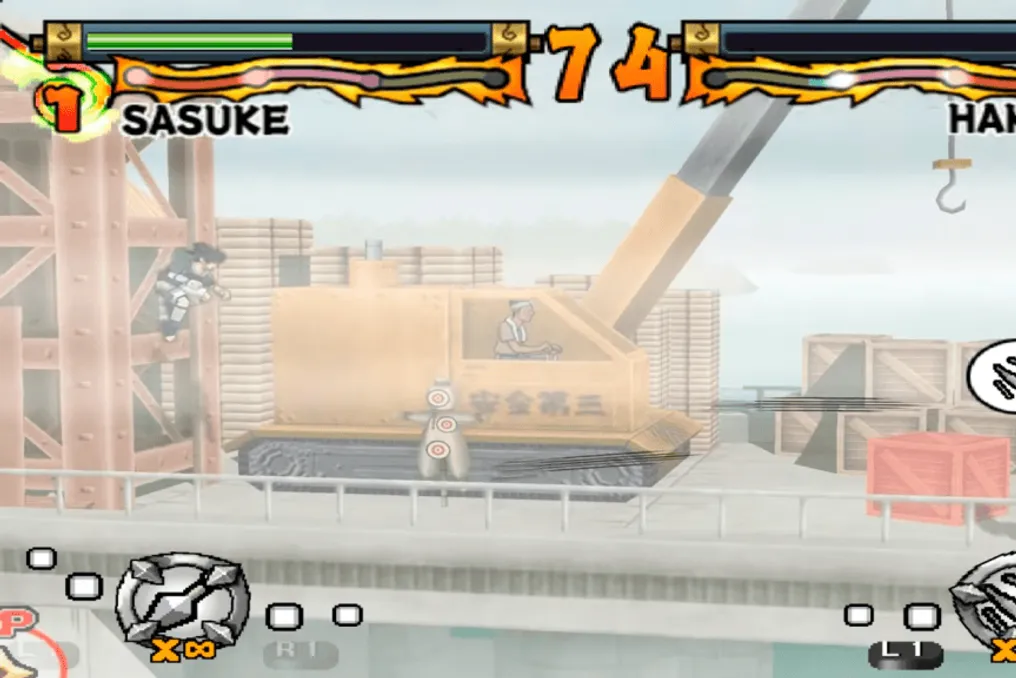
The Naruto Ultimate Ninja series is considered one of the most popular titles of the character, especially in Brazil. The games released for the PlayStation 2 featured dynamic and fast-paced 2D gameplay despite using 3D graphics. Although the controls were simple, there was great variety, notably among the different characters, some endowed with exclusive abilities and transformations.
The characters reflect the diversity seen in the anime, ranging from those focused on physical attacks and projectiles, to jutsu and individuals with extreme speed, capable of disappearing from the screen. In later editions, the option to select a second character to act as support was introduced.
Four games were released for the PS2 between 2003 and 2009. However, most of them took approximately three years to reach the Western market, although there were other games in the series released on other platforms.
Next came the Naruto Ultimate series games released for the PSP, Sony's portable console of that period. The first title was essentially an adapted version of Naruto Ultimate Ninja 2, but with reduced content due to the device's limitations. Even so, the game offered 3v3 battles, following the model of The King of Fighters, requiring the defeat of all three opponents for victory.
Naruto Shippuden: Ultimate Ninja Impact marked the fourth and last release for the PSP. On this console, players had access to boss fights, a novel rush combat system, a 1 vs 100 mode, and multiplayer missions via ad hoc connection. In addition to these innovations, the game featured over 50 characters, 26 of which were playable.
Naruto Ultimate Ninja Storm represented the series' debut on the seventh generation of consoles, bringing a significant change: full 3D movement. Additionally, the game introduced the 'Awakening Mode,' allowing the character to transform after losing a certain amount of health, the value varying according to the chosen character.
The second title in this sub-series was available for both PlayStation 3 and Xbox 360. Unlike the first, it had more characters, scenarios, and story mode content, besides being the first game in the series to include an online multiplayer mode, which was innovative for the standards of the time.
Five more games belonging to this sub-series were released, and starting from the fourth title, they were available for PlayStation 4 and Xbox One, with some versions also for PC. The most recent, Naruto x Boruto Ultimate Ninja Storm Connections, released in 2023, celebrated Naruto's 20th anniversary and was released for PlayStation 4 and 5, Xbox Series S|X, Switch, and PC. Regardless of the platform, this edition contained the narrative of previous games and their 124 characters, plus two new members.
Naruto Clash of Ninja is the Naruto game series that was initially released for the GameCube. On the Nintendo platform, four games were made available, presenting gameplay distinct from the Naruto Ultimate titles. This was more three-dimensional, similar to the Tekken series, and its dynamism resembled conventional fighting games, also featuring multiple game modes.
The first game generated divided opinions, receiving reviews ranging from very elementary gameplay to the monotony and predictability of its modes. The second title was better received, mainly for offering more characters and a multiplayer mode for up to four players, while the fourth game was released exclusively in Japan.
This series marked Naruto's entry into the Nintendo Wii, with a total of three games released in the West. The main modifications included the addition of map transitions, allowing the fight to change from one area to another during the confrontation, as well as the inclusion of destructible objects and interactive elements in the environment. In addition to these aspects, many characters were rebalanced, and subsequent games incorporated combo canceling mechanics and quick recovery after falling to the ground.
There is also a parallel series that, unlike Naruto Ultimate, focused on action and adventure, prioritizing map exploration and mission execution. This series featured dynamic gameplay, full of combos and special techniques, including skill progression. Its graphics also stood out, as they did not use cel-shading, which was common in this genre at the time.
The second game in this line brought new changes: it abandoned the mission mode to focus on a more traditional story mode. However, the game was brief, even with the mission mode (which was separated) and the versus mode offering greater replayability. In addition to the two titles, two versions were released for PSP—Naruto Shippūden Legends Akatsuki Rising and Naruto Shippūden Kizuna Drive—which are direct sequels to the previous PS2 games.
The first game is a simple and straightforward action and platformer, where it is possible to throw kunai, deliver punches and kicks, or use special jutsu by charging the bar. Naruto Ninja Council 2 presented several differences, such as special moves in the style of fighting games, character swapping, and even a multiplayer mode.
Subsequent games were released for Nintendo DS, starting with Naruto Ninja Council 2 – European Version. Despite the name, it is a continuation of the second game, showing considerable similarity but with additions due to DS functionalities, such as mini-games with the touch screen and character swapping on the second screen. The fourth and fifth games explored the DS features even more dynamically, using the second screen as a map and to execute each character's various jutsu.
The last game in this series was Naruto Shippuden 3D: The New Era, intended for the Nintendo 3DS. This game had fully 3D graphics but maintained 2D movement and, unfortunately, only arrived in the West in its European version, without including voiceovers.
Besides the mentioned series, there are countless other games and even other Naruto series. Among them, Naruto Ninja Destiny was a fighting game series for 3DS, and Naruto Path of the Ninja was an RPG series for Game Boy Advance, both containing three games each. Naruto also had many other titles for the main consoles of the time, reaching arcade and mobile games, such as the recent Naruto Senki. There are also Boruto games, but this is a separate topic.