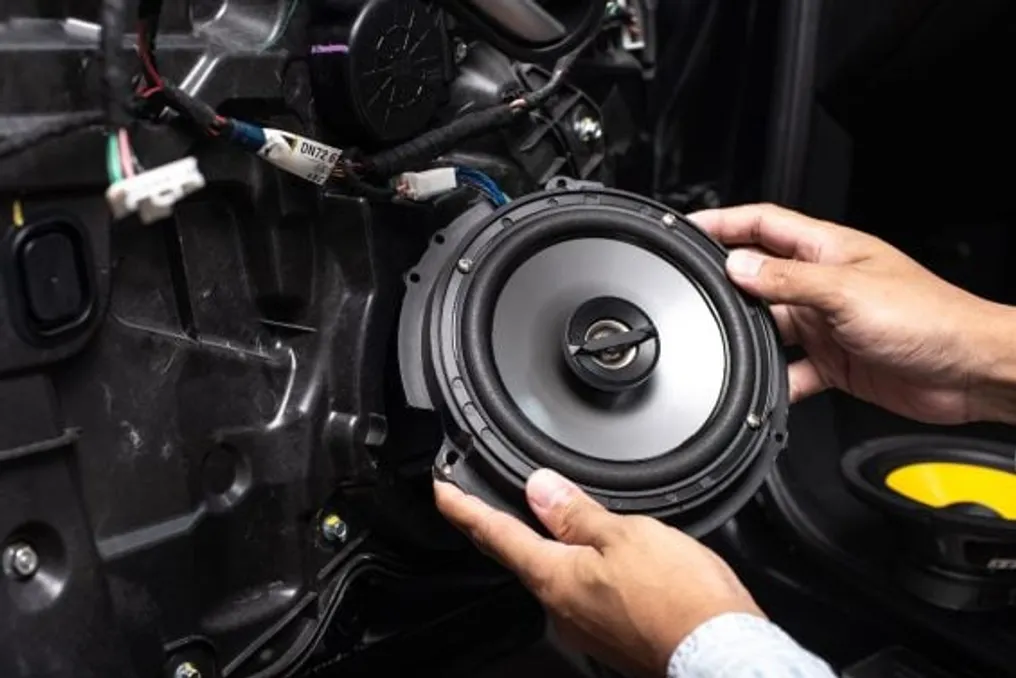
Automobile manufacturers have been using sound systems as a selling point in recent years. Vehicles priced over R$ 200 thousand often come equipped with subscriptions from renowned brands, and Chinese manufacturers compete to offer a greater number of speakers in the cabin.
Current cars incorporate audio system-related technologies, such as active noise cancellation and engine sound simulations. The system has transcended the function of a mere radio and speakers, being fully integrated into the vehicle's electronic architecture, even emitting turn signal sounds through the speakers.
Although these features are impressive in technical specifications, audiophiles generally are not satisfied with factory systems, keeping the movement alive in specialized automotive sound workshops.
Analysis of modifications and challenges
Marcello Franco Figueiredo, an automotive sound specialist and owner of Audio Design, reported that the most sought-after changes by owners of new vehicles include replacing speakers with high-performance components, acoustic treatment, and adding amplifiers, audio processors, and subwoofers.
For Marcello, the popularity of branded sound systems has not changed the workflow in his shop. He observes that these factory projects use standard speakers, and the branding is merely a certification. Frequent clients include owners of Porsche with Bose systems and Stellantis line vehicles equipped with Harman Kardon.
The arrival of various Chinese brands in Brazil in recent years has brought different electronic architectures, parts fitting standards, and other details that impact the accessories market.
When receiving a new car, Marcello takes time to study the model, evaluating what can be installed and what the multimedia center allows to offer.
Limitations imposed by embedded technology
As mentioned, modern cars use the sound system for additional purposes. In more sophisticated models, active noise cancellation is present, a feature that uses counter-frequencies to block external noises in the cabin.
Marcello Franco Figueiredo points out that this functionality can make sound system modifications unfeasible. He cited the Volvo XC60 T8 as an example, where replacing the original speakers is impossible due to active noise cancellation. Furthermore, some units use the sound system to reproduce engine roar simulations.
Figueiredo warns that increasing speaker size and power can generate unbearable noise, preventing the desired installation. While it is possible to deactivate this system in BMW cars, it does not have this option in Mercedes-Benz.
Considerations regarding electric vehicles
Electric cars share the 12-volt battery with combustion models, although the latter does not need to start an engine, it provides energy for accessories and the sound system. When seeking a more powerful sound, the installer must check the alternator's capacity to ensure battery recharge. In certain projects, it becomes necessary to use a more robust battery or alternator to operate amplifiers and other equipment without problems.
In electric vehicles, the battery is recharged by an inverter. Marcello Franco Figueiredo mentioned not having obtained data on the recharge power of this system, which is why he started refusing clients with BYD Seal and Porsche Taycan to prevent complications.
The specialist informed that the BYD Seal uses a 13 Ah battery, which prevents the installation of an amplifier, contrasting with a Fiat Mobi that has a 60 Ah battery. Therefore, contemporary cars demand greater caution when making interventions in the sound system; anyone planning such a change should consult a specialist to develop the project carefully.