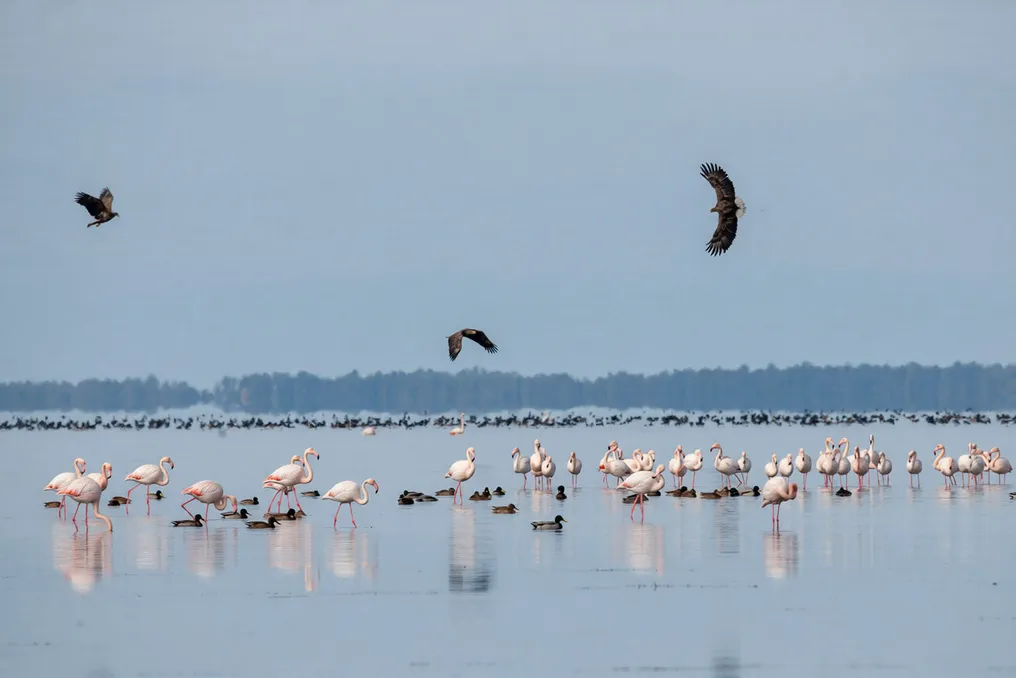
Migratory Bird Day serves as an occasion to highlight the critical role these birds play in maintaining ecosystem balance and the necessity of protecting their habitats. These tireless travelers cover thousands of kilometers annually for survival, yet they face growing threats, including wetland drainage, habitat destruction, illegal hunting, and climate change.
This global holiday aims to raise awareness about the importance of conserving migratory birds and their habitats. It was first established in 2006 by the initiative of the Secretariat of the Agreement on the Conservation of African-Eurasian Waterbirds (AEWA) and the Secretariat of the Convention on Migratory Species of Wild Animals (CMS) with support from the United Nations.
The celebration is intended to draw public attention to threats such as environmental pollution, habitat destruction, and illegal hunting, while also emphasizing the need for international cooperation to protect migratory birds.
Migratory Bird Day is observed annually on the second Saturday of May and the second Saturday of October, coinciding with the main migration seasons for birds in the Northern Hemisphere. In 2026, this date falls on May 9th and October 10th.
This year's theme, 'Every Bird Matters – Your Observations Matter!', emphasizes the role of citizen science and public participation in conserving migratory birds. This initiative underscores the value of field observations made by birdwatchers, researchers, local communities, and nature enthusiasts to understand migration routes, monitor population trends, and identify threats affecting various species.
Iran plays a particularly important role in the conservation of migratory birds due to its geographical location in West Asia and its position along the seasonal migration routes of many species. The wetlands, lakes, coasts, and other natural habitats of this country serve as stopover, feeding, resting, and wintering sites for a large number of waterfowl and coastal birds throughout the year.
The wetlands of Anzali, Miankaleh, Ghori Gol, and Shadehgan, along with the water bodies in the Urmia Lake basin, are among the areas where continuous monitoring can provide valuable information on species occurrence, relative abundance, arrival and departure dates, and seasonal population changes.
Recording observation dates, bird counts, geographic coordinates, habitat condition, and signs of threats helps improve ecological assessment, especially when data is collected using standardized methods over a long period. Such records facilitate the comparison of results over time and the identification of ecological changes. In this context, public participation in documenting bird sightings can complement professional national bird counting and monitoring programs.
The Migratory Bird Day theme, 'Every Bird Matters – Your Observations Matter!', reminds us that effective conservation requires not only expertise and planning but also informed public involvement and the transformation of individual observations into reliable, usable data. Every accurate observation can help reveal a broader picture of the status of migratory birds and the vital routes they depend on—a picture necessary for protecting this shared natural heritage.