The Department of Environment (DOE) is developing national programs for the conservation of priority reptile and amphibian species. These programs focus on implementing advanced monitoring methods, strengthening local community involvement, and providing continuous specialist training.
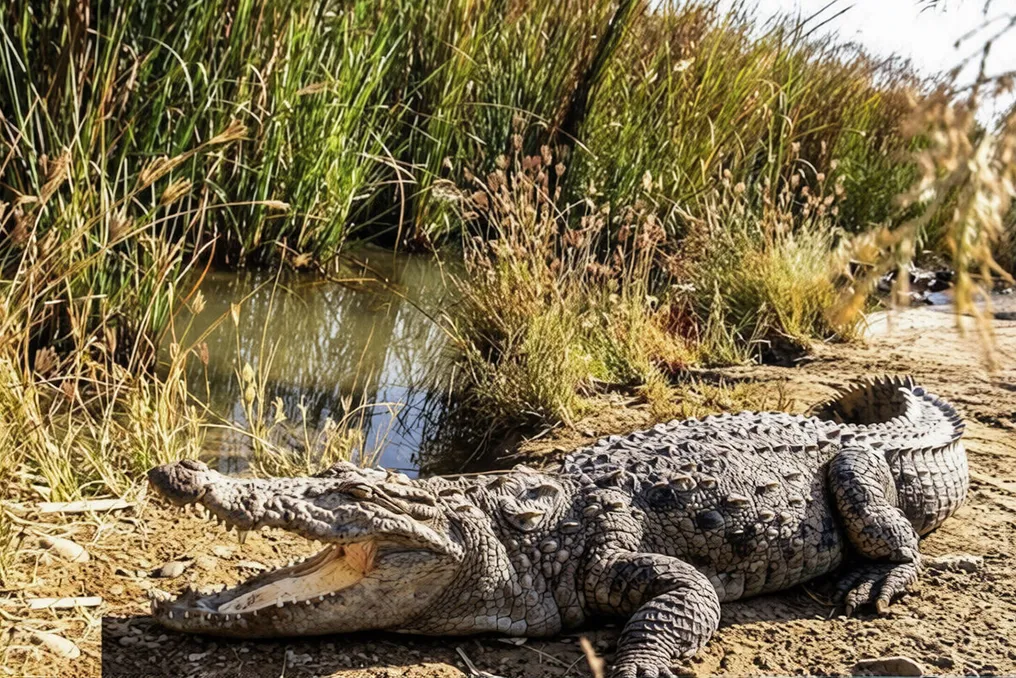
According to Peyman Ashouri, a DOE employee, the plan covers species such as salamanders, swamp crocodiles, spiked vipers, and Talysh frogs, utilizing new approaches to census, monitoring, and conservation measures.
Razi University in Kerman province has already used artificial intelligence (AI) to assess the population of the yellow-spotted salamander. Furthermore, a count of swamp crocodiles is scheduled to take place from February 20 to May 21.
A DOE employee detailed the measures taken to address human-wildlife conflict issues. A project is currently underway aimed at reducing threats, minimizing collisions, and restoring habitats for the Lorestan newt and the Talysh frog. These initiatives include installing informational signs, creating leaflets and posters to raise wildlife awareness, and organizing educational events for tourists and local residents, as well as cleaning up waste from natural areas.
Regarding spiked vipers, Ashouri stated that the DOE is preparing a conservation plan to protect this species, which will be implemented shortly.
DOE employs a comprehensive set of measures—environmental, scientific, legal, and operational—to enhance the protection of wild species and their habitats nationwide. This approach is targeted and strategic, with priorities determined by scientific research and data.
According to Peyman Valizadeh, another DOE employee, the Department emphasizes a more scientific approach when developing and implementing environmental protection measures tailored to the unique needs of each species and habitat.
Plans have been prepared for the conservation of 25 endangered species, and another thirteen plans are under development. These documents establish a clear framework for species conservation, defining their status, main threats, conservation priorities, necessary actions, and evaluation indicators.
However, the implementation of these measures at national and provincial levels faces difficulties. One of the most serious problems is securing funding to execute the plans. Another issue is the development of specialized competencies for species conservation. A shortage of trained, qualified personnel hinders the effective application of environmental action plans.
In response, tasks have been put on the agenda regarding the training of specialized personnel, the development of expert potential in provinces, and the strengthening of headquarters' scientific and technical capabilities.
Concerning the fight against illegal wildlife trade, Valizadeh noted that to improve coordination between responsible agencies, the DOE established a national committee to combat illegal wildlife trade. The committee has already held three expert meetings. Additionally, the development of a comprehensive plan to counter and prevent this trade is concluding, and a comprehensive program for this purpose is being prepared.
To manage human-wildlife conflicts, efforts have shifted from a reactive stance to identifying critical hotspots, understanding the causes of conflicts, and implementing preventive measures. DOE has identified certain conflict hotspots for species such as leopards, brown bears, and herbivores. Data collection on brown bears is currently underway in Hormozgan and Kerman provinces.
Moreover, Valizadeh added that the DOE has signed agreements with the National Environmental Fund and the Agricultural Insurance Fund to support local communities and compensate for their losses.
He also stressed that accurate information on species distribution, habitats, migration routes, and ecological corridors makes conservation efforts more effective.
In this context, DOE, in collaboration with Shiraz University, conducted research to create detailed distribution maps that will help determine migratory and dispersal corridors for herbivores and predators. These maps will serve as a management tool for habitat conservation, preventing and regulating human-wildlife conflicts, determining conservation priorities, and properly utilizing intelligent monitoring systems and environmental programs, thereby providing a more precise basis for conservation decision-making.
The employee concluded that DOE will ensure funding, train qualified personnel, and promote intersectoral cooperation to create an integrated system that utilizes scientific information, field data, local community capacity, and executive body potential to develop and implement conservation plans for each species and habitat.