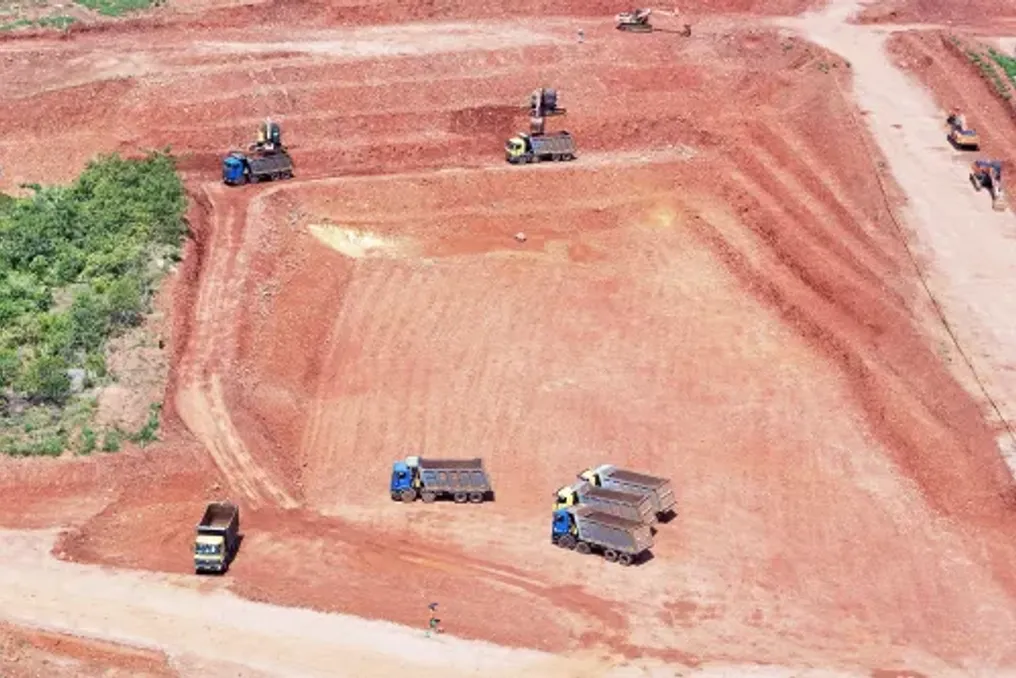
Residents of Visakhapatnam, India, often called Vizag, are expressing disagreement with the construction of a massive Google data center. The protests go beyond a simple opposition to artificial intelligence, as local residents fear the project's negative impact on the environment and their daily lives.
Earthworks are underway on the southeastern coast for the construction of Google's largest data center outside the US, a $15 billion (₹248 billion) project. This facility in Andhra Pradesh, in the port city of Vizag, is actively supported by India as a key element of its technological aspirations.
However, many citizens are concerned that this data center, one of several major tech facilities in Vizag, will place excessive strain on water and energy resources, damage the ecology, and provide an insufficient number of jobs.
Farmer Chandala Sadamma told AFP that it was difficult to see traces of red earth where her mango and cedar trees once grew. Despite being paid over $82,000 (₹1.35 million) for a two-acre plot (0.8 hectares), the deal left a bitter taste. 'Some company came and took the land without showing any respect, and we agreed,' shared the 50-year-old woman.
Vizag is an entry point for underwater internet cables connecting the country to Singapore, making the location of this 600-acre site—more than 340 football fields—ideal for India. Alexander Smith, Google's Head of Infrastructure and Energy for the Asia-Pacific region, stated that 'investments in the AI hub are a multi-decade commitment' that carries an 'obligation to be a good neighbor.' He emphasized that 'the watershed, power grid, and communities around our facilities should be in better condition because of our presence here.'
The Andhra Pradesh government informed AFP that in addition to financial compensation, new housing is being built and provided to people who lived on the territory. Local activists are demanding a moratorium on the construction of new data centers across the state until independent social and environmental impact assessments are published.
Gutta Rohit, a local Human Rights campaign member, told AFP at a meeting of about 150 people that 'the United States has a huge coastline... They could just build it there.' He questioned, 'Why are they coming here?'
Protests against data centers, including those in the US, are often linked to the use of local water resources for cooling hot servers. Google claims that the Indian center will use 'advanced' air cooling technology, while the state plans six nuclear power plants with a capacity of 1.2 gigawatts in response to growing energy demand. Nevertheless, concerns about water consumption persist, especially given the plans to turn Vizag into a technology megahub.
Shopkeeper Gubbala Ramanna noted that 'they say Google is established for the education and job opportunities of our children,' but added that 'we are already fighting water scarcity,' standing next to a dried-up well.
Land Prices
Google stated that its data center will generate $688 million in local economic activity annually and provide about 4,200 jobs during construction, with hundreds of specialized positions after launch in 2028. The Andhra Pradesh government also forecasts the creation of '188,000 direct and indirect jobs.' However, Rohit countered that the economic benefits may not reach the population from these warehouse-like facilities, stating, 'We need mass employment and labor-intensive industries, not capital-intensive industries.'
Google is not alone in this; a joint venture between Reliance Industries, Brookfield, and Digital Realty is investing $11 billion in another AI data center in Vizag. According to E. Ashok Kumar, head of the Visakhapatnam Real Estate Developers Confederation, land prices have risen by an average of 'more than 45 percent' since the announcement of the city's development plans.
Meanwhile, as AI usage accelerates, the world's most populous country has introduced incentives to attract large technology companies, including tax breaks. Although internet and app usage in India generates nearly one-fifth of global digital data, government data shows that India's share of global data center capacity is only about three percent. Andhra Pradesh Technology Minister Nara Lokesh spoke to AFP in February about investment agreements worth $175 billion covering 760 projects, pledging to 'implement these projects at a pace the country has never seen.' Lokesh also insisted that 'housing needs will always take priority over data centers,' according to his statement, emphasizing: 'The needs of our people for water will always come first.'
Visakhapatnam environmental activist E.A.S. Sarma, a former high-ranking government official who worked in the ministries of energy and finance, called for a water audit by an independent agency. He warned, 'Civilizations have disappeared due to water shortages.'