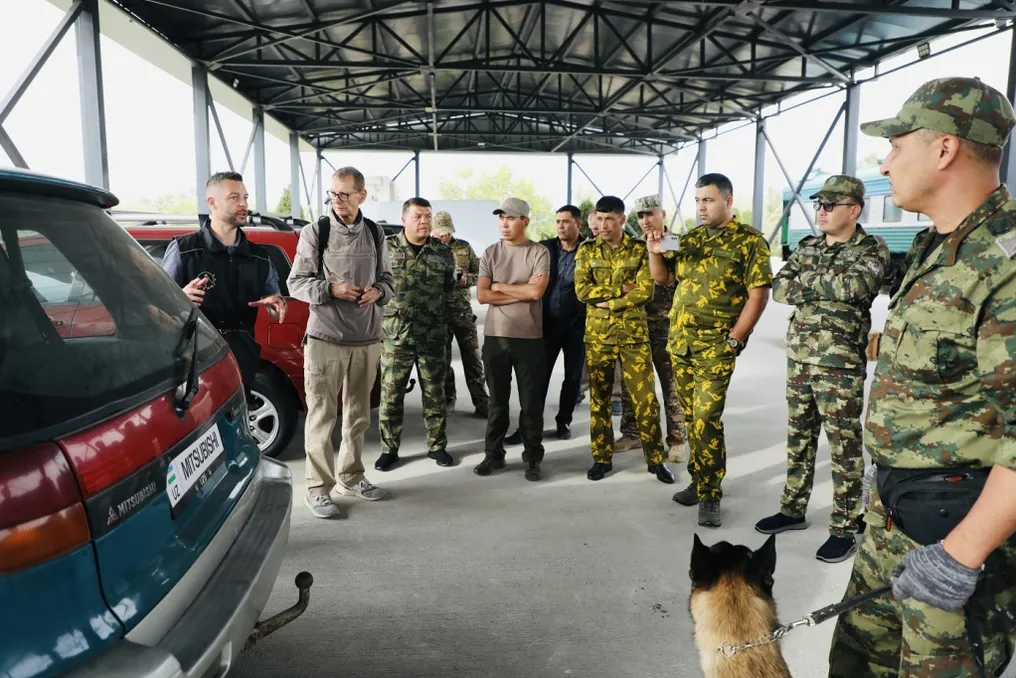
A five-day regional training course on the detection of explosives, ammunition, and weapons was held in Tashkent from October 5 to 9. The event was organized by the Organization for Security and Co-operation in Europe at the National Canine Center of the Customs Committee of Uzbekistan.
Fifteen employees from the border and customs services of Kazakhstan, Kyrgyzstan, Tajikistan, Turkmenistan, and Uzbekistan participated in the training. The goal of the intensive course was to enhance practical skills in identifying illegally transported firearms and explosives, as well as to standardize evaluation criteria for the work of canine units in Central Asian countries and improve instructor training.
The practical part of the training included studying methods for analyzing air currents, ways to eliminate the influence of extraneous odors, and inspecting various objects such as vehicles and crowded areas. Additionally, separate sessions were conducted concerning maintaining operational readiness and the well-being of service dogs.
Significant attention was paid to strengthening interaction between various agencies and information exchange. Participants were able to agree upon unified standard operating procedures, which should increase the effectiveness of preventing the illegal movement of prohibited items across borders.
The Director of the Customs Agency's National Canine Center, Colonel Farrukh Kakhhorov, emphasized the importance of further joint training events and the development of cooperation between regional agencies. The OSCE Project Coordinator in Uzbekistan, Ambassador Antti Karttunen, noted that Uzbek instructors shared experience gained in Great Britain, which will allow the benefits of this training to extend throughout the Central Asian region.
This training was conducted as part of an OSCE non-budgetary project aimed at strengthening capabilities to counter cross-border threats, funded by Germany, Sweden, the United States of America, Finland, and France.