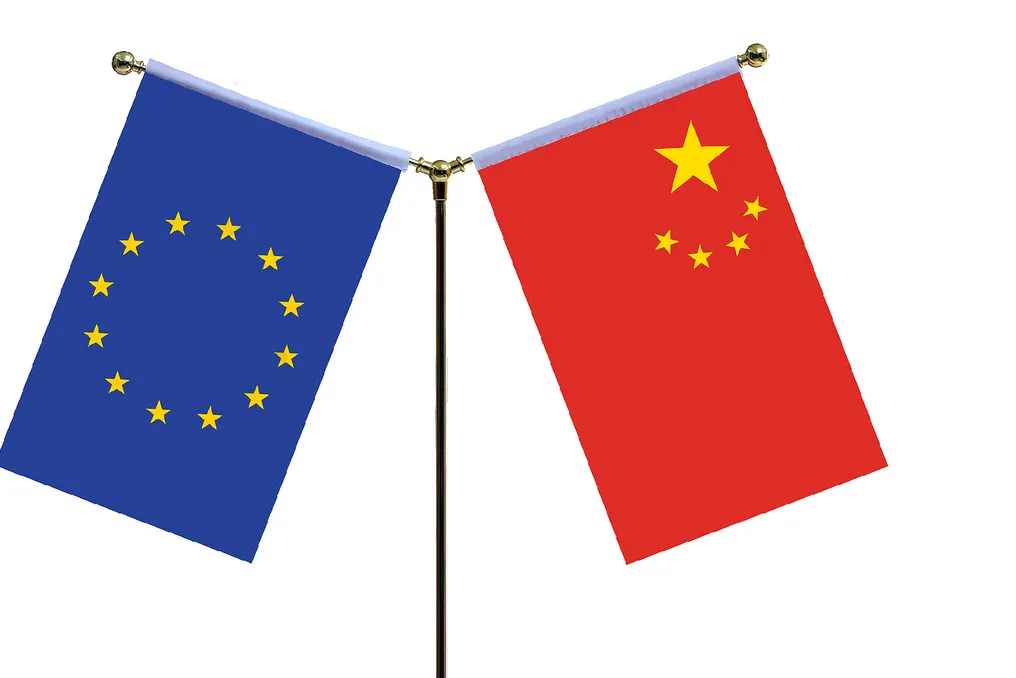
A Chinese trade expert told CGTN on Saturday that China and the European Union are capable of deepening economic and trade interaction by resolving their differences through negotiations and providing businesses with a more stable and predictable environment.
These comments came after the second meeting of the China-EU trade and investment consultation mechanism, which took place in Beijing from Thursday to Friday. The co-chairs of the meeting were China's Minister of Commerce Wang Wentao and European Commissioner for Trade and Economic Security Maroš Šefčovič. In a joint statement published on Friday, it was noted that both sides agreed to maintain stable bilateral economic and trade relations and make them more balanced.
Zhou Mi, a senior researcher at the China Academy of International Trade and Economic Cooperation, noted that the statement clearly showed the mutual agreement of the parties to improve the negotiation process. He emphasized that China and the EU possess complementary advantages in markets, innovation, and business, and that dialogue will help the parties better cope with uncertainty and restrictions.
According to Zhou, political stability and predictability are critically important for stimulating investment and expanding cooperation. He added that businesses are ready to strengthen ties if they are confident that the cooperation will bring them new opportunities, as supply chains and industrial chains are built on trust and collaboration.
The joint statement identified sixteen areas of agreement, including balancing trade and investment, export control, intellectual property rights, and WTO reform. The parties also agreed to continue exploring the possibility of reducing tariffs on certain goods within WTO rules and reached an agreement on the trade of hybrid vehicles.
Zhou believes that China and the EU can contribute to restoring confidence in global trade governance amid growing uncertainty and protectionism. He stressed that both sides are strong proponents of globalization and call for increased support for the multilateral trading system, including improving dispute resolution mechanisms and working on new issues such as e-commerce.
Furthermore, the parties identified potential for cooperation in artificial intelligence, the digital economy, and new energy sources. However, Zhou noted that turning this potential into real business and investment opportunities will partly depend on companies' confidence in political stability and the prospects of interaction.
China and the EU agreed to hold the next meeting under the trade and investment consultation mechanism in March 2027, and a ministerial-level video conference is scheduled for January. Both sides also agreed to maintain close contact and facilitate the early implementation of the agreements reached.