Musk criticizes Ambani supporters for hypocrisy regarding Starlink's entry into the Indian market
Read more
Business Standard
business-standard.com

Musk criticizes Ambani supporters for hypocrisy regarding Starlink's entry into the Indian market

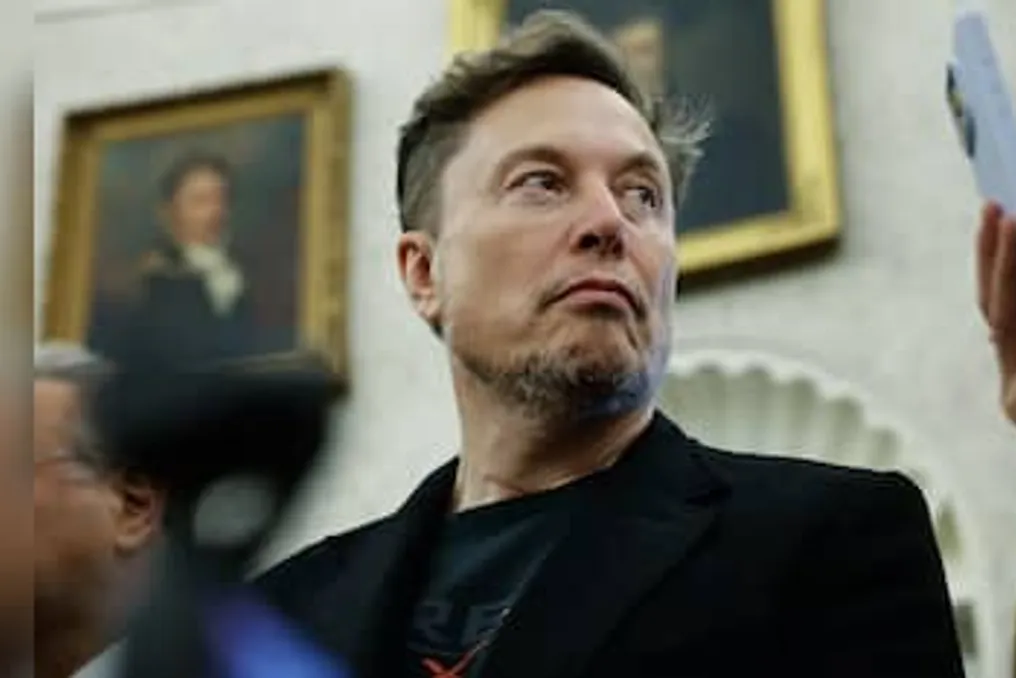
Elon Musk sharply criticized Mukesh Ambani on Sunday again, accusing the billionaire's supporters of 'absurd hypocrisy and hyperbole.' These supporters simultaneously claim that Musk's satellite internet service cannot compete with 'the stunningly low prices offered by Ambani's de facto monopoly in India,' while also stating that Starlink poses a serious competitive threat.

In a post on the social media platform X, Musk stated that competition from Starlink would benefit ordinary Indians by expanding consumer choice. He added that even if this could reduce Ambani's profits, 'he will not leave the market.' Musk also noted that if Starlink services prove too expensive in India, consumers won't buy them, which would force the company to make prices affordable.

The US tech trillionaire called the arguments of Ambani's internet supporters 'absurd.' He emphasized: 'On one hand, they say Starlink cannot compete with the stunningly low prices offered by Ambani's de facto monopoly in India, and yet, they actually claim that Starlink will be a strong competitor! This is absurd hypocrisy and hyperbole.'

Musk insisted that competition always benefits the average Indian citizen by providing more options. He continued that 'Ambani's profit will be lower, but he will not leave the market. And, obviously, if Starlink is too expensive in India, no one will buy it, so SpaceX must make pricing affordable.'

This week, Musk has repeatedly criticized Ambani, whose company is a major player in India's telecommunications market and is involved in the race for satellite communication services. On Saturday, he published screenshots of media reports claiming that the Reliance-funded firm helped promote Bharatiya Janata Party (BJP) campaigns on social media, and the Reliance-linked company made large political donations to the ruling party.

Musk's post on X contained an Al Jazeera report from 2022 titled 'How Reliance-funded firm promotes Bharatiya Janata Party campaigns on Facebook' and an archived Indian Express report from 2024 about Qwik Supply, which stated that the Reliance-linked firm donated 385 crore rupees to the BJP and 25 crore rupees to Shiv Sena through electoral bonds.

These statements came amid Musk's sharp criticism of Ambani over the delay in launching Starlink satellite broadband services in India. Reliance publicly did not respond to Musk's accusations, while the government stated that the country's authorization system for telecom and satellite services is 'fair and non-discriminatory,' and any suggestion of its selective application was 'unfounded and erroneous.'

Previously, Musk sarcastically addressed industrialist Mukesh Ambani in an X post, calling him 'Ambani Prime Minister,' and accusing him of trying to protect his monopoly. In this post, Musk asked whether Ambani would consider allowing his satellite internet service to compete in the country. He wrote: 'Dear Prime Minister Ambani, please accept my humble apologies for not realizing that you are the real boss of India. Naturally, you would prefer to maintain your monopolistic exploitation of the great Indian people, but could you still consider allowing Starlink to compete?'

He also mentioned that many areas in India, like in all countries, lack internet access, depriving children of educational opportunities and small businesses of the ability to sell their goods on the global market. Musk argued that Starlink would change their lives for the better.

Within minutes of this post late Friday, Musk published another, stating that Starlink has proven indispensable for saving lives during natural disasters worldwide when other communication systems failed. He added: 'Thus, you are also helping save men, women, and children across India.'

On Friday, Communications Minister Jyotiraditya Scindia stated that India does not permit monopolies in any sector. He clarified that despite the hype around one company, licenses for satellite communication have been granted to three players—including Starlink—and they can begin operations after individually meeting safety requirements and established milestones.

Scindia emphasized that the Department of Telecommunications is technologically neutral, and its role is to provide every customer with a set of services, allowing the consumer to independently choose the preferred service and company within that set.

The minister reported that three entities—Reliance Jio's satellite initiative, Jio Satcom, and Bharti-supported Eutelsat OneWeb—have already received licenses, and Amazon's Project Kuiper has expressed interest and must go through the established procedure. He noted that although much talk is about one company, three have received licenses.

Scindia also informed that TRAI and the telecom department are close to making a final decision on the pricing regime for satellite spectrum. Criticizing Congress amidst exchanges between Rahul Gandhi and Musk on X, the minister also stated: 'As for Congress... I don't think they themselves know where they are going—left or right.'
Similar stories

High-tech companies discuss expanding ties at the III Forum on ICT of Russia and Iran
Read more
www.tehrantimes.com

High-tech companies discuss expanding ties at the III Forum on ICT of Russia and Iran

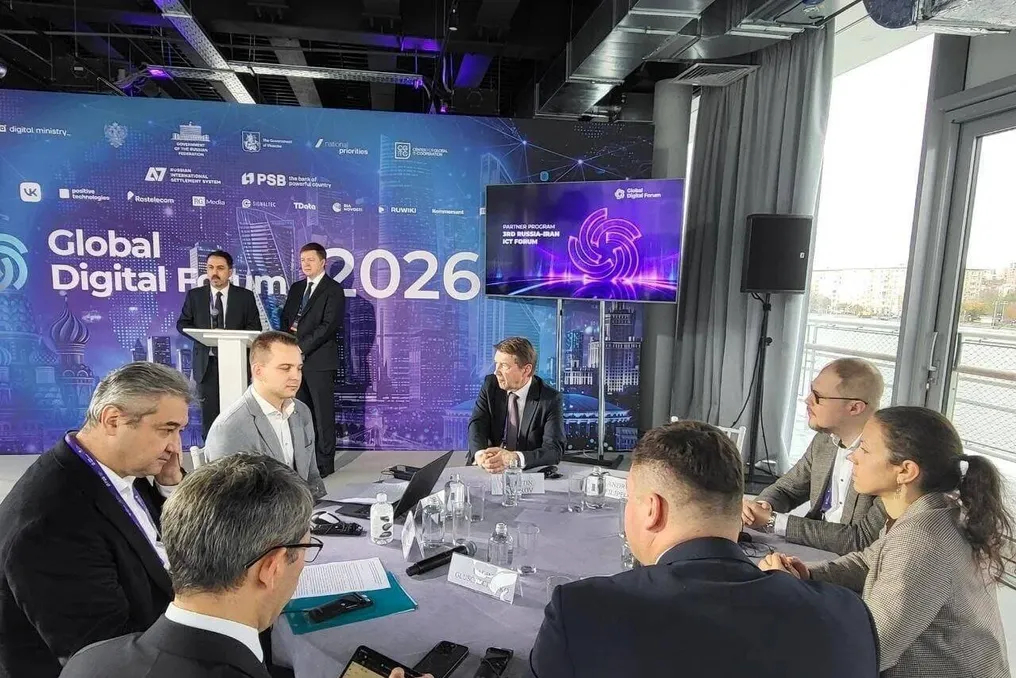
Leading Iranian and Russian companies discussed ways to strengthen bilateral cooperation in advanced technologies at the third Forum on Information and Communication Technologies (ICT) between Russia and Iran.

The event gathered representatives from state structures, diplomats, and private sector figures from both countries. Participants met as part of the second Global Digital Forum, which took place in Moscow from October 8 to 10, according to IRNA.

During the meeting, Alexander Shoytov, Deputy Minister of Digital Development, Communications, and Mass Media of Russia, noted that the participation of Iranian companies in the Global Digital Forum provided a valuable opportunity for information exchange and establishing new partnerships. He emphasized the significant potential of Iran and Russia for expanding bilateral interaction, especially in the fields of artificial intelligence and cybersecurity.

Shoytov also confirmed Russia's readiness to deepen bilateral relations and develop joint infrastructure in the ICT sector. For his part, the Iranian Ambassador to Russia, Kazem Jalali, highlighted the importance of developing a strategic partnership between Iran and Russia to expand digital exchange within the framework of state regulation. He added that improving ties contributes to strengthening the country's ability to participate in regional and global markets.

Highlighting the experience and knowledge of Iranian technology firms in localizing IT infrastructure equipment, Russian companies can establish joint ventures with reliable partners in Iran, gaining access to the country's IT services and artificial intelligence services market. Furthermore, representatives of high-tech companies from Iran and Russia demonstrated their latest achievements and presented comprehensive plans and operational proposals for advancing cooperation in advanced technologies.

Key aspects of the Forum included the exchange of best practices and technological solutions, holding B2B meetings, expanding business contacts, and seeking opportunities for joint projects. Special attention was paid to practical mechanisms allowing Russian and Iranian companies to enter new markets and cooperate with partners from third countries.

The second Global Digital Forum was held at the 'Mechta' multifunctional complex in Gorky Park. Approximately 760 delegates from 120 countries participated, including deputy prime ministers, ministers of digital development, high-ranking government officials, diplomats, IT company leaders, experts, researchers, and representatives of international organizations from Africa, Asia, the Persian Gulf, Europe, and Latin America. Sessions were dedicated to artificial intelligence, digital sovereignty, cybersecurity, digital infrastructure, and global cooperation. Participants reviewed global trends in digital transformation, the integration of modern products into national digital systems, and prospects for interstate cooperation in the technological sphere.

Uzbekistan is privatizing assets worth trillions of soms, reducing the state's share in the economy
Read more
nuz.uz

Uzbekistan is privatizing assets worth trillions of soms, reducing the state's share in the economy

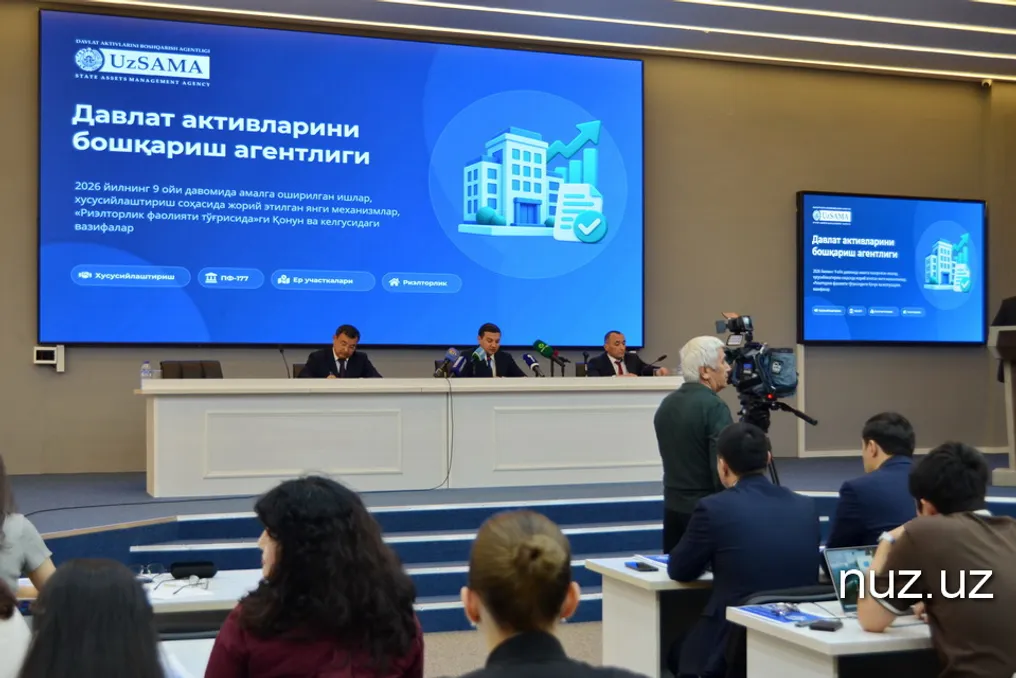
A press conference was held in Tashkent by the Agency for Management of State Assets of the Republic of Uzbekistan, where employees presented a report on their work for 2026. The main focus of the reports was the promotion of the private sector and the implementation of the privatization process of state assets.

These steps are being taken in accordance with Decree of the President of the Republic of Uzbekistan No. UP-177, which was approved on August 28, 2026, and came into effect on September 8. According to the provisions of this Decree, the sale of over 1200 real estate objects, 8 thousand hectares of land, and state shares in the authorized capital of 84 companies is planned by the end of the current year. The total expected revenue from the sale of these assets is estimated at 14 trillion soms.

An example of the ongoing privatization is the 'Uzbekistan GTL' gas chemical plant, which, as stated in the Decree, is scheduled to be put up for auction in the second half of 2026. Sohibjon Murodov reported that although the sale may occur later than the scheduled date, preparatory work for holding the auctions is already underway.

Parallel to the privatization process, reverse trends were also observed. This month, licenses of the oil and gas company 'Sanoat Energetika Guruhi' were annulled, and the Fergana Oil Refinery, previously transferred to this company, was returned to state ownership. The reason for this decision was the company's financial problems, which led to its failure to fulfill its obligations.

According to the Agency, in 2026, more than 36.5 thousand land plots were privatized, covering a total area of 3509 hectares. The realization of these plots generated approximately 3 thousand hectares of revenue totaling 4.7 trillion soms.

Furthermore, in accordance with the new Law of the Republic of Uzbekistan No. ZRU-1163 'On Real Estate Activities,' signed on August 7, 2026, the Agency for Management of State Assets has assumed responsibility for regulating and developing the real estate sphere. Among the main innovations presented at the conference is the introduction of enhanced standards for real estate services through increased professional requirements and the introduction of qualification certification, as well as the creation of a unified open database of realtors and real estate organizations to increase transparency and ease of operation.

Discussion on the feasibility of purchasing the iPhone Duo for around 50,000 Rands
Read more
iol.co.za

Discussion on the feasibility of purchasing the iPhone Duo for around 50,000 Rands

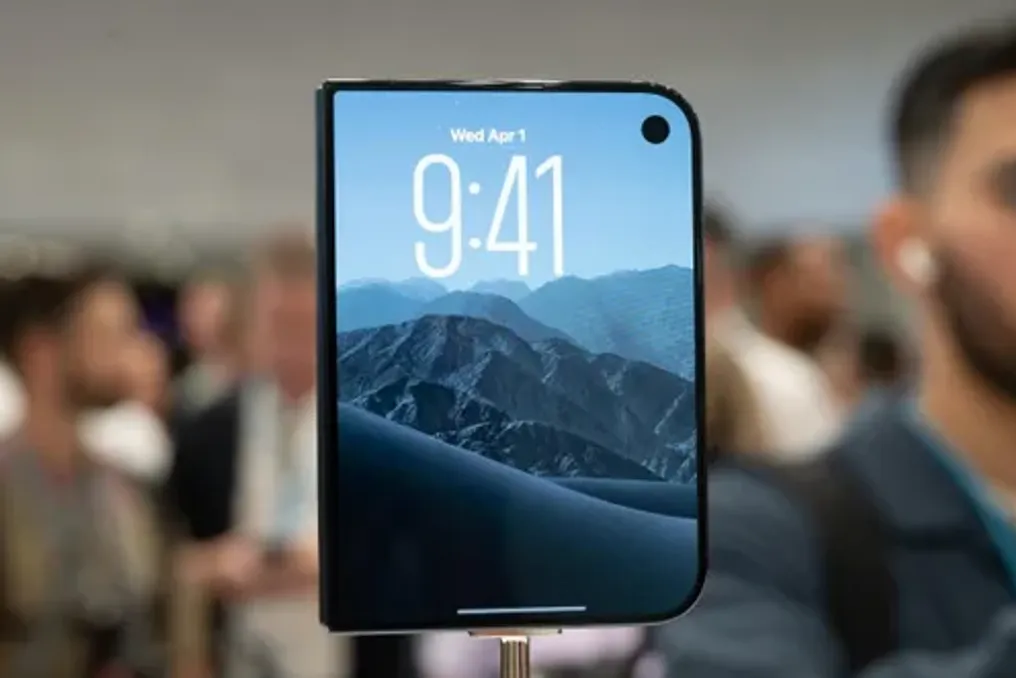
Despite the high quality demonstrated by the iPhone Duo, the question arises about the advisability of spending an amount approaching 50,000 Rands on it. Rumor has it that the starting price of the device could reach this amount, making its purchase a difficult task amidst existing foldable competitors.

The iPhone Duo is likely to take leading positions in the foldable device market immediately after its release on October 16th. However, the main controversial point remains open: is it truly worth that much money? The main issue is that, according to rumors, the base model with 256 GB will cost no less than 50,000 Rands, which is a serious drawback at such a price level.

Exact local prices will be confirmed on the day of the official pre-order launch on October 16th. For comparison, the iPhone 18 Pro Max with 1 TB of storage is available for 45,699 Rands and features a significantly more advanced camera system.

The primary reason for such a high cost is novelty: the Duo represents a completely new form factor and marks Apple's long-awaited entry into the foldable gadget market.

As an alternative, the Samsung Galaxy Z Fold 8 starts from 40,999 Rands for the 256 GB version, which is a much more acceptable price for a niche foldable device. Considering that Samsung has been perfecting folding technology since 2019, this seems like a more reliable investment than betting on a first-generation product like the Duo.

Meanwhile, the Huawei Mate X7 is sold for 39,999 Rands while offering double the storage capacity—512 GB. When comparing the base model of the Duo with the most premium competitor offerings, comparable price categories are found. For instance, the Samsung Galaxy Z Fold 8 Ultra with 512 GB costs 50,999 Rands.

It is no secret that Apple often takes years to implement features that Android users have enjoyed for generations. Nevertheless, this patient and thoughtful approach is at the core of Apple's strategy. As a luxury brand, the company prefers to meticulously refine its hardware rather than rush the release of cutting-edge technology just to be first.

The philosophy of refined engineering is evident in the iPhone Duo. Observing the smooth animation transition of the software as the display expands from a standard smartphone interface into a canvas resembling an iPad Mini demonstrates a level of polish unmatched by other foldable devices on the market.

Naturally, such a high level of premium execution comes with a significant price tag. Ultimately, if money is not an absolute issue, the iPhone Duo remains a complex choice for the average buyer, at least in the author's opinion.

Popular