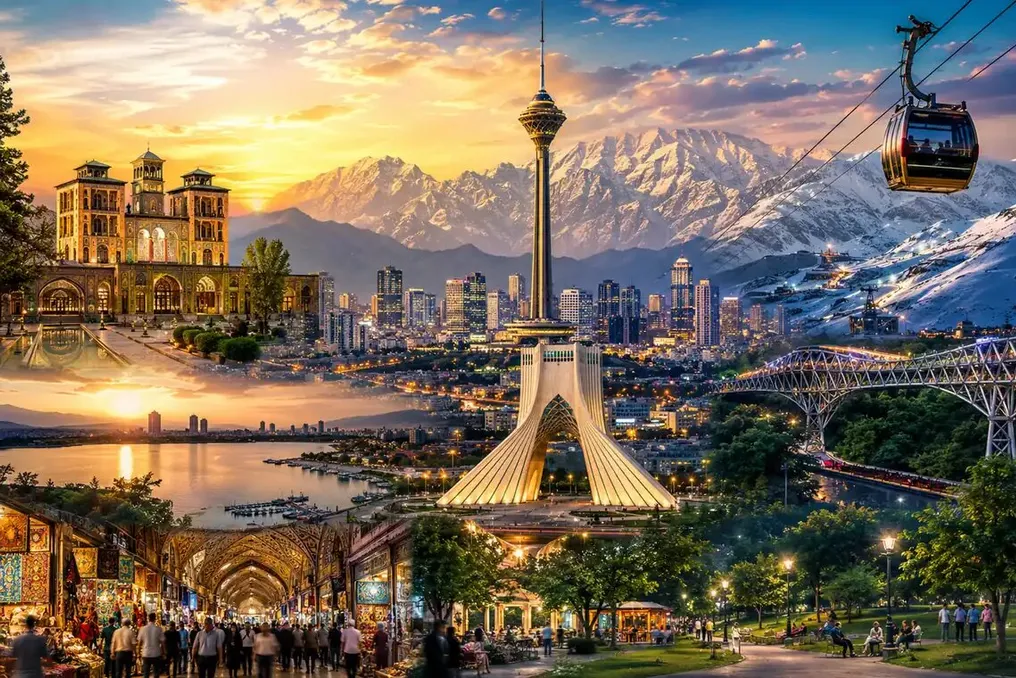
A member of the Tehran City Council noted that the main problem in the capital's tourism industry is not a lack of infrastructure, but fragmented decision-making and limited public awareness of the city's existing attractions.
Seyed Ahmad Alavi, head of the Tourism and Cultural Heritage Committee of the Tehran City Council, emphasized that better coordination between municipal structures and more active promotion of the city's historical, recreational, and tourist sites are crucial for developing domestic tourism.
According to Alavi, responsibility for tourism and recreation facilities was distributed among several municipal organizations, which led to a division of decision-making processes and a lack of comprehensive planning. To solve this issue, the council initiated the creation of a municipal tourism company, a proposal that was approved after years of discussions.
Previously, various structures oversaw different aspects of tourism and recreation, including amusement parks, cultural sites, and urban environment improvement projects. Alavi believes that a unified system could help synchronize their activities and utilize existing assets more effectively.
He also pointed to a significant increase in the budget allocated for guided tours and sightseeing buses, adding that additional funding is possible if the proposed tourism company presents viable plans that can be integrated into the municipal budget.
Another priority has been the revitalization of abandoned recreational areas. Among the sites planned for restoration is the Basij amusement park, which had remained closed for about six years despite previous investments. Furthermore, during the current term of the council, the Abbasabad cultural and recreational complex amusement park was completed, and plans were being developed to create six more amusement parks.
Alavi reported that the city is also expanding the services of tour buses and creating special routes connecting historical monuments and places related to Tehran's cultural identity. These services will allow residents to discover attractions they might otherwise miss.
Acknowledging the complexity of reorganizing the sector due to competing interests of municipal bodies, he stated that the council's goal is to improve the coordination, accessibility, and promotion of already existing sites, rather than solely building new infrastructure. The broader objective, he said, is to enable a larger number of residents to benefit from Tehran's historical, cultural, and recreational resources.