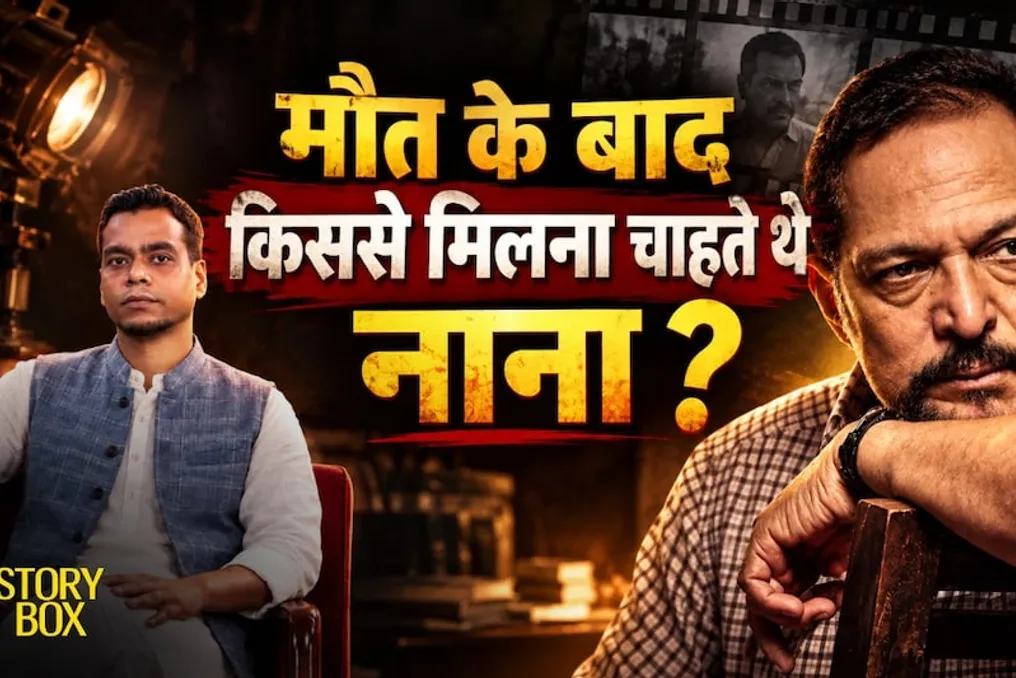
Nana Patekar shared that he had two mentors in his life who taught him the most important things: hunger and humiliation. He emphasized that these were not literary metaphors, but real life experiences. He recounted how the taste of the last crumb after hunger helped him understand the value of life, and humiliation showed him what self-respect was.
This man, despite achieving everything, never forgot the bitter and dark days of poverty. He loved sweets very much, but in those times, he could never afford them. When he became wealthy, he decided to stop eating sweets so he would always remember what it was like not to have what he desired, even when it was right before his eyes.
He also kept twelve bundles of dry firewood until his death so that after the funeral, people could perform a smoke ritual, and the tears they shed could be interpreted as mourning for the deceased, rather than tears from the smoke. He said he did not want to die in delusion.
This story belongs to an actor who learned about life through adversity and who did not need acting school. This is the story of Vishvanath Gajanan Patekar, or Nana Patekar.
When the actor screamed, interrupting his breath on screen, people stopped to watch him. Nana Patekar often got angry, and in interviews, he explained that this anger was likely related to the behavior he experienced in childhood. Anger and anxiety in his roles manifested not only in dialogue but also in his eyes and body language. For example, in the role in the film 'Ankush', he portrayed an unemployed young man struggling against the system and social injustice. This anger reflected the experiences of a boy aged 13-14.
Around 1964, a boy named Vishwanath lived in Mumbai, aged thirteen to fourteen. His father owned a small textile printing business. Initially, everything went well; there was a decent and respectable life, but one day someone fraudulently robbed Nana Patekar's father, and everything changed. The house, business, and property were lost. Thirteen-year-old Vishwanath ended up on the streets. However, he did not give up his studies: he went to school in the morning and painted posters for films in the evening. The distance from his workplace to home was eight kilometers, and he covered this distance on foot, walking 16 kilometers a day. For this work, he received thirty-five rupees per month. Since then, Nana constantly worked, climbing the steps of fame while carrying the bitterness of his childhood.
The beginning of his fame came in the 1970s when the renowned Marathi playwright Vijay Tendulkar staged the play 'Pahije Jatiche', in which he acted. He was noticed by director Jabbar Patel, who was very impressed by his performance. This was the first time Nana Patekar attracted attention. Patel was so amazed by his acting skills that he gave him the opportunity to work in his film. Then, in 1978, the film 'Gamnan' was released. The boy who used to paint movie posters was now himself in front of the camera.
However, Nana Patekar's story is not one of instant success. It took him time to find his identity. After this, films such as 'Salaam Bombay', 'Parinda', and 'Krantivir' were released. For the film 'Parinda', he received a national award, and for 'Krantivir', the best actor of the nation award.
Nana's main characteristic was that he did not allow himself to be limited to one type of character. In 'Parinda', there was darkness, and in 'Welcome', there was the rise of Shetty. In the voice of 'Krantivir', anger resonated, and in that same voice, the comedic timing of existence was present. If one were to describe Nana Patekar's story in one sentence, perhaps he showed more honesty towards the role than towards acting itself, and never compromised for money.
There is one instance where Nana Patekar knew Smith Patil. Smith Patil said that Ravi Chopra was shooting the film 'Aaj Ki Awaaz', based on the unemployment problems of that time. He met Ravi. Ravi saw him and offered him a role, to which Nana flared up and scolded Ravi in front of everyone. This role was that of a rapist. He believed that a great person is one who does not break in difficult times. If you are in a good mood, in abundance, you easily refuse something unpleasant, but true value is determined when you are in a difficult situation: when there is no job, your pocket is empty, hunger rumbles in your stomach, and there is no hope in the distance, and you refuse a job that you believe does not meet your standards.