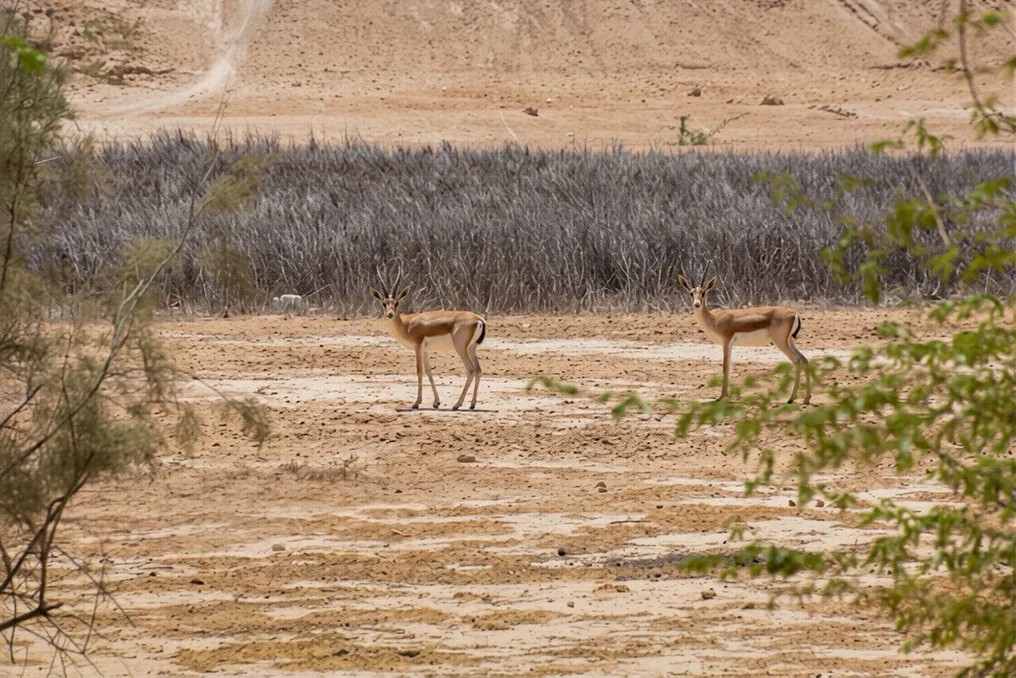
Iran is preparing a comprehensive report on the environmental harm caused by US attacks on Hargh Island, located in the southern province of Bushehr. The goal of preparing this document is to utilize legal and international channels, including the United Nations, to address this issue.
Abdolrahman Moradzadeh, Director General of the Bushehr Province Environmental Department, emphasized that protecting the natural habitats and wildlife species of the island is part of the responsibility to preserve the nation's assets. He added that documenting the damage inflicted could play an important role in advancing the issue through international and legal mechanisms.
Following the aggression by the US and Israel against Iran on Hargh Island, the death of at least 25 deer was confirmed, but environmental officials warn that the actual damage is likely much higher. These animal deaths demonstrate one of the most obvious consequences of war for Iranian fauna, highlighting the often-ignored ecological consequences of armed conflicts beyond human casualties.
Masoumeh Safaei, Deputy Director of Iran's Wildlife Protection and Management Authority, reported that recent reports indicate the death of no less than 25 deer on Hargh Island. She specified that this figure only covers areas outside military zones, and the real number of victims exceeds what has been registered so far.
Environmental experts warn that the impact of military actions on wildlife extends far beyond direct mortality. Explosions, habitat destruction, and prolonged exposure to loud noise can leave long-term physical and psychological trauma in animal populations. According to Safaei, severe stress caused by nearby explosions also affected captive animals.
Shina Ansari, Head of the Department of Environment (DOE), noted that remaining silent in the face of environmental destruction caused by military actors is tantamount to accepting a threat that will eventually affect everyone. She stated that the environment is the first silent victim of war and the last to recover from its consequences. In her words, nature does not recognize the end of armed conflict, and environmental destruction can undermine human health, food security, water resources, and biodiversity for decades after a ceasefire.
These remarks were made by Ansari during the ninth session of the Committee on Environment and Development (CED9), held from July 1 to 3 in Bangkok, Thailand. Discussing cross-border environmental issues such as climate change, air and sea pollution, loss of biodiversity, land degradation, dust and sandstorms, and waste management problems, Ansari stressed that environmental destruction resulting from war and military aggression represents the most serious and inhumane damage to the environment. She noted that the consequences of these brutal attacks pose a deep threat to the entire planet.
Ansari stated: 'When war targets the environment, it is not just one nation that becomes a victim—it is humanity's common heritage. Therefore, environmental protection must become a shared global responsibility; aggressors must be held accountable for their crimes and provide full compensation for the environmental damage caused. Effective application of this principle serves not only the justice of the affected state but also plays an important role in preventing such devastation from recurring.'
Referring to some of the gravest war crimes and environmental disasters caused by the military actions of major powers in the region in recent decades, she reported that over the past year, the US and Israeli coalition conducted two illegal military conflicts against Iran.