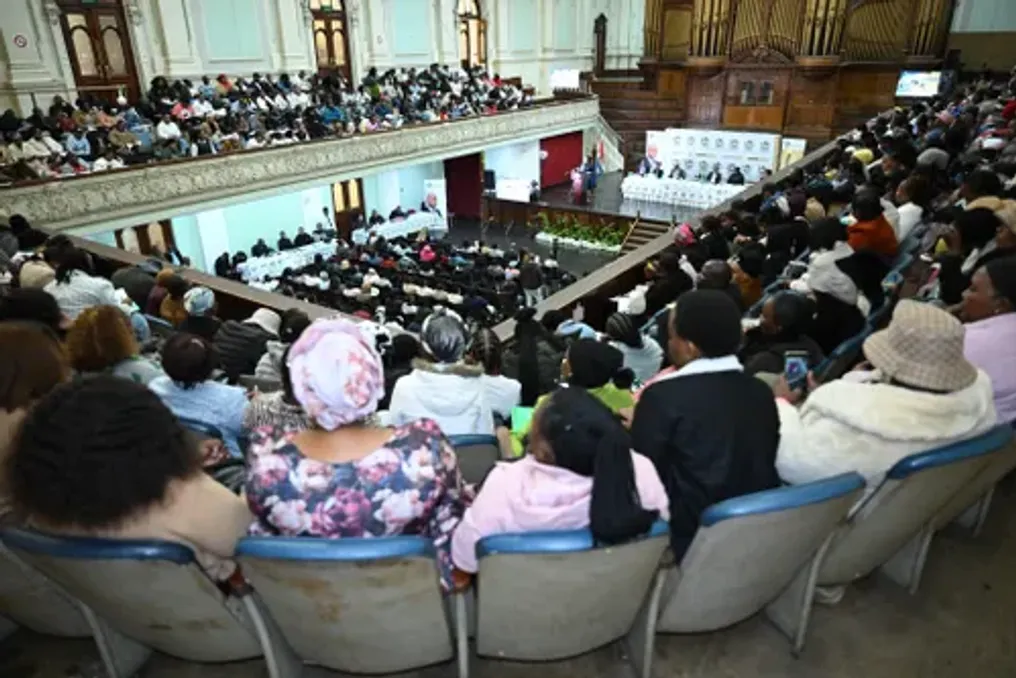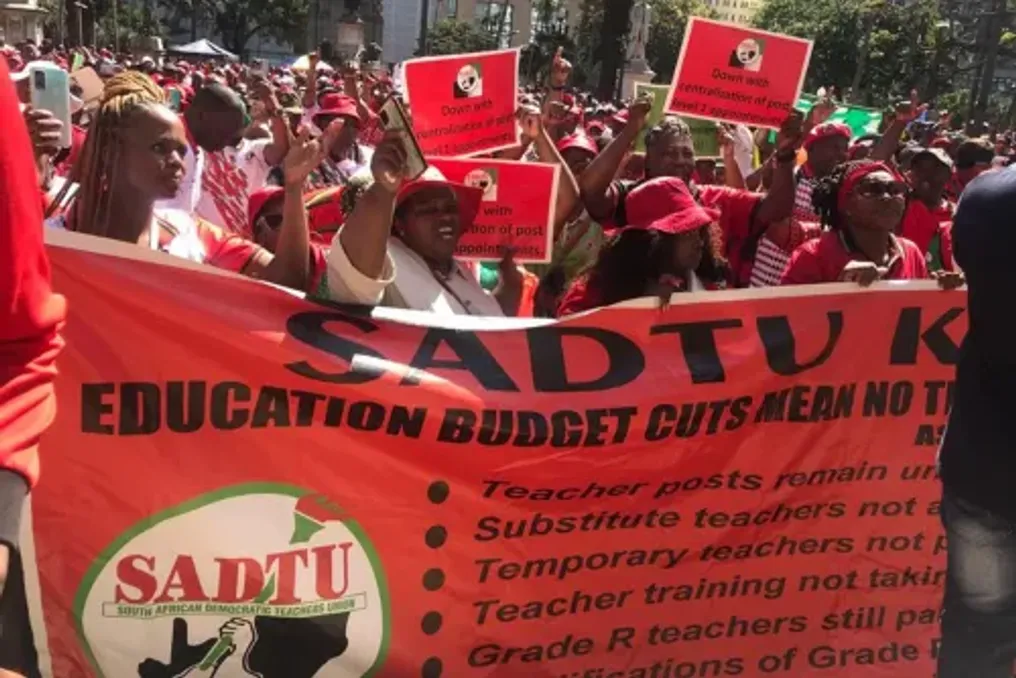
Despite the KwaZulu-Natal Department of Education deciding to retain approximately 90,057 teaching positions, the SADTU union is maintaining its plans for protests.
SADTU states that it continues to plan protest actions because its concerns relate to school funding, vacancies, and administrative delays. These statements were made even after the KZN Department of Education abandoned plans to cut around 4,000 teaching posts.
Union representatives had previously threatened to take to the streets due to fears that thousands of jobs could be lost, which occurs against the backdrop of a constant shortage of teachers in schools across the province.
The provincial secretary of SADTU, Nomarashiya Kaluza, reported that the Minister of Education (MEC), Sifo Khlomka, reviewed the initial reduction proposals and notified that the department would retain the current teaching staff. Kaluza stated that after she announced her intention to march over job cuts, MEC Khlomka returned and announced that he had changed his mind and would no longer reduce positions.
According to Kaluza, the MEC indicated that 90,057 teaching positions would be created, which effectively means retaining the number of positions the department worked with in previous years. Although SADTU welcomed this step, Kaluza emphasized that this was not enough to cancel the decision to march.
The issues causing concern for the union go beyond the supposed staff reduction. Schools are facing a range of financial and administrative difficulties. Kaluza noted that actions by the Department of Finance and the Prime Minister's Office are hindering the work of schools.
Schools are struggling to fill vacancies because appointing personnel, including temporary teachers, requires approval from the provincial treasury and the Prime Minister's Office. Kaluza believes these problems are easily preventable given the large number of unemployed teachers ready to fill these vacancies.
Furthermore, questions have been raised about the financial readiness of schools for the 2027 academic year, as some institutions have not yet received final funding allocations for the year. This could lead to schools not being ready to open in 2027. Kaluza also mentioned that new schools are having difficulty recruiting teachers, and temporary educators covering colleagues on sick leave or maternity leave are allegedly not receiving payment.
These concerns arise against the backdrop of broader issues regarding staffing levels in KwaZulu-Natal. Education activist Hendrik Makaneta stated that celebrating teachers contradicts the situation where they face uncertainty about their employment. He stressed that teachers are a central element of the state's constitutional obligation to provide quality basic education, not just employees reduced to numbers in a table.
Makaneta noted that reports of approximately 4,700 teacher vacancies in KwaZulu-Natal as of June 2026 call into question the plans for job cuts. He urged the government to clearly explain how the province can have significant vacancies while simultaneously considering reducing teaching staff. He warned that laying off thousands of teachers could place additional strain on schools that are already dealing with large classes, leading to reduced individual attention and support for students in need.
Makaneta argued that the dispute should be viewed not only as a disagreement over teacher numbers but also as part of broader systemic issues affecting the province's education system, including funding, school safety, student support, teacher morale, and administrative capacity. He pointed to serious financial and managerial problems within the KZN Department of Education, including concerns about cash flow pressure, employee compensation, and essential educational services.
He insisted that these problems must be solved collectively, not as isolated incidents, as they are symptoms of a system requiring stronger planning, financial management, and accountability. Makaneta also cautioned that employment uncertainty could undermine teacher morale and deter young graduates from choosing teaching as a career. He concluded that if qualified teachers are unemployed while schools have vacancies, something in the system is wrong.
While Makaneta acknowledged the reality of budget constraints, he stated that they should not be used to undermine the state's constitutional obligation to provide basic education. He reminded that Article 29 of the Constitution guarantees everyone the right to basic education, and therefore the government must find a responsible balance between financial discipline and the educational needs of children. He called for greater transparency regarding education budgets, the definition of teaching positions, and the reasons for unemployment among qualified educators when there is a shortage of staff in schools. In conclusion, he urged the government and teachers' unions to return to the negotiating table to determine the actual number of at-risk positions and assess the potential impact on individual schools.