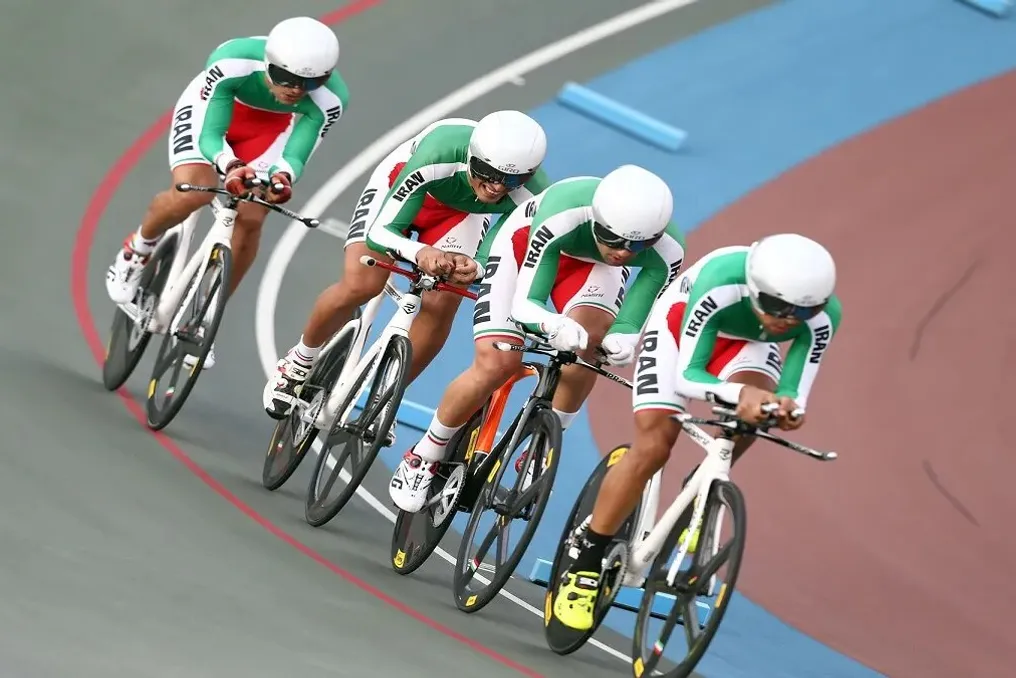
The Iranian cycling team has demonstrated a continued disappointing decline in results at the Asian Games in Nagoya, failing to achieve encouraging achievements. An analysis of the last five Asian Games indicates a steady deterioration of the country's performance in this sport, raising serious questions about the development and future direction of cycling in Iran.
One of the most successful periods in Iranian cycling history was the 2006 Asian Games in Doha, where the national team won four medals, including three silver and one bronze. Mehdiz Sohrabi won silver in the men's road race, and Iranian cyclists also took podium places in various road and track disciplines.
Four years later, at the 2010 Asian Games in Guangzhou, Iran's medal count decreased. Hossein Askari won bronze in the individual road time trial, and Iranian athletes added two more bronze medals in team track disciplines, bringing the total to three awards.
At the 2014 Asian Games in Incheon, Arvin Moazemi Gudarzi achieved significant success by winning silver in the men's road race. In intense competition with leading Asian athletes, he secured second place, maintaining Iran's competitiveness in road cycling.
Nevertheless, despite this silver medal, Iran's overall performance in other disciplines was not strong enough to indicate consistent progress. In track cycling, mountain biking, and other events, representatives from the country struggled to establish themselves among Asian leaders.
Deterioration of Results in Subsequent Years
Iran's declining success became more evident at the 2018 Asian Games in Jakarta, where the cycling team failed to win any medals despite participating in road, track, and mountain bike races. Farzad Shokri and Faranaq Partoazar finished fourth in cross-country mountain biking, and Mohammad Ganjkhanlou also placed fourth in the track omnium. Hossein Zanjanian finished fifth in the men's downhill race, while Iranian road cyclists could not reach the podium.
Following several competitions where Iranian cyclists won medals, Jakarta marked a disappointing campaign, where fourth places were the best achievements for the team.
At the 2022 Asian Games in Hangzhou, Iran managed to return to the podium, but only once. Ali Labib finished fourth in both the men's road race and the track omnium, narrowly missing a medal in both events. However, Partoazar won bronze in the women's cross-country mountain biking, securing Iran's sole cycling medal from those games.
Although the total number of medals remained modest, the fourth-place finishes in Jakarta and Hangzhou indicated that some Iranian cyclists are still capable of competing with Asian rivals. However, at the Asian Games in Nagoya, the results in road cycling did not provide reason for optimism. Mandana Dehghan finished 13th in the women's individual time trial and 14th in the women's road race. Nabi Mirbagheri placed eighth in the men's individual time trial.
Mirbagheri, Iran's only representative in the track omnium, also experienced a difficult campaign, finishing in 12th place. Ali Labib, who represented Iran at the Olympics, was not included in the Nagoya squad due to disagreements, causing Iran to lose one of its allocated spots.
A review of Iran's performance across five Asian Games, from Doha to Nagoya, demonstrates a worrying downward trend. The country won four medals in 2006, three in 2010, and one silver medal in Incheon. Subsequently, Iran received no medals in Jakarta before winning only one bronze in Hangzhou. In Nagoya, the cyclists were significantly behind the podium.
Repeated failures in the fight for medals, alongside finishes ranging from fourth to fourteenth place, call into question the direction and effectiveness of Iranian cycling development programs. Rasoul Asadi, President of the Iranian Cycling Federation, must address the team's declining results and provide a transparent explanation as to why a sport with a history of success at the Asian Games has failed to maintain its former status in recent years.