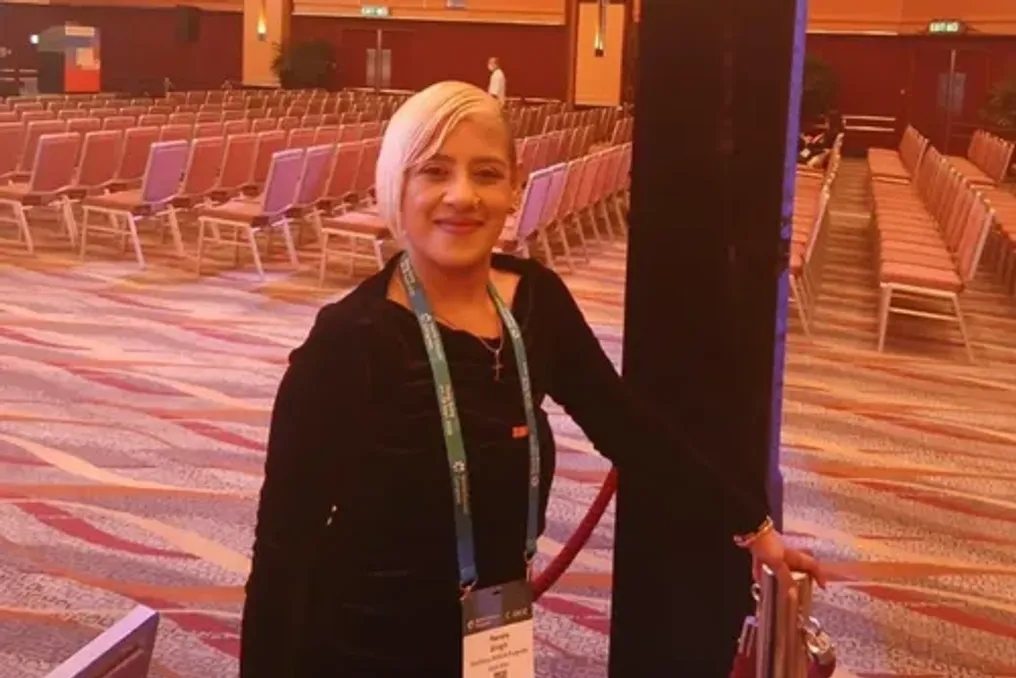
Renee Singh, a breast cancer survivor and global advocate for the fight against cancer, shared her experience living with stage IV metastatic breast cancer, which was diagnosed nearly nine years after her initial case.
At age 46, the resident of West Rand, Singh reported that her life paused in 2017 when she was diagnosed with cancer. She recalls feelings of fear, disbelief, and numerous unanswered questions. When she was told about the recurrence almost nine years later, she was informed she had Luminal B metastatic breast cancer and stage IV bone cancer, leading her to question how she could find herself in this situation again after everything she had already overcome.
Singh discovered resilience within herself. She realized that because she had previously fought cancer, she knew how to do it. The first days and weeks were a mix of fear, anger, sadness, and attempts to understand what was happening. It was especially difficult because she had spent years advocating for cancer patients, and suddenly she herself became a patient.
She had to learn to assert her interests with the same determination she had always used to defend others. She realized that her journey with cancer could give even more meaning to her work. She can still speak, educate, raise awareness, and ensure that patients' voices are heard. She understood that cancer is something she lives with, but it does not have to take away her purpose.
When asked about the most challenging aspects of living with cancer, she replied that it is the struggle with the physical and emotional uncertainty of metastatic cancer while continuing to pursue her passion. However, she emphasized that treatment can be exhausting, and there is also financial pressure associated with receiving care without medical insurance.
She continues to move forward because she knows there are patients who are still waiting to be heard, informed, and supported. At the same time, she has learned that she must also take care of herself.
The survivor, who is also a member of the Union for International Cancer Control, believes that cancer taught her to appreciate the small things. She noted that quiet moments, prayer, reflection, family, genuinely caring people, and continuing her advocacy work helped her get through difficult days. She rejoices in small victories, such as the ability to laugh, travel, and engage in meaningful conversations.
Singh also mentioned that cancer completely changed her relationship with her body. After the first diagnosis, she had to adapt to surgeries, chemotherapy, radiation therapy, and subsequent physical changes. Now, having metastatic cancer, she listens to her body differently—she does not ignore symptoms, asks questions, and asserts her rights.
Her main support has been her purpose. Her anti-cancer work, her passion for the field, and her commitment to the Warriors With A Purpose organization have given her something to hold onto during the toughest moments. For years, she defended other patients, and now she has to defend herself. Her family, loved ones, and supporters are her backbone.
She explained that the concept of survival is different for her because she currently lives with stage IV metastatic cancer. For her, it means living with purpose while managing treatment and uncertainty. It is about making memories, continuing her work, and using her life experience to improve the fight against cancer for others.
She added: 'I don't want cancer to become my entire identity. I am still a mother, an advocate, a leader, and a woman with dreams. I live with cancer, but I also live my life.'
Singh advised everyone who receives a cancer diagnosis to simply breathe. She said that one should not try to plan their entire future on the day of diagnosis. It is necessary to ask questions, gather information, bring a trusted person to appointments, and not be afraid to seek a second opinion. Most importantly—assert your rights. Life may look different after a diagnosis, but that doesn't mean your life has stopped.
In another part of the article, a breast cancer specialist urges women to report any breast changes promptly, while the stage IV cancer survivor highlights the emotional and financial difficulties associated with the disease.
The country annually registers over 13,000 new cases of breast cancer among women, accounting for about 25.1% of all diagnosed female cancer cases. This underscores the constant need for early detection and increased awareness.
A representative from the National Department of Health, Foster Mohale, confirmed these statistics during Cancer Awareness Month, which runs from October 1st to 30th. The campaign calls on South Africans to prioritize cancer screening, recognize warning signs, and seek medical attention early.
Dr. Karin Kabanga, a breast cancer specialist from RK Khan and Albert Luthuli hospitals, stated that many women are still unaware of breast cancer. She noted that most women in the country lack knowledge about breast cancer and often postpone visits to public health facilities for screenings.
Speaking about new advancements in screening technology, Kabanga mentioned that they focus on higher-resolution imaging, the integration of artificial intelligence (AI), and non-invasive methods that improve early detection, especially in women with dense breast tissue. She explained that mammography is a common first step in breast cancer detection, but it is not the only diagnostic tool used by doctors, and new technologies are on the horizon. Innovations such as artificial intelligence, 3D mammography, and liquid biopsy promise to change breast cancer diagnosis and may contribute to life-saving processes.
She explained that the role of AI in breast cancer diagnosis expands the scope of second opinions beyond human capabilities. Machine learning algorithms can process vast amounts of data to identify patterns invisible to the naked eye. Thus, they can analyze information from mammograms, ultrasounds, and other tests, providing more detailed information that allows radiologists to better detect anomalies on breast cancer scans. AI can also play a role in analyzing biopsies, providing a tool for more complete detection of molecular biomarkers in pathological samples. This information can lead to improved breast cancer treatment plans and more targeted therapy.
She also mentioned MRI, which is used for breast cancer screening and is more specific in detecting cancer. According to her, there are three MRI machines in KwaZulu-Natal, but government funding is insufficient to purchase more such machines.
Kabanga strongly urged women to start with self-examination before visiting medical facilities. She stressed that women should know what their breasts feel like. Lumps in the breast should not be ignored, even if they are painless. If a lump is painless and has never appeared in the breast before, one should visit a clinic or hospital as soon as possible.