A new gallery in Tehran invites visitors on a journey through the political, social, cultural, and artistic history of the capital, utilizing digital technologies and artificial intelligence to demonstrate the potential future development of tourism in the city.
The exhibition 'Histories of Tehran' opened at the Kushk-e Bagh-e Honar cultural complex in the Abbasabad Cultural and Tourist Zone on Sunday, coinciding with World Tourism Day and Tehran Week. The exposition will run from September 27 to October 8 under this year's World Tourism Day theme: 'Digital Agenda and Artificial Intelligence (AI) for Tourism Redesign.'
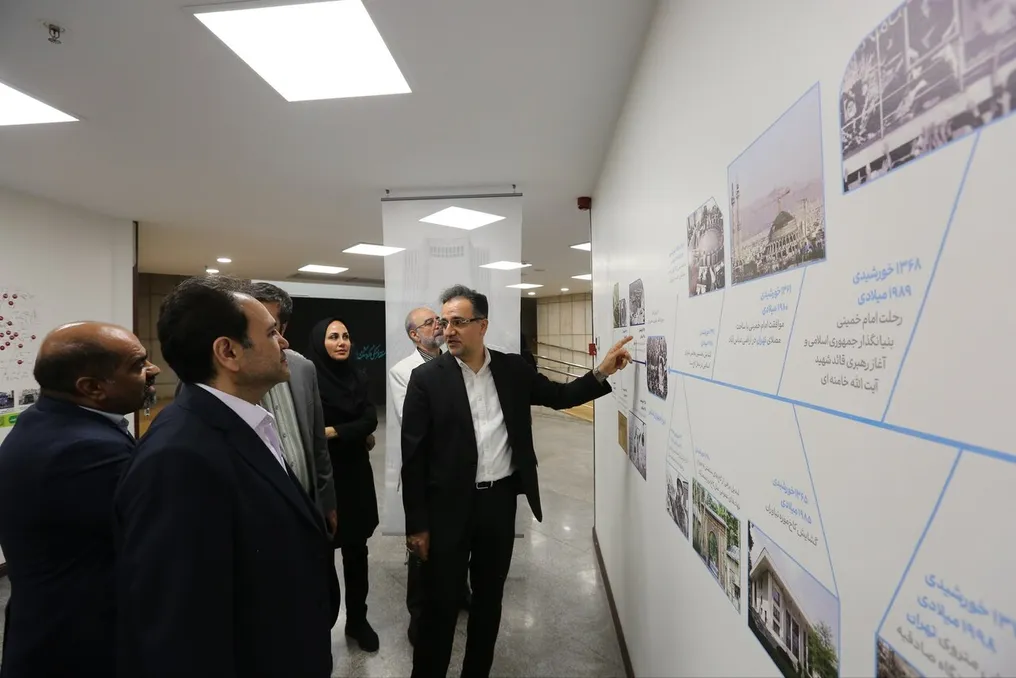
The gallery combines historical maps, illustrated timelines, infographics, photographs, and interactive elements, among others, to present various chapters of Tehran's history—from its early development and selection as the capital of Iran to the political and social transformations of the modern era.
Topics presented in the exhibition include the earliest known stages of the city's development, old plane trees, food culture, historical buildings, as well as major political and cultural events. The exhibit also documents the damage inflicted on historical buildings and cultural spaces during the recent war with the US and Israeli regimes.
Seyed Mohammad-Hossein Hejazi, Managing Director of the Abbasabad Cultural and Tourist Zone, noted that the event was conceived to present Tehran's tourist attractions through the lens of its past and future. He informed reporters that in recent years, Tehran has often been perceived more as a transit city than a final destination for tourists.
Hejazi emphasized that this exhibition is part of broader efforts to showcase the capital's attractions from different perspectives and strengthen its position as a tourist destination. Furthermore, digitalization is being integrated into plans for developing tourism services in the Abbasabad zone. Hejazi mentioned that the Tehran Municipality application 'Sharzad' has been linked to a planned tourist map for the Abbasabad district.
This map, which has not yet been launched, is partially based on systems like Istanbulkart and Dubai Pass. It is expected to eventually provide access to a range of services, including public transport, museums, recreational facilities, as well as tourist and entertainment attractions. Hejazi specified that the Abbasabad zone was chosen as a pilot site for this initiative, and trials may begin in the coming months.
The concept of 'Histories of Tehran' originated during the COVID-19 pandemic when international tourism halted. According to Alireza Moghadam-Nia, Tourism Director of the Abbasabad Zone, the area sought to offer virtual tours of Tehran at that time, relying on the knowledge and experience of guides, tourism businesses, and other industry participants.
The central timeline of the exhibition runs along the walls of the gallery, tracing key events in Tehran from the Safavid and Qajar periods to modern history. Historical maps of the old city are a highlight. Visitors can listen to stories about the city and interact with replicas and toys related to old Tehran. The exhibition also includes elements of the city's natural heritage, including long-lived trees, rather than focusing exclusively on monuments and historical events.
One of the main features is the use of artificial intelligence and digital technologies to create an interactive tourist experience. Guests can take virtual tours of countless places in Tehran and use a QR code-based service to create photos of themselves against backdrops of the city from different eras. Organizers state that the goal is to combine digital tools with physical and immersive experiences, not to replace direct interaction with the sites.
Sara Mirzaei, Deputy Head of the Tourism and Recreation Department in the Abbasabad Cultural and Tourist Zone, stated that technology can facilitate tourism services and the travel process itself, but it should not replace the real tourist experience. She cited new tools, such as smart glasses capable of translation and content generation, that could simplify trips.
The exhibition also examines the history of the 560-hectare Abbasabad territory, which today includes several major cultural, tourist, and recreational sites in Tehran, such as Tabiat Bridge, Ab-o-Atash Park, Mina Dome, Bagh-e Honar, Book Garden, and the Museum of the Islamic Revolution and Sacred Defense. In Mirzaei's opinion, transforming this area into a cultural and tourist zone took years of planning and effort to determine a suitable future for the location. The exhibition traces this history and shows how the area ultimately became one of Tehran's main cultural and recreational destinations.
Organizers note that the gallery is partly intended to change the perception of Tehran as merely a transit point for tourists. The exhibit also features a unique element looking far beyond the present: a mailbox for letters addressed to the Mayor of Tehran in the Iranian calendar year 1450, corresponding to 2071–72. Visitors are invited to write down their hopes, expectations, and ideas for the future of Tehran and place them in this box. The box will be sealed after the exhibition ends and preserved for opening in the year 1450.
Mirzaei described this idea as a paradox of the digital age. While physical correspondence has largely given way to email and messengers, visitors are invited to write down their thoughts on paper and entrust them to the future. This contrast is intentional: an exhibition focused on artificial intelligence and digital tourism created a space for one of the most ancient forms of communication—handwritten letter writing.
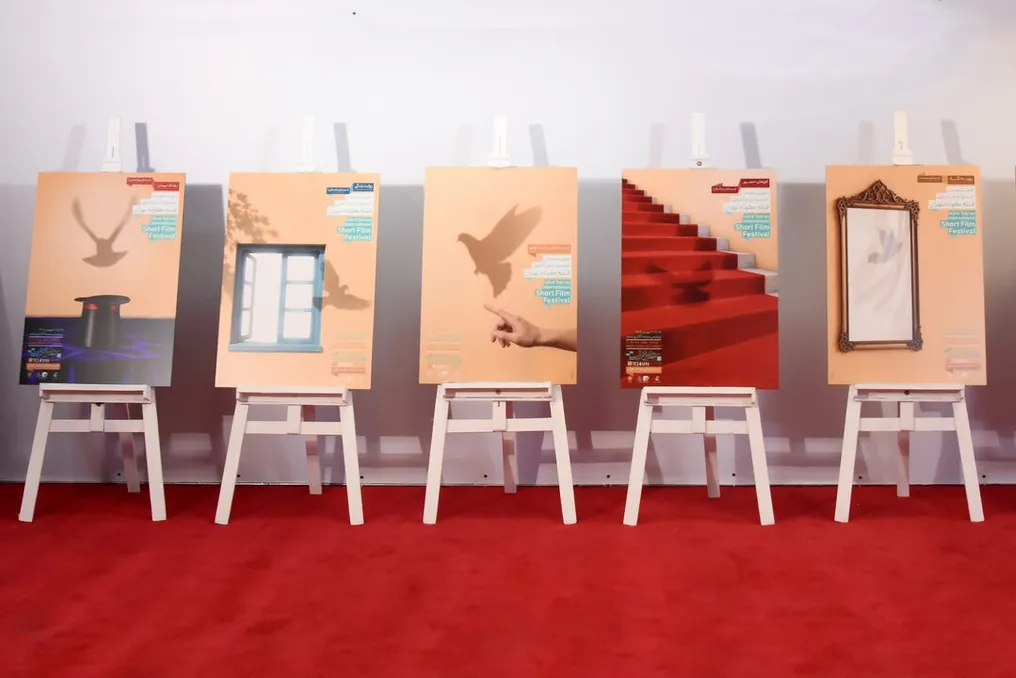
The broader program accompanying the exhibition includes educational panels, specialized seminars, and film screenings dedicated to smart tourism, tourism platforms, historical urban landscapes, safe travel, and new technologies. Other events include a documentary screening about the Omidvar brothers, renowned Iranian travelers, a seminar on rediscovering Iran, and sessions on the role of new tourism technologies in developing a smart urban economy. The Abbasabad Cultural and Tourist Zone, which organizers refer to as a major green and recreational center of the capital, also aims to strengthen its international tourism profile.