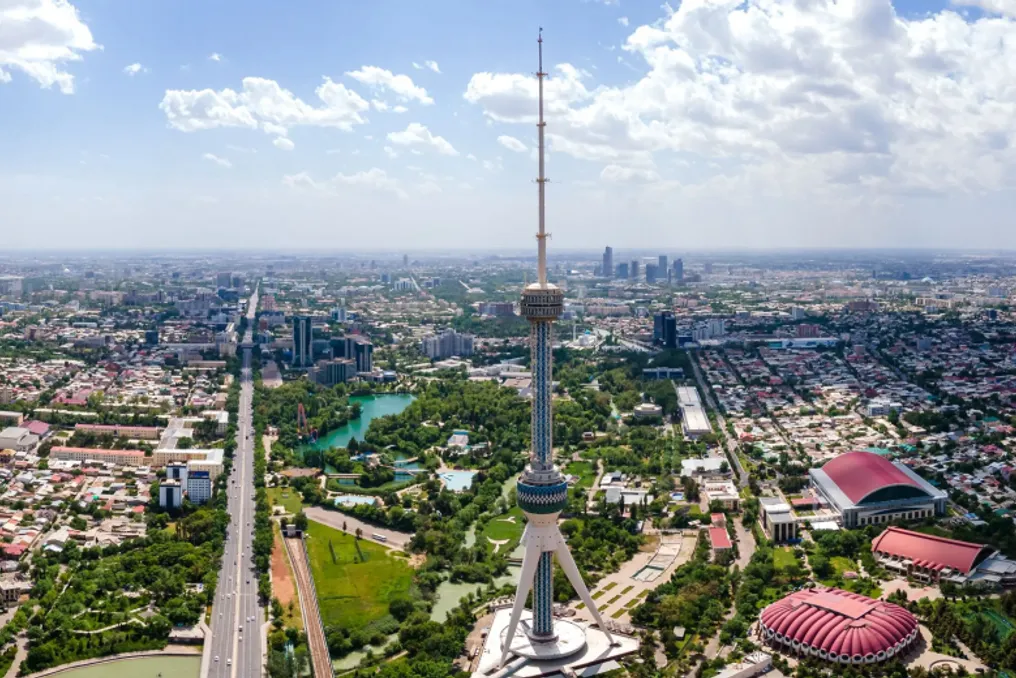
Navoi Region Leads Growth in Service Sector in Uzbekistan
Read more
UzDaily
uzdaily.uz

Navoi Region Leads Growth in Service Sector in Uzbekistan

The volume of market services in Uzbekistan increased by 17% in real terms for the period from January to August 2026 compared to the same period last year. According to data from the National Statistical Committee, the highest growth rates were recorded in the Navoi Region and Tashkent.

Growth Dynamics by Region

In the Navoi Region, the growth of market services was 18.5%, while the capital showed an increase of 18.4%. In the Syrdarya Region, the indicator grew by 17.7%. A growth of 17.6% was noted in the Andijan, Jizzakh, Surkhandarya, and Khorezm regions.

The volume of provided services increased by 17.2% in the Bukhara Region, and by 17.1% in the Kashkadarya and Samarkand Regions. Growth reached 16.8% in the Namangan Region and 16.4% in the Karakalpakstan Republic.

The lowest growth rates among the regions were recorded in the Fergana and Tashkent regions, where they amounted to 16.3% each.

Similar stories

Uzbekistan's retail revenue grew by 18.8% from January to August 2026
Read more
uzdaily.uz

Uzbekistan's retail revenue grew by 18.8% from January to August 2026

According to data from the National Statistical Committee of Uzbekistan, retail revenue in Uzbekistan for January-August 2026 reached 370.6 trillion soms, representing a real growth of 18.8% compared to the same period last year.

Concurrently, wholesale revenue increased by 16.9%, amounting to 447.7 trillion soms, while the turnover of public catering enterprises grew by 26.7%, reaching 208.7 trillion soms.

Small businesses accounted for 296.7 trillion soms, or 80.1% of total retail revenue, demonstrating an increase in their turnover by 18.5%. Large enterprises recorded revenue of 73.8 trillion soms, which is 20% more, with their share rising to 19.9% from 19.7% a year earlier.

The fastest growth in retail trade was noted in the Andijan region (24.4%), followed by the Syrdarya region (23.1%) and the Khorezm region (22.4%). The smallest increase was recorded in the Karakalpakstan Republic (9.6%), Navoi region (14.2%), and Fergana region (15.6%).

In Tashkent, retail revenue increased by 19.2%, and in the Tashkent region by 20.1%.

As of September 1, 2026, there were 92,434 commercial enterprises operating in retail trade. Of these, 428 were large enterprises, and 92,006 were small enterprises and microfirms.

In wholesale trade, large enterprises increased their turnover by 36%, reaching 128.4 trillion soms. Small businesses increased their turnover by 10.6%, receiving 319.3 trillion soms, which accounts for 71.3% of the total wholesale revenue.

The most significant growth in wholesale revenue was observed in Tashkent (20.7%), followed by the Andijan region (15.9%) and the Surkhand region (15.5%). The lowest growth rates were recorded in the Fergana region (6.7%), Namangan region (8.1%), and Tashkent region (10.4%).

A total of 58,261 enterprises operated in wholesale trade, including 427 large enterprises and 57,834 small enterprises and microfirms.

In the public catering sector, small businesses accounted for 78.1% of the turnover, while large enterprises contributed 21.9%. As of September 1, 30,390 enterprises were registered in this sector, of which 148 were large enterprises and 30,242 were small enterprises and microfirms.

It is important to note that the data presented for January-August 2026 are preliminary and were calculated taking into account statistical estimates of the informal and unobserved economy.

World Bank reports significant increase in the share of the middle class in Uzbekistan
Read more
podrobno.uz

World Bank reports significant increase in the share of the middle class in Uzbekistan

The World Bank has presented data indicating a substantial increase in the proportion of the population belonging to the middle class in Uzbekistan during the period from 2021 to 2025. This share rose from 37% to over 72%.

Specifically, in the country's capital, Tashkent, the share of residents falling into the upper-middle class category reached 71.5%. The World Bank's analysis showed that over this period, the share of the upper-middle class in the republic increased from 8% to 31%, while the share of the lower-middle class grew from 29% to 41%.

Experts note that the growth rates in the capital were noticeably higher than in other regions of Uzbekistan. One of the key factors contributing to the expansion of the middle class is recognized as the growth in wages in the private sector.

Furthermore, Tashkent concentrates 29% of all official jobs in the country's private sector that require a high level of qualification.

Popular