
Financial pressure and rising debt threaten South Africans' insurance coverage
Read more
IOL
iol.co.za

Financial pressure and rising debt threaten South Africans' insurance coverage

Growing financial strain among South African residents is forcing them to make difficult decisions regarding monthly spending, and insurance coverage is increasingly under pressure. As households struggle with debt repayment and the rising cost of living, some consumers are reducing their insurance policies or allowing them to lapse, which could expose them to financial shocks such as illness, death, or loss of income.

According to the DebtBusters Money-Stress Tracker study, conducted among 18,000 respondents, 72% of participants experienced financial stress, higher than the 70% recorded the previous year. Furthermore, 53% of those surveyed spent more than 40% of their net income servicing debt.

A deeper analysis presented by the South African Financial Pressure Index (SAFPI), compiled by Debt Solutions 4 U based on debt restructuring applications, showed that the median applicant directed 58.4% of their net income towards debt repayment before accounting for rent, transport, food, and other living expenses. Among the most vulnerable segments of the population, 56% spent over half of their income servicing debt.

However, it should be noted that SAFPI does not reflect the picture of all South African households, as it only covers those who have already sought help with debt issues. This situation creates a complex dilemma in the insurance sector.

The insurance dilemma

Jura Kaliasing, Senior Director of Actuarial and Insurance Solutions at Deloitte Africa, noted that the growth in life insurance policy sales remains modest, with most growth concentrated in the lower price segment dominated by cheaper funeral policies. Simultaneously, according to estimates from the South African Savings Institute, the gap between the insurance coverage held by South Africans and what is needed continues to widen.

Kaliasing argues that the consumer in South Africa is becoming increasingly underinsured because 'free disposable income for insurance simply does not exist under current conditions.' Although Kaliasing has not yet observed an 'inflow' of consumers reducing coverage or cancelling policies, there are signs of increasing delinquency rates. He warns that if current economic conditions persist, including low growth and rising fuel prices, he does not rule out an acceleration of delinquency rates, as the availability of insurance policies will come into question.

When insurance is reduced

FNB Insurance is already registering the impact of financial pressure on households through claims and customer churn data. CEO Himal Parbhu explains that the rising cost of living, fluctuating fuel prices, exchange rate pressure, and general international uncertainty have burdened disposable income, forcing insurance premiums to compete with essential expenses such as food, transport, debt repayment, and utilities.

According to Parbhu, the largest spike in churn occurs approximately six and nine months after policy issuance. FNB's analysis shows that increased early churn is concentrated among clients in the Entry Wallet, Entry Banking, and Middle-Income segments. Nevertheless, there are signs of some temporary relief: FNB collections in July exceeded the June figure by approximately 20 million rand, and manual payments rose by 19.2% compared to the previous month, reaching about 4.4 million rand. Parbhu cautions that this data is based only on the monthly report and does not yet indicate a clear trend toward improvement.

Yazid Adams, Head of Strategy, Management and Transformation at MiwayLife, believes that insurance premiums begin to be perceived as an expense rather than protection when households are forced to cut costs. Adams notes that clients more often seek advice on adjusting policies rather than canceling them entirely, which is a more sustainable approach. He emphasizes that the financial need the policy was supposed to cover does not disappear just because the household can no longer comfortably afford the premium.

Protecting against the wrong risk

There is also a danger that consumers, forced to reduce insurance coverage, may start protecting themselves against the wrong financial shock or simply purchase insufficient coverage for existing risks. Kaliasing points out that South Africans are often underinsured against serious illnesses, critical diseases, and disability, as it is easy to underestimate the full financial cost in the event of one of these occurrences. Parbhu similarly highlights disability and critical illnesses as significant areas of underinsurance.

Adams says that people often base insurance coverage on debts, such as mortgages or car loans, without considering future expenses, such as children's education, inflation, household needs, and the number of years the family might require financial support. He suggests asking not 'What is my debt?' but 'How long can my family maintain its current lifestyle if I were to pass away tomorrow?'

However, death is not the only event that can deprive a family of income. Bidvest Life's 2024 claims data showed that the company's clients were 4.5 times more likely to file income protection claims than lump-sum critical illness claims, 15.3 times more likely than death claims, and 43 times more likely than lump-sum disability claims. Moreover, about 52% of income protection claimants had made previous claims.

Risks for women

This issue is particularly important for women whose careers may involve reduced working hours, childbirth, caregiving responsibilities, or periods outside formal employment. In 2024, women accounted for 51% of income protection claimants at Bidvest Life, and childbirth led to 19% of all income protection claims. Among the top 10 claimants for policies designed for professions that do not meet traditional income protection criteria, homemakers were included. Claudelle Jacobs, Head of Claims at Bidvest Life, insists that financial planning consultations with advisors must go beyond creating long-term capital and retirement, focusing on what will happen if a person's earning capacity is disrupted. She stresses: 'Instead of recommending risk products that meet general client needs, we must examine how a woman earns income, who depends on it, how her career might change, what responsibilities she holds, and what will happen to her financial plan if her income is interrupted.'

Similar stories

Study shows that in South Africa, a person's worth is still often determined by their financial status
Read more
iol.co.za

Study shows that in South Africa, a person's worth is still often determined by their financial status

Despite unemployment statistics, gender economic pressure in South Africa affects deeper aspects of people's lives. It influences how people assess their significance, conduct relationships, and interpret difficulties, often reinforcing old attitudes even when the economic situation makes adhering to these attitudes difficult.

The Centre for Analytical and Behavioral Change (CABC) conducted a study titled 'Economic Anxiety: How Money Shapes Masculinity and Femininity.' The work is based on data collected between September 2025 and September 2026.

As part of this study, a massive dataset was analyzed, including about 165,290 posts on X from nearly 45,000 authors (with over 940,000 reposts), as well as hundreds of mentions on TikTok. Researchers examined how money becomes a measure of personal value, suitability for relationships, and power, and how these expectations either reinforce or challenge gender norms related to gender-based violence.

Male Context: The Provider Identity

According to the study's findings, South African academic thought and online discourse demonstrate that masculinity remains closely linked to providing financially. The colonial and apartheid past associated the concept of manhood with paid labor. This attitude persists even after the economic conditions that made it feasible have changed.

The study found that if men cannot provide for their families, it is perceived as a personal failure rather than a consequence of structural limitations. Unemployed men describe stigma, shame, depression, and feelings of exclusion from relationships and sometimes fatherhood. Even employed men speak of provision as an 'inevitable requirement.' Some men exhibit 'provider masculinity,' dressing for work and viewing job searching as full-time employment.

This manifests particularly strongly in the online space. Social media posts evaluate a man's ability to improve his partner's standard of living as a basic criterion for suitability. Financial difficulties are presented as a valid reason to remain single or as a painful lesson not to be repeated. Women sometimes note the emotional burden associated with downplaying their own preferences to maintain their partner's self-esteem. This provider stereotype persists despite its recognition as repressive.

Statistically, the official unemployment rate in the second quarter of 2026 was 33.6%, with 8.5 million people unemployed, and youth unemployment reached 47.4%. However, in the social sphere, many men are still judged by a standard that the labor market cannot provide them.

Female Context: Audited Independence

The study also revealed that women face different but intersecting challenges. Financial independence is widely recognized as necessary for dignity and security. The phrase 'a woman lacking her own money' is described as worse than heartbreak. At the same time, women are still expected to judge men based on their ability to provide.

This creates contradictory demands: to earn independently, yet continue to view provision from men as an indicator of relationship viability, according to the study. Disagreements over money can quickly escalate into sexualized judgments or humiliation of femininity. Transactional motives add another layer, as economic exchange determines desirability, status, and power imbalance.

Economic dependence can also become a vulnerability. Posts analyzed in the study condemn the exploitation of women out of material need, yet others shift the blame onto women for being in harmful relationships due to financial dependency. It is important to distinguish between ordinary money stress and economic abuse, such as control over resource access, income restriction, or creating dependency.

General Pressures and Judgments

The study shows that both sets of expectations are actively discussed online. Some voices broaden the definition of contribution, including practical care, emotional presence, and recognition of reproductive labor. Others adhere to orthodox views or rationalize financial claims to justify aggression and suppression.

Researchers acknowledge that financial difficulties themselves do not lead to gender-based violence, emphasizing that existing gender norms influence how difficulties are interpreted. When provision is seen as the primary measure of male worth, failure can cause shame. When women's financial preferences are presented as the cause of violence against them, responsibility is shifted.

High unemployment in South Africa, rising poverty levels, and cost-of-living pressures intensify this dynamic. The economy hinders the realization of traditional provider ideals for many men, yet it allows these ideals to shape judgments about both men and women.

How to Change the Situation

According to the CABC report, the same moments of economic tension that reinforce old norms can also open space for challenging them. Practical intervention areas indicated by the study include valuing care and shared responsibility alongside income, considering provision as one contribution rather than the sole condition of dignity or authority, and rejecting narratives that turn money disputes into justifications for control or violence.

Cost of living crisis forces South African shoppers to rethink spending
Read more
iol.co.za

Cost of living crisis forces South African shoppers to rethink spending

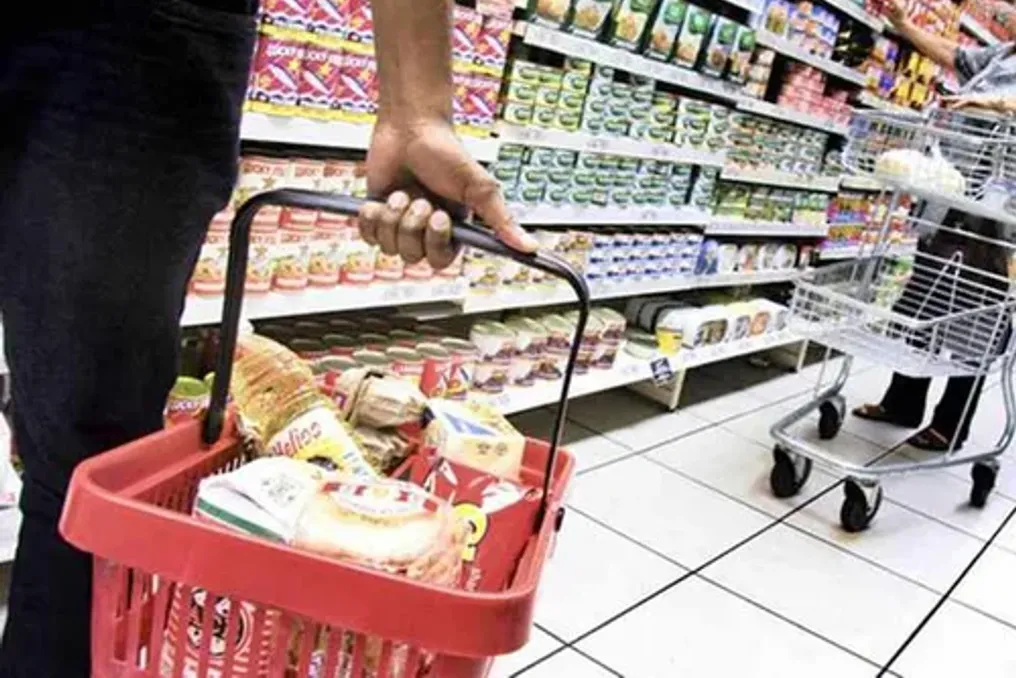
Amid the cost of living crisis, residents of South Africa are becoming more meticulous about every purchase in grocery stores, as rising food prices, debt repayments, and other household expenses place significant pressure on already strained budgets.

Consumers in South Africa are exercising greater caution in spending, forced to analyze everything from food prices to debt repayment. For many shoppers, the familiar brand on the supermarket shelf is no longer an automatic choice. The popularity of private label goods is growing, as consumers compare prices, question the justification for premium brand prices, and seek ways to stretch limited family income.

Neil Ruets, CEO of Debt Rescue, noted that this reflects a broader shift in household financial management. He stated: 'At Debt Rescue, we see this as part of a wider change in how households manage money: buyers are paying much closer attention to what they are buying, what they truly need, and whether the price they are paying can be justified within their monthly budget.'

The increasing demand for private label goods is one sign of this shift. According to NielsenIQ data cited in a recent industry analysis, private label sales in South Africa reached 53.5 billion rand in the first half of 2026. Ruets added that from a consumer finance perspective, this trend indicates that purchasing decisions are becoming less automatic.

He emphasized: 'Loyalty to established brands can still matter, but when household finances are constrained, consumers have a stronger financial incentive to compare alternatives and decide if the cost of a particular product remains affordable.'

Households under growing pressure

This shift occurs against a backdrop of a difficult economic situation characterized by inflationary pressure, high interest rates, weak economic growth, and persistently high unemployment, which continues to negatively affect household finances. The latest PMBEJD Household Affordability Index revealed the pressure consumers are facing. In September, the average cost of a food basket was 5488.06 rand, which is 108.64 rand, or 2% year-on-year, higher.

Of the 44 main products tracked, 21 increased their price during the month. For families already incurring costs for housing, transport, electricity, insurance, debt repayment, and food on the same income level, even small savings can become substantial over a month. Thus, choosing the retailer's own product instead of the familiar branded alternative is one way consumers are trying to control daily spending.

However, Ruets cautioned against interpreting this shift as merely evidence of increased consumer financial discipline. He warned: 'It is important to understand that this does not mean consumers will automatically choose the cheapest item in their entire shopping basket.' Households often save in areas where they are comfortable, continuing to spend on items they deem important. Ruets concluded: 'The level of consideration put into these choices has changed.'

Private label gains ground

Tony Man Gavin, Managing Director of Encore, a wholly-owned private label business of SPAR South Africa, reported that shoppers are increasingly focusing on value rather than just price. Man Gavin stated: 'South African shoppers are not just becoming more price-sensitive. They are becoming more value-sensitive.'

NielsenIQ data showed that private label sales grew by 1.9% year-on-year in the first half of 2026, highlighting the growing role of retailer brands in food baskets. Ruets noted that this trend is important because it demonstrates that consumers are actively re-evaluating established purchasing habits. He added: 'There is something encouraging about consumers actively comparing prices and looking for ways to cut unnecessary expenses. However, we must also be careful not to interpret all this behavior solely as improved purchasing discipline.'

For many households, the heightened focus on spending is due to necessity. Ruets noted that Debt Rescue's concern was particularly focused on families who had already significantly cut their spending. He explained: 'There comes a point where switching brands, buying on sale, and cutting non-essential expenses can no longer compensate for the constant gap between household income and monthly financial obligations.'

'When a consumer has already significantly reduced spending and still cannot comfortably cover basic necessities and debt repayment, the problem goes beyond finding extra savings in the supermarket. It may indicate deeper financial difficulties,' Ruets continued. For such households, the rise in private label sales offers only limited relief from broader financial pressure. Nevertheless, Ruets believes this trend provides valuable insight into the decisions being made by South African households striving to stay within increasingly tight budgets.

He concluded by saying: 'Consumers are becoming more selective and more willing to reconsider established purchasing habits while trying to keep essential expenses within increasingly limited budgets.' The problem for households is that there is a finite amount of expenses that can be cut. Thus, as consumers become more strategic in their purchases, the growing reliance on cheaper alternatives is not just a story of changing consumer preferences, but also a reflection of the financial pressure faced by millions of South African households.

Popular