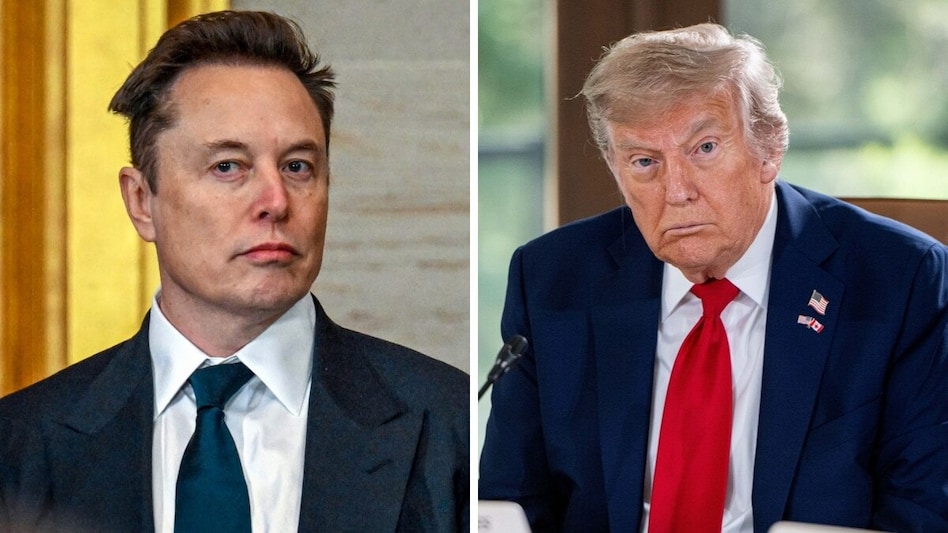
While Elon Musk attempts to exert pressure on the Indian government regarding Starlink, the U.S. Department of Labor announced a ban on the PERM permanent labor certification program for eight major companies, including TCS, Infosys, and Wipro. In social media, these two events are linked to 'American pressure policy,' but a detailed analysis shows that there is no direct diplomatic or political connection between these incidents; rather, it is a coincidence of two separate matters.
In fact, the PERM ban is due to internal U.S. electoral and labor policies. This decision was made by the U.S. Department of Labor and Vice President J.D. Vance as part of the 'America First' policy of the Trump administration. They stated that the measure is aimed at protecting American employees' jobs and preventing a decrease in domestic wage rates. This ban applies not only to Indian companies but also to American firms Microsoft and Adobe.
Despite Musk being close to the Trump administration, the State Department or the U.S. Department of Labor would not create a policy that jeopardizes the country's own technology companies and universities for the commercial project of one magnate. The dispute over Starlink is internal and concerns India's security, and its entry into India is not the result of geopolitical pressure. Home Minister Jyotiraditya Scindia also emphasized that the licensing process is identical and non-discriminatory for all companies, including Jio, Airtel, and Starlink.
The fact that both events happened simultaneously is merely a coincidence. The U.S. Department of Labor is conducting an investigation to determine whether companies are leading to a reduction in American citizens' wages by attracting foreign specialists through PERM. This ban directly affects large corporate sectors in America itself, such as Microsoft and Adobe, as well as the country's prestigious universities. The U.S. administration will not jeopardize its leading technology companies and research institutions to satisfy Musk's demands.
Vice President J.D. Vance leveled serious accusations against Microsoft, noting that the company laid off 6,000 American employees last year while approving thousands of H-1B and PERM visa applications for foreign workers. The administration viewed this as an abuse of the system and an attempt to push out local American workers from the labor market. This decision was made primarily to prevent abuses of visa and green card rules for foreign workers and to ensure the employment of U.S. citizens.
PERM is the initial and most important procedure through which American companies apply for permanent residency (green cards) for their foreign employees (H-1B visa holders). Although this measure does not immediately cancel existing legal H-1B visas or already obtained green cards, it completely blocks the path to obtaining a green card in the future. Since over 70% of people working in the American technology sector who benefit from H-1B visas or work green cards are Indian engineers, this decision will hit thousands of Indian IT specialists working there the hardest.
For the stock market, this ban was not perceived as a major crisis because it does not directly affect H-1B work visas or current company revenue. However, investors fear that the suspension of PERM may lead to increased American scrutiny and regulatory oversight, which could subsequently increase margins and project execution costs for companies. Existing H-1B or L-1 visas are not canceled, and employees can continue to work in the U.S. within their current scope of activity. TCS and other IT companies have assured that this administrative review will not affect their daily operations, new hires, or services provided to clients in America. H-1B is a temporary work visa that allows specialists to work in the U.S. for 3 to 6 years. The PERM process requires the employer to confirm to the U.S. Department of Labor that there is no suitable American candidate for the position. Simply put, H-1B gives you temporary legal permission to work in the U.S., whereas PERM is the first and most crucial legal document on the path to becoming a U.S. citizen.