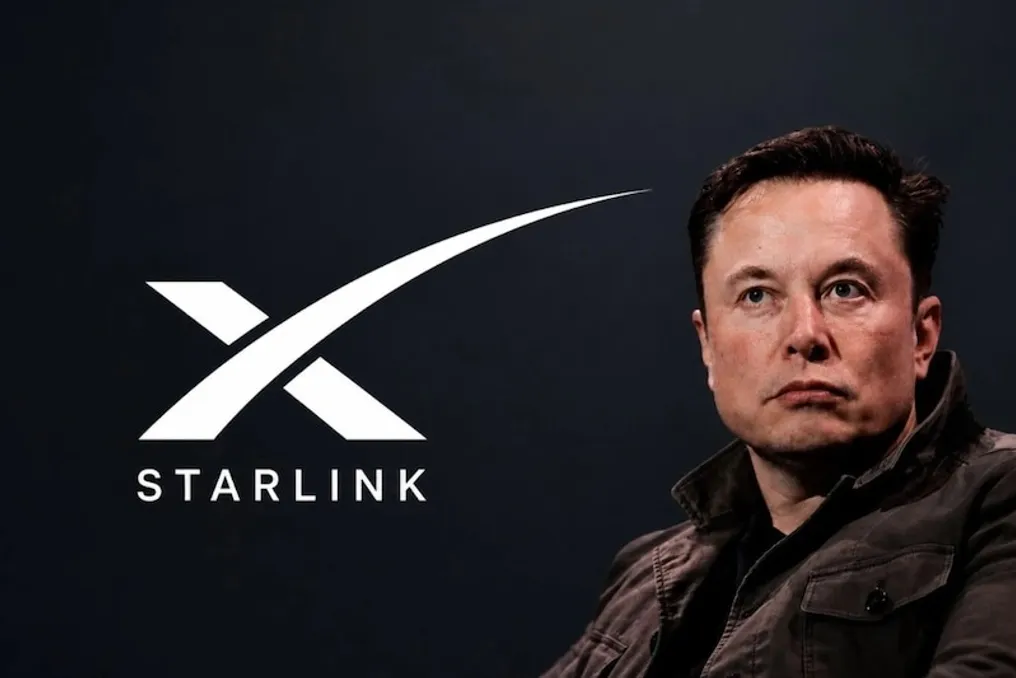
SpaceX, a company owned by one of the world's wealthiest individuals, Elon Musk, has long sought to provide its Starlink satellite internet service in India. The attractiveness of the Indian market is due to the growing middle class, large population, and increasing purchasing power.
Musk claims that his Starlink has received licenses in 165 countries and that the company has met several requirements of the Indian government while preparing ground infrastructure to provide the service. Nevertheless, the Indian government has not yet approved the launch of this service.
According to one report, Starlink began attempts to operate in India in 2022. In June 2025, it was issued a license agreement for satellite communication services by the Ministry of Telecommunications. Subsequently, in September 2025, it was granted spectrum for testing. However, launching a commercial service requires completing several procedures, including obtaining security clearances.
Following recent objections from Elon Musk, the Indian Ministry of Telecommunications rejected his claims. The Ministry stated on October 8 that the satellite communication regulatory system in India is impartial and non-discriminatory. The government emphasized that Starlink is at the same stage of regulatory review as two other companies—Jio Satellite and OneWeb from Airtel.
Furthermore, on October 9, 2026, Telecom Minister Jyotiraditya Scindia announced that the process of determining the spectrum cost for satellite communication is in its final stages. If the Indian government delays issuing licenses under the pretext of security, billionaire Musk's objections become meaningless, as the state's sovereignty over national security matters is non-negotiable.
Starlink is a satellite internet service from Elon Musk's SpaceX. As the name suggests, the company provides internet access via satellites. Starlink delivers internet through a network of small satellites located approximately 550 kilometers from Earth. Unlike traditional satellite internet systems where satellites are at a much higher altitude, Starlink's satellites are relatively close to the planet's surface. This results in reduced latency when sending and receiving data, which improves services such as video calls, online gaming, and streaming video.
The main advantage of this system is that it does not depend on mobile towers or fiber optic cables laid underground. The user requires a special antenna and router that connects to the satellite to receive the internet. This allows connectivity even in mountainous regions, remote villages, maritime zones, and disaster-stricken areas. Musk calls this feature the biggest unique selling proposition (USP) of his company, arguing that it enables internet provision in hard-to-reach regions of India without laying cables.
However, such continuous internet provision raises security questions in a country like India, leading India to proceed cautiously while considering security issues. Both India and America have very strict security standards. The US has imposed strict restrictions on companies, technologies, and services related to certain countries based on national security. The American government's stance is particularly stringent regarding China's communication and surveillance technologies. US concerns stem from the possibility that foreign governments could gain access to confidential networks, government communications, and citizen data through companies from their countries and use this to their advantage.
Essentially, telecommunication networks, satellites, and internet services are not only commercial tools but are also linked to military operations, intelligence, and national security. Therefore, American politics places great importance on the nationality of the company, its ownership, and the potential influence of the associated government.
Citing national security, the US has imposed bans on many major technology companies worldwide, most of which are Chinese. China is America's main rival. The US has completely ceased using products and services from these companies in government agencies, military institutions, and critical infrastructure. Among these giants is the Chinese technology company Huawei. The US has been tightening control over this company's 5G equipment, telecommunications gear, and smartphones since 2019. American telecom companies and government agencies do not use any Huawei equipment. Furthermore, the absence of Google services in new phones has effectively removed the company from the American market.
In September 2026, Huawei stated in a New York court that the case concerned competition, not a conspiracy. The company insisted that it was about innovation, not theft, and that ordinary business operations were being portrayed as a crime. Another company, ZTE, has also been banned from selling telecommunications equipment and mobile devices. American government networks and major telecom operators do not use ZTE equipment. The production and sale of new models have been practically halted. In 2019, the Donald Trump administration placed Huawei on the 'Entity List.'