Elon Musk criticizes Starlink launch delay in India and addresses Mukesh Ambani
Read more
The times of India
timesofindia.indiatimes.com

Elon Musk criticizes Starlink launch delay in India and addresses Mukesh Ambani

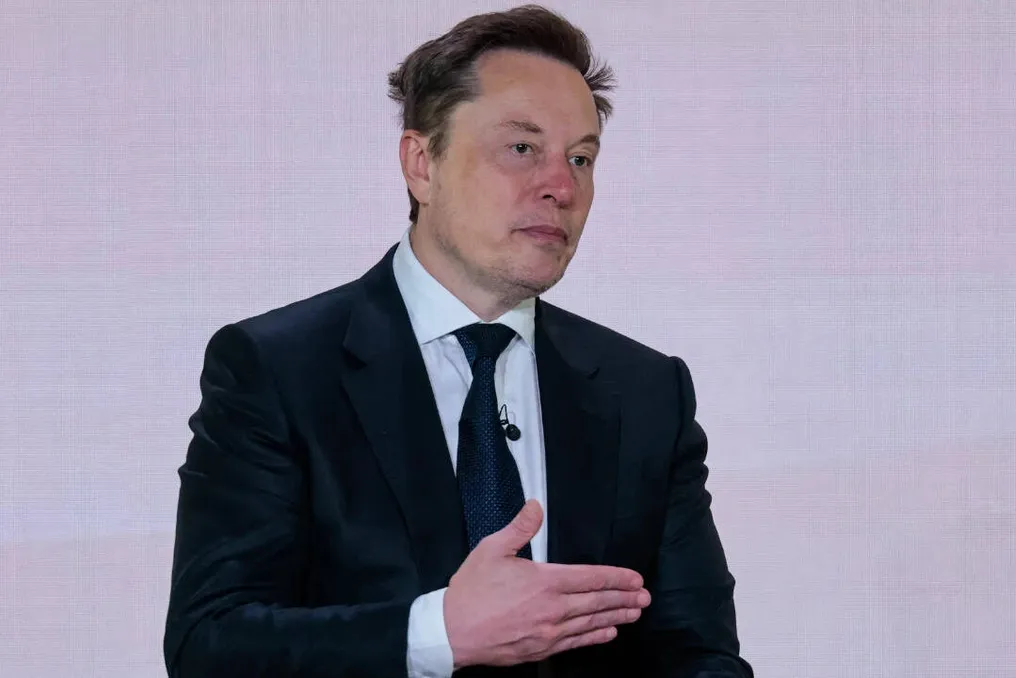
Elon Musk, CEO of SpaceX, once again issued sharp criticism on Friday regarding the delay of the commercial launch of Starlink in India, directing his remarks to billionaire Mukesh Ambani.

In his post on the social network X, Musk addressed the chairman of Reliance Industries as 'Ambani the Prime Minister,' asserting that he is the 'real boss of India,' and questioned the reason why Starlink has not yet received the necessary permissions to begin commercial operations.

Musk wrote: 'Dear Prime Minister Ambani, please accept my humble apologies for not realizing that you are the real boss of India. Naturally, you would prefer to maintain your monopolistic exploitation of the great Indian people, but could you still consider allowing Starlink to compete?'

He argued that Starlink is capable of improving internet access in underserved areas of the country, especially for children seeking education and for small businesses looking to enter international markets.

Musk added: 'In many parts of India, as in all countries, there is no internet access, which deprives children of the opportunity to receive an education, and small businesses of the opportunity to sell their goods on the global market. Starlink will change their lives for the better. Thank you.'

Musk's latest comments came a day after he accused unnamed Indian business groups of obstructing Starlink's market entry to protect their positions. He claimed that 'certain oligarchs' were hindering the companies, aiming to maintain 'monopolistic control over the Indian people.'

The Indian government rejected these accusations, insisting that the delay is related to pending regulatory and safety requirements, rather than favoring domestic telecommunications companies.

At the Indian Mobile Congress (IMC) 2026 in New Delhi, Union Minister of Communications Jyotiraditya Scindia stated that India will not allow a monopoly in any sector, and that three satellite communication operators have received licenses. These include Reliance Jio Satcom, Eutelsat OneWeb, supported by Bharti Airtel, and Starlink. Amazon, with its Kuiper project, also expressed interest in entering the market and will undergo the standard evaluation procedure.

Scindia reported that the government is finalizing the satellite spectrum pricing system while the Ministry of Home Affairs and other agencies conduct security assessments. Commercial operations can commence after the companies meet the established requirements. The government also stated that security clearances remain incomplete for all three licensed operators, refuting the assumption that only Starlink faces regulatory difficulties.
Similar stories

Four-hour documentary reveals the behind-the-scenes life of Elon Musk
Read more
olhardigital.com.br

Four-hour documentary reveals the behind-the-scenes life of Elon Musk

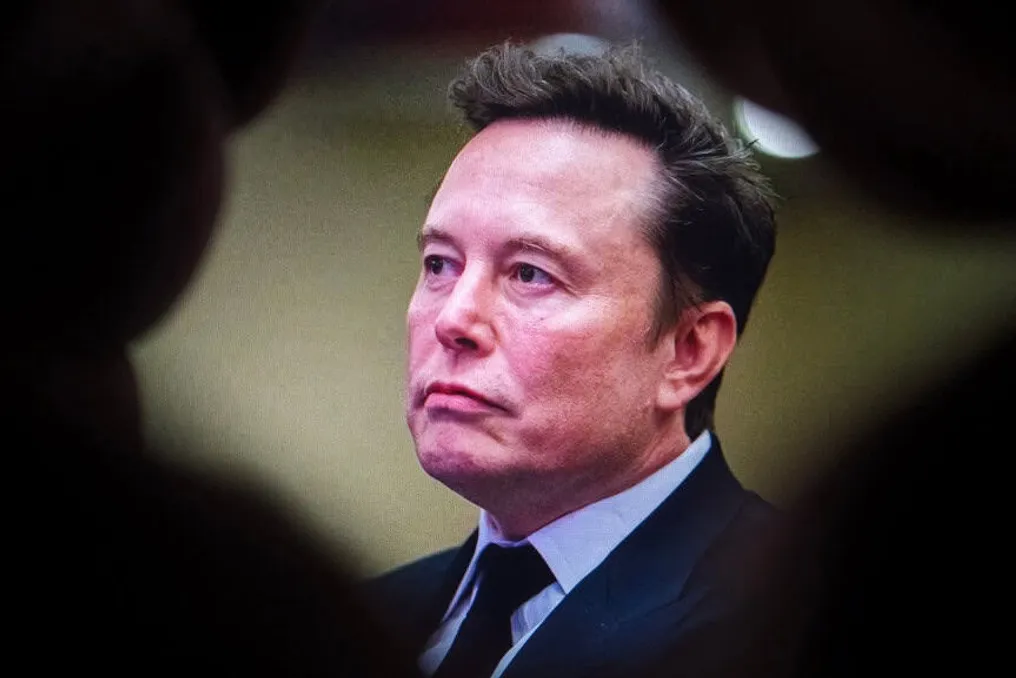
The four-hour film titled 'Musk,' directed by Alex Gibney, explores the businessman's life journey through public records and interviews, questioning how Elon Musk accumulated so much power and why society allowed such a concentration of influence.

The film, which is screening in theaters, traces the billionaire's career and his recent political activities. Despite extensive investigation, critics at The New York Times believe the picture offers no new revelations about a personality whose life has already been widely covered.

Musk, who leads Tesla, SpaceX, and Starlink, declined to give an interview to the director. To circumvent this absence, Gibney created a digital avatar based on the entrepreneur's statements and public appearances. This representation reproduces his voice and words and addresses the viewer directly.

This technique helps present the interpretation underlying the documentary: Musk views the world as a game to be won, in which other people can become opponents or expendable material. The film also touches upon his interest in simulation theory, according to which reality might be a simulation created by a higher intelligence.

The first half of the film focuses on the businessman's professional trajectory. Former colleagues cast doubt on the image of the technological genius, recounting episodes of credit appropriation and practices deemed deceptive. After a ten-minute break, the narrative shifts to recent events, focusing particularly on Musk's involvement in DOGE, the initiative to cut government spending, and his alignment with the far-right wing.

The documentary also uses testimonies from two women who were in relationships with Musk. Justine Musk, his first ex-wife, describes a relationship marked by dominant behavior, according to her account. She shares how the businessman defined himself as an 'alpha male' and found ways to make her believe she was wrong during arguments.

Ashley St. Clair, an influencer who previously held conservative views and is the mother of one of Musk's children, claims their relationship lasted two years. In her account, she describes non-disclosure agreements and alimony payments related to the businessman's children's mothers. St. Clair also states that her alimony was reduced by 60% after she publicly criticized Musk. She links this to a message in which he allegedly advocated for them to have 'a legion of children before the civil war.' These testimonies help reveal aspects of Musk's private life through the experiences described by these two women.

In examining Musk's rise, Gibney investigates potential influencing factors, such as the businessman's childhood, his need for admiration, and allegations of drug use. The documentary also analyzes the Silicon Valley environment, where entrepreneurs considered eccentric geniuses can gain recognition despite controversial behavior.

However, according to The New York Times, the film fails to convincingly explain how Musk managed to concentrate so much power. The investigation leaves questions unanswered: the body of information is vast, but in the newspaper's assessment, it offers few new discoveries. The central question remains open: to understand Musk, one must also consider the social and business environment that facilitated his ascent.

Elon Musk Criticizes After India Refuses to Recognize Him as Oligarch; Controversial Aspects of Starlink Discussed
Read more
timesofindia.indiatimes.com

Elon Musk Criticizes After India Refuses to Recognize Him as Oligarch; Controversial Aspects of Starlink Discussed

After the Indian government rejected Elon Musk's statement that his telecommunications company faces regulatory hurdles due to 'oligarchs,' Musk initiated a series of messages on Twitter.

These comments appeared against the backdrop of the Starlink delegation's participation in the Indian Mobile Congress, which is taking place in the country's capital. Previously, Musk claimed that his telecommunications service was experiencing difficulties in India due to the influence of 'oligarchs,' a claim decisively rejected by the Indian government.

The Minister of Information Technology, Jyotiraditya Scindia, stated on Thursday that there has been a significant decrease in data prices—by almost 97%—which has contributed to wider service penetration, and also noted a drop in voice call prices.

Musk previously wrote in his post on Wednesday: 'Unfortunately, certain oligarchs are blocking us to maintain their monopoly control over the Indian people. You can guess who they are... This is a crime against the people of India!'

Reasons for Controversy Surrounding Starlink

The core idea of Starlink is to provide internet access to areas where traditional networks are either inaccessible or too expensive. However, Elon Musk's satellite internet service has become more than just a communication tool. Its growing use in war zones, conflict areas, and during internet outages has turned Starlink into a strategic technology, raising questions about who controls access to it.

How Starlink Functions

Starlink uses thousands of small satellites in low Earth orbit, approximately 550 km above the planet. Unlike traditional communication satellites located at an altitude of about 36,000 km, these satellites are capable of transmitting data with lower latency. Users connect via a small receiver with an electronically steered antenna that automatically links up with satellites passing overhead. Furthermore, the satellites can exchange data with each other using laser links.

According to the Kutniti Foundation's 2024 report, Starlink was described as a 'wolf in sheep's clothing.' The Foundation argued that the global Starlink satellite network provides capabilities that go beyond ordinary telecommunication services and could pose strategic concerns for countries like India.

The Kutniti Foundation also pointed to Starlink's connections with US intelligence and military agencies, including publicly known contracts involving Musk's companies.

The Foundation asserts that Starlink is a dual-use technology because it can provide high-speed internet while simultaneously supporting functions such as high-definition video transmission and live video conferencing.

Unlike traditional telecommunication networks, which rely on domestic infrastructure, Starlink satellites operate outside national territory, calling into question regulatory control. Communications Minister Jyotiraditya Scindia noted that Starlink has not yet met all required security conditions, and India's license will only be issued after these requirements are fulfilled.

Moreover, the satellites themselves raise security questions. The satellites travel at speeds of approximately 11,000 to 28,000 km/h in Earth orbit and can be used to monitor activities within the country's territory.

Akash Ambani on Elon Musk's comments regarding Starlink and Jio's satellite internet development
Read more
www.aajtak.in

Akash Ambani on Elon Musk's comments regarding Starlink and Jio's satellite internet development

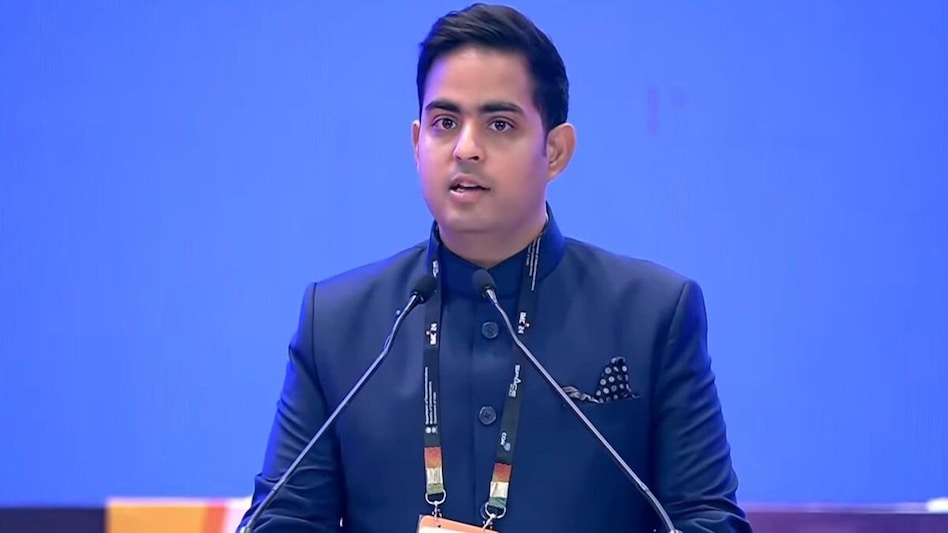
Important information has emerged regarding the Reliance Jio satellite internet service. The company's Chairman, Akash Ambani, stated that Jio is actively working on its satellite service but declined to name a precise date for the launch of the first service in India.

These statements were made by Akash Ambani during a special interview with India Today as part of the India Mobile Congress 2026. When asked about Elon Musk's recent statement and ongoing discussions about Starlink in India, he chose not to comment on it.

He emphasized that the company is currently focused exclusively on its work and aims to provide quality service to Indian customers.

How satellite technology will help bring broadband access to homes

Akash Ambani noted that satellite technology can play a crucial role in the future expansion of broadband internet access for a larger number of people. This is particularly relevant for households that have not yet received conventional broadband internet.

According to him, the most significant application of satellites may be found in home broadband access. This will simplify the delivery of the internet to areas where laying fiber optics or other types of networks is difficult.

Ambani added that Jio is already working to provide broadband access to as many homes as possible in the country, and satellite communication can significantly accelerate this process.

Jio's focus on indigenous technologies

Akash Ambani also reported that Jio is making significant progress in developing end-to-end indigenous technologies for its satellite service. The company aims for its satellite technologies to meet or exceed global standards.

Previously, Jio demonstrated a similar focus on its second technology, and now the company is preparing to bring this same level of technology into the satellite internet sector.

What is the situation with Starlink?

In India, besides Jio, Starlink from Elon Musk's company is also featured in the discussion about satellite internet. Starlink is preparing infrastructure to deliver internet to rural and sparsely populated areas where access to conventional broadband internet is limited.

Starlink has received a license to provide services in India. Furthermore, licenses have also been issued to OneWeb from Jio and Airtel. Nevertheless, questions remain regarding security and spectrum allocation before commercial operations can begin.

Elon Musk claimed that some 'oligarchs' are trying to hinder Starlink's entry into India. The government rejected this claim, stating that the allocation of satellite spectrum will be carried out transparently and impartially.

When will Jio's satellite service start?

The main question remains unanswered: when exactly will Jio's satellite internet service begin? Akash Ambani did not provide an answer to this question. He clearly stated that he does not wish to name a specific launch date. Thus, although work on Jio's satellite service is progressing rapidly, customers may have to wait some more time.

Popular