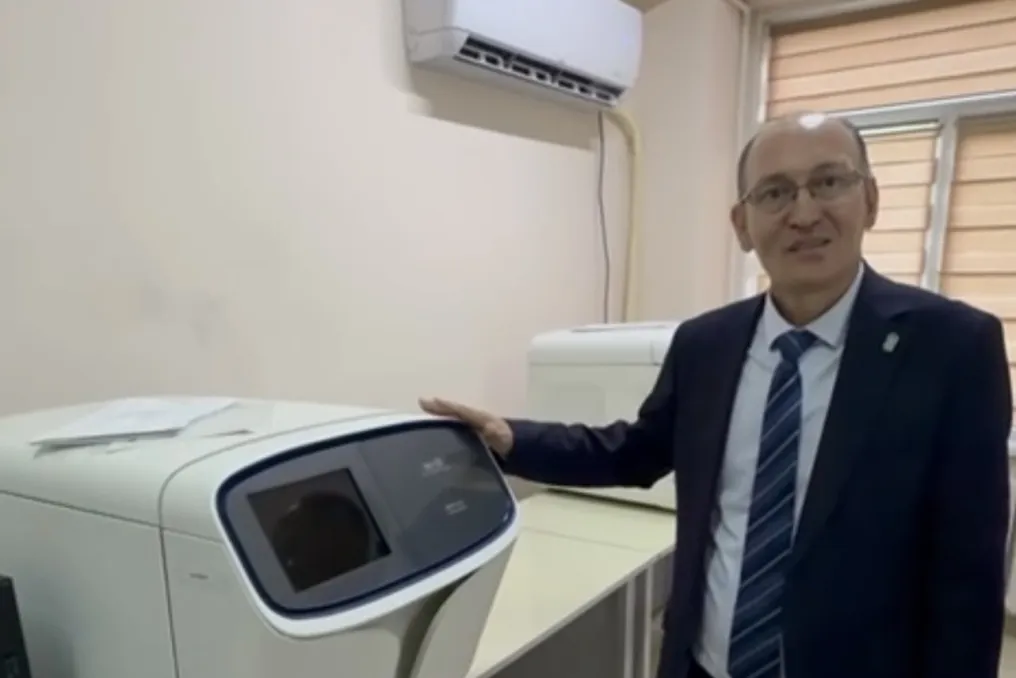
Scientists from the Center for Genomics and Bioinformatics of the Academy of Sciences of the Republic of Uzbekistan conducted the first complete sequencing of coronavirus genomes within the country and subsequently performed bioinformatics analysis on them. The results of this study were submitted to the international open database of viral genomes, GISAID.
Thanks to this work, Uzbekistan has joined the ranks of fifty countries worldwide that have been able to fully decode the DNA sequences of all coronavirus variants circulating in their territory. Specialists from the center took samples from 62 individuals who had a confirmed diagnosis from the Department of Sanitary and Epidemiological Welfare and Public Health of Tashkent Region and the private clinic Biogen Med.
Using a next-generation sequencer, 32 samples were analyzed in detail, corresponding to a genetic chain length of 29,903 nucleotides. The bioinformatics analysis, performed using the Nextclade program, allowed for the comparison of variants circulating in the republic with the global database and determined the placement of 18 samples on the phylogenetic tree.
It was found that the strains belong to groups GR (20V) and S (19V). Group GR (20V) on the tree is located near viruses from Europe, Asia, Africa, and Australia, while group S (19V) unites genomes characteristic of Asian and African regions, indicating the presence of multiple sources of infection import.
The complete decoding of COVID-19 genomes and their comparison with global databases laid the foundation for continuous monitoring of virus mutations under local conditions. This data obtained is crucial for developing a national vaccine aimed at combating the specific strains spreading in Uzbekistan.