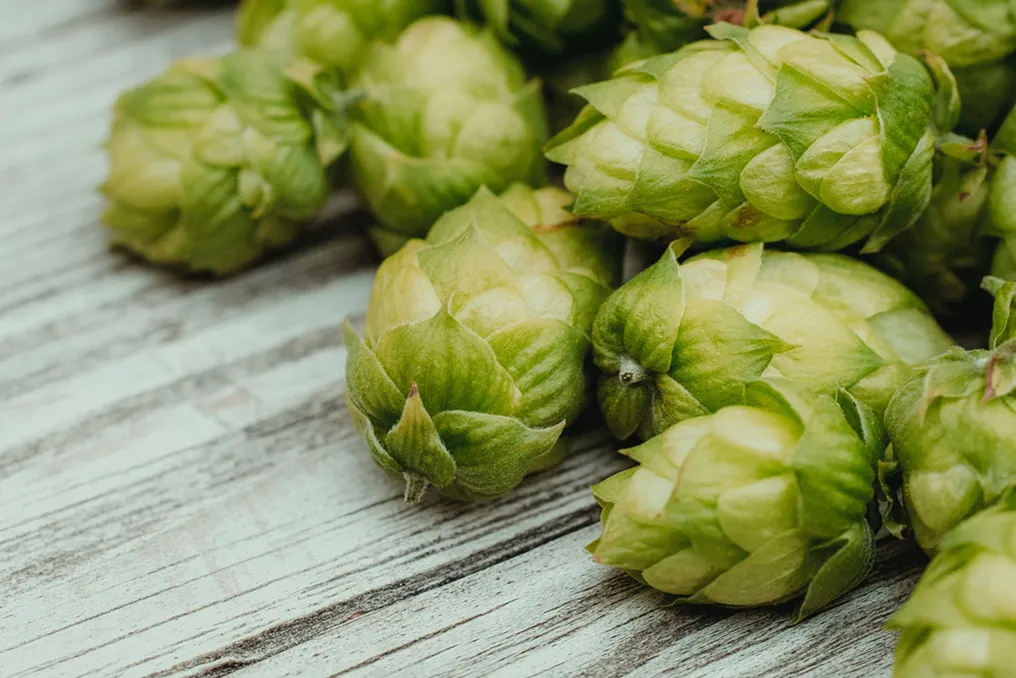
It is possible to use other bitter herbs in the manufacture of beer instead of hops. Although the fermented beverage has existed for about 13 thousand years, hops only gained popularity approximately a thousand years ago.
During the Middle Ages, brewers used a combination of herbs known as gruit to give bitterness to their drinks. This mixture could contain wormwood, juniper, St. John's wort, and other vegetables that were pleasant to consumers, with each producer having its own formula.
The transition from gruit to hops occurred around the 11th century. This happened after the discovery that beer produced with hops had greater durability, facilitating its transport and commercialization to more distant regions, thanks to its antibacterial properties.
Hops fulfill several functions in beer. One of these is providing characteristic bitterness through alpha acids, which are chemical compounds present in the resinous glands of hop flowers. When subjected to cooking during the manufacturing process, these acids undergo a chemical reaction called isomerization, transforming into iso-alpha acids, responsible for both the bitterness and the antimicrobial action of the beverage. The IBU (International Bitterness Units) index, which quantifies the bitterness of the beer, is determined based on these iso-alpha acids.
A study conducted by Unesp in 2018 investigated the use of five bitter, Brazilian plants in beer production: carqueja, quinine, pau-tenente, guatambu, and artichoke. All these vegetables maintained the physicochemical characteristics of the beer, including alcohol content, suggesting their viability for use.
It is important to note that these herbs do not generate alpha acids. In these cases, the bitterness of the beer comes from other substances, such as flavonoids and terpenes in the case of carqueja, or quassinoids in the case of pau-tenente. Although these substances do not have antibacterial properties, this does not represent an impediment to the current industry, since all beverages undergo the pasteurization process.
In a tasting test involving one hundred participants, the beer made with carqueja was the most appreciated, presenting a herbal aromatic profile. On the other hand, the drink made with artichoke received the least acceptance, being classified as excessively bitter.