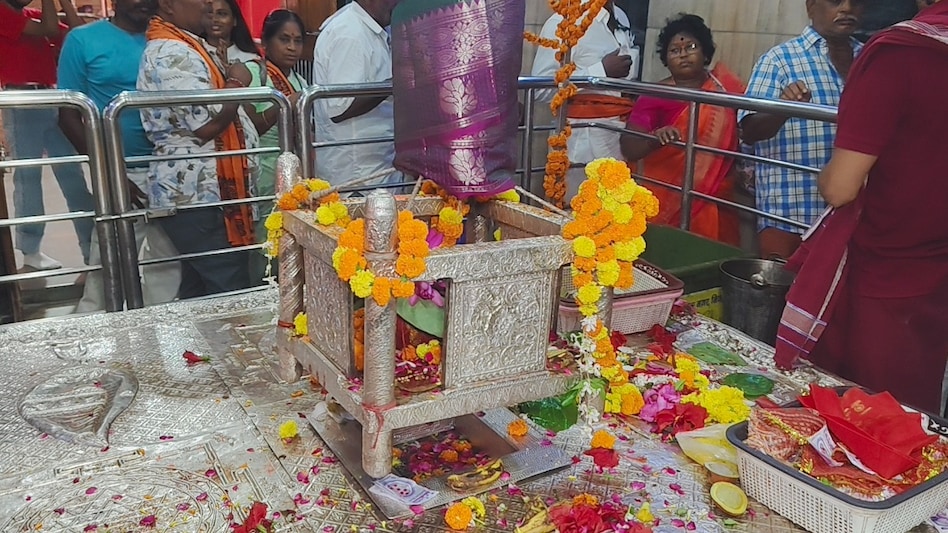
Prayagraj is known as a city of pilgrims, as well as a center of faith and piety. The Maa Alop Shankari Temple, located here, is recognized as one of the 51 Siddhipetas. The main feature of this shrine is the absence of a traditional statue or image of the Mother; instead, worship is performed to a deity residing in a sacred cradle.
There is a belief that all wishes sincerely offered to the Mother's temple are fulfilled. This is why pilgrims arrive from different parts of the country to make a pilgrimage and see the deity.
The religious significance of this temple, located in Alopibagh, Prayagraj, is considered centuries old. According to mythological history, Mata Sati, upset by Lord Shiva's insult to her father Daksha Prajapati at his fair, sacrificed her life in the fire of yoga. After this, Lord Shiva began to wander the universe, carrying her earthly body. To save the cosmos from this situation, Lord Vishnu separated parts of Mata Sati's body using his Sudarshana Chakra.
It is believed that where parts of Mata Sati's body fell, the Siddhipetas were established. According to legend, it was in this place that Mata Sati's palm fell in Prayagraj, becoming invisible, hence 'Alop'. Due to this tradition, the shrine received the name Maa Alop Shankari. Pilgrims revere this place as a Siddhipeta and seek the Mother's blessings by visiting it.
The most unique tradition of the Maa Alop Shankari temple is related to the divine cradle installed in the shrine. There is no traditional statue of the Mother in the main hall of the temple. Pilgrims circumambulate and worship the deity in the cradle, presenting their desires before the Mother. They believe that prayers offered with true devotion will surely reach the Mother.
In addition to nine forms of Goddess Durga, Kala Bhairava, Maa Shitlu, and Lord Hanuman can also be seen in the temple premises. Because of this, pilgrims visiting this place receive blessings not only from Maa Alop Shankari, who resides in the cradle, but also from other deities.
During Navaratri, the number of visitors to the temple increases significantly, and people come from afar to make a pilgrimage.
There is a sacred pond on the temple grounds. According to belief, pilgrims whose wishes have been granted fill this pond with milk, yogurt, and nuts as a sign of gratitude to the Mother. This tradition is closely linked to the faith and devotion of the pilgrims. People also perform special rituals here when their requests are fulfilled.
Newlyweds come to the temple after marriage with wishes for happiness and prosperity in family life. There is also a tradition of performing the Mundan ritual (head shaving) for an infant after the birth of the first child in the family. During Navaratri, pilgrims look at the Mother's cradle, bringing her shawls, coconuts, flowers, and fruits to ask for blessings.
The Maa Alop Shankari Temple is a primary center of faith, trust, and religious beliefs. Pilgrims believe that anyone who comes here with a prayer of unwavering faith receives fulfillment of their wishes from the Mother. It is because of this faith that pilgrims visit the temple even on ordinary days, and during the nine days of Navaratri, a special atmosphere prevails in the temple.
During Navaratri, thousands of pilgrims arrive to worship the Mother. They worship the cradle, bring shawls and coconuts, and pray for the well-being of their families. A distinctive feature of this unique Maa Alop Shankari shrine is that the divine form of the Mother is revered in the form of a cradle, and this tradition gives the temple its special identity.