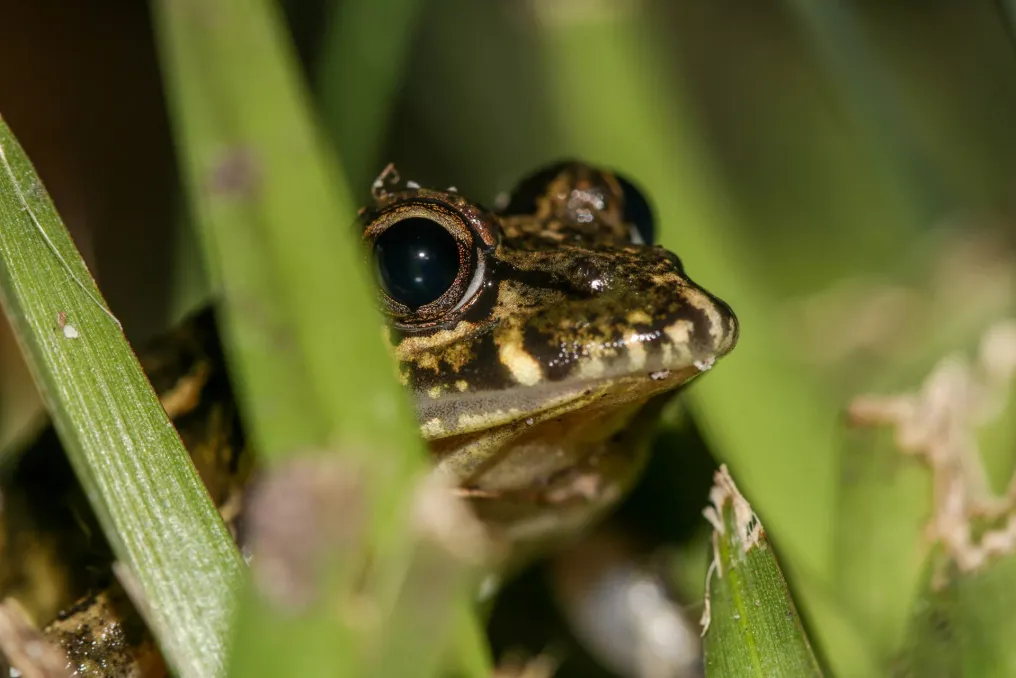
Wildlife populations in Africa are facing increasing pressure. According to the WWF Living Planet Report 2026, the average size of monitored terrestrial and freshwater vertebrate populations across Africa has decreased by 80% between 1970 and 2022.
The report, titled 'Science of Hope,' analyzes global biodiversity trends and emphasizes the urgent need to address the factors causing wildlife decline. It also notes conservation successes, such as the recovery of some elephant populations in South Africa, demonstrating that sustained efforts can aid nature's restoration.
Regional data from the report places Africa among the areas experiencing the sharpest decline in tracked wildlife species, alongside Latin America and the Caribbean, as well as Asia and the Pacific region.
Globally, the greatest decline has been recorded among freshwater populations, followed by terrestrial and marine populations. The Living Planet Report 2026 reports a decrease in freshwater populations by 85%, terrestrial populations by 69%, and marine populations by 59% worldwide.
Freshwater ecosystems face particular challenges. Dam construction and other alterations to water flows can change habitats and impede migration routes, negatively affecting species dependent on connected river systems. The most frequently cited threats to monitored populations are habitat loss and degradation, followed by overexploitation, climate change, pollution, invasive species, and diseases.
These factors are closely linked to human activity. The report identifies three main systems contributing to biodiversity loss: food production, energy, and finance. Agriculture contributes significantly to habitat destruction, while the burning of coal, oil, and gas leads to greenhouse gas emissions, causing climate change and impacting ecosystems.
Financial investments also play a role. In 2023, approximately $7.3 trillion was directed toward activities damaging nature, compared to $220 billion allocated to nature protection or restoration. These figures demonstrate a financial imbalance that must be corrected to support biodiversity conservation.
The Global Living Planet Index, developed by the Zoological Society of London, recorded a 73% decrease in the average size of tracked wild animal populations between 1970 and 2022. This estimate is based on 35,803 tracked populations representing 5,790 vertebrate species, including mammals, birds, fish, reptiles, and amphibians.
The figure of 73% does not mean that 73% of the world's wildlife has disappeared. Instead, it reflects the average change in the size of tracked populations over time. The report showed that 43% of tracked populations were growing, and 7% remained stable, meaning that half of the populations included in the index were either stable or increasing, despite the overall downward trend.
For Africa, regional findings highlight the vulnerability of wildlife and the ecosystems that support it. Healthy ecosystems provide vital services such as fresh water, climate regulation, and pollination. Consequently, their degradation can negatively affect both wildlife and communities and livelihoods.
Despite the alarming findings, the report points to examples of wildlife recovery, demonstrating the value of sustainable conservation efforts. Although African savanna elephants remain generally threatened, their populations are growing in certain areas of South Africa where local communities co-manage land with elephants.
This underscores the importance of involving communities in conservation efforts and considering the needs of both people and wildlife. Long-term approaches promoting coexistence can help protect species and their habitats. The report also highlights recoveries among wild tigers, bluefin tuna, and green sea turtles. These examples show that coordinated actions, clear goals, and adaptable conservation plans can yield positive results.
However, conservation initiatives alone are insufficient to reverse biodiversity loss unless broader systems causing environmental damage are changed. The report calls for changes in food production, energy generation, and financial investments, alongside ecosystem restoration and halting deforestation.
The report emphasizes the need for collective action involving governments, businesses, financial institutions, indigenous peoples, and local communities. It also urges countries to fulfill existing international commitments, including the Kunming-Montreal Global Biodiversity Framework and the Paris Agreement on Climate Change.
For Africa, solving the problem of wildlife decline requires habitat protection while simultaneously addressing broader pressures on ecosystems. Conservation initiatives must also be supported by solutions that promote sustainable resource use and direct investment towards nature restoration.
The Living Planet Report 2026 serves as a serious warning about biodiversity loss, but its findings also show that recovery is possible. African wildlife statistics underscore the urgency of this task, while the elephant populations in South Africa serve as proof that sustainable, community-managed conservation can make a difference.