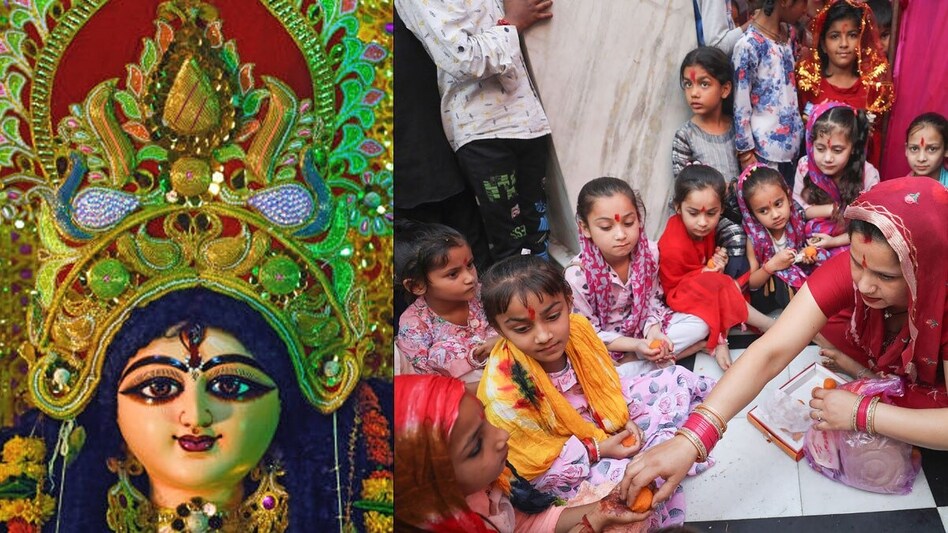
List of necessary materials for performing Puja during Sharadiya Navratri 2026
Read more
Aaj Tak
www.aajtak.in

List of necessary materials for performing Puja during Sharadiya Navratri 2026

The festival of Sharadiya Navratri is very significant for followers of Mata Durga, as nine different aspects of the goddess are worshipped during these nine days. According to the Panchang, Sharadiya Navratri will begin on October 11th this year, and the Vijayadashami festival will be celebrated on October 20th.

On the first day of Navratri, worship begins in homes and temples with the installation of a Kalasha. Many devotees also light a continuous fire (Akhand Jyoti), which is kept burning throughout all nine days.

It is recommended to prepare all necessary items for the Navratri celebration in advance. It is especially important to gather the items needed for Ghatsthapana, worship of the goddess, performance of Havan, and Kanya Pujan, to avoid shortages of materials during the ritual. If you plan to observe a fast and worship Mata Durga this time, below is a complete list of materials for Puja during Sharadiya Navratri.

Necessary materials for Kalasha installation

To grow barley, earth, barley seeds, and a vessel made of clay, brass, or copper are required. Mango leaves, a small bowl to place on top of the Kalasha, grain for this bowl, coconut, a red woven cloth or chunri, mauli or kalava, roli, kumkum, sindur, and turmeric are also needed, along with akshat (whole rice), pure water, Gangajal, one coin, and supari.

Materials for worshipping Mata Durga

For worshipping Mata Durga, her statue or image, a wooden pedestal (chowki), red woven material to lay on the pedestal, roli, kumkum, and sindur, akshat, fresh flowers and floral garlands, fruits, and sweets are needed. Materials for the sixteen adornments of the goddess are also required: kamalaghatta, panchmava, paan and supari, cloves and small cardamom, batashe or other prasads, oil or ghee for the lamp, pure ghee, incense and agarbatti, turmeric, coconut, nutmeg, and javitri, dakshina (donation), as well as naivedya—the offering presented to the goddess.

Materials for continuous fire and Havan

To maintain the Akhand Jyoti, a vessel for it, cotton wicks or those made of kalava, ghee or oil, and an altar for Havan are required. Additionally, materials for Havan, turmeric, mango wood, and special types of wood and materials intended for the Nine Grahas Havan are necessary.

What is needed for Kanya Pujan?

For Kanya Pujan, roli or kumkum, akshat, flowers, mauli, fruits, sweets, halwa-puri or other delicacies, and dakshina will be required.

Similar stories

Dates and Auspicious Time to Begin Sharadiya Navratri 2026 and Install Kalash
Read more
www.aajtak.in

Dates and Auspicious Time to Begin Sharadiya Navratri 2026 and Install Kalash

The festival of worship of Goddess Durga, known as Sharadiya Navratri, will begin on October 11th on Sunday and conclude on October 20th on Tuesday, the day of Vijayadashami.

According to special religious beliefs, astrological calculations, and Panchang, this year Goddess Durga is expected to arrive on an elephant. In traditional beliefs, the goddess's arrival on an elephant is considered extremely auspicious, as it heralds good rain, progress in agriculture, happiness, prosperity, peace, and stability. Nevertheless, it should be remembered that these predictions related to the goddess's ride are based on religious beliefs and traditional astrological calculations.

Pandit Shripati Tripathi provides information regarding the start of Sharadiya Navratri, the auspicious time for installing the kalash, the main days of the festival, and the mode of transport on which the goddess will arrive this time.

Navratri Begins on October 11th

Sharadiya Navratri will commence on October 11th on Sunday. This day will mark Ashvin Shukla Paksha Pratipada. Rituals for installing the kalash will be performed, and worship will be offered to the first form of Goddess Durga, Shailputri.

On the first day of Navratri, the kalash is installed at home, and the worship of the Goddess begins. Over nine days, devotees worship various forms of the Mother, observing fasts, chanting hymns, reading sacred texts, and engaging in spiritual practices according to their faith and capabilities.

Auspicious Time for Installing the Kalash

According to the Panchang, Chitra Nakshatra and Vaidhruti Yoga will be present on October 11th. The Abhijit Muhurta is particularly significant for installing the kalash. On this day, the Abhijit Muhurta will be from 11:36 AM to 12:24 PM. It is considered auspicious to install the kalash during this time.

However, due to differences in sunrise and local time across various cities, the timing may vary slightly. Therefore, devotees are strongly advised to confirm the time using their local Panchang.

Reading Durga Saptashati During Navratri

Navratri is not just a festival of fasting but also a time for worshipping strength and spiritual practice. Ashvin Shukla Paksha Navratri is associated with the worship of the primal power of Mother Durga, as well as the victory of Lord Shri Rama over Ravana. During Navratri, it is considered virtuous to read the Durga Saptashati or entrust its reading to a qualified Brahmin or priest.

It is believed that worshipping the Goddess brings happiness and peace to the family and promotes the spread of positive energy. Below are the main days of Navratri and the associated religious events.

Rituals During Navratri

October 16th, Friday, will be dedicated to Belvarna Puja. Belvarna is one of the important traditions of Durga Puja, especially revered in the traditions of Bengali and East Indian Durga Puja.

October 17th, Saturday, will feature worship related to Maha Saptami. According to the Panchang, the worship related to Saptami will take place after 8:58 AM. Many important Navratri traditions will be observed on this day, including the entry of Naupatrika, Nisha Puja, and the installation of the goddess in pujalayas in Mula Nakshatra. Furthermore, the gates for visiting the goddess will open on this day, enhancing the enthusiasm of Durga Puja, allowing devotees to see the goddess.

October 18th, Sunday, will observe the Shri Durga Ashtami fast. On this day, the eighth form of Goddess Durga, Mahagauri, is worshipped. Ashtami is considered a very important day in Navratri practice. Devotees observe fasts, worship Goddess Durga, and perform other religious rites, including Kanya Pujan, according to their beliefs. Special worships and Mahanisha Puja are also scheduled for this day.

October 19th, Monday, during the conjunction of Ashtami and Navami, Sandhi Puja will be performed. According to the Panchang, the specific time for Sandhi Puja will be at 6:53 AM. This moment of merging Ashtami and Navami is considered extremely important from a religious perspective, hence the Sandhi Puja is conducted with special rituals and reverence. The festival of Mahanavami is also celebrated on this day.

October 20th, Tuesday, according to the rising date, will be Navami, and the Navami period will last until 9:35 AM. After this, the Navratri fast will conclude. Vijayadashami, or Dussehra, is also celebrated on this day. On this same day, the immersion of the images of Goddess Durga will take place.

Goddess's Arrival on an Elephant

According to religious beliefs and astrological calculations, Goddess Durga will arrive on an elephant this year. The goddess's arrival on an elephant is considered extremely auspicious in religious traditions. The elephant symbolizes prosperity, stability, and wealth. Therefore, it is believed that the goddess's arrival on an elephant can create an atmosphere of good rain, agricultural progress, happiness, prosperity, and well-being. Good rain holds particular significance in predominantly agrarian societies. However, it is important to clarify that these predictions concerning the goddess's ride are based on religious beliefs and traditional Panchang calculations.

In conclusion, starting with the installation of the kalash on October 11th, devotees must maintain reverence and self-control in worshipping Goddess Durga.
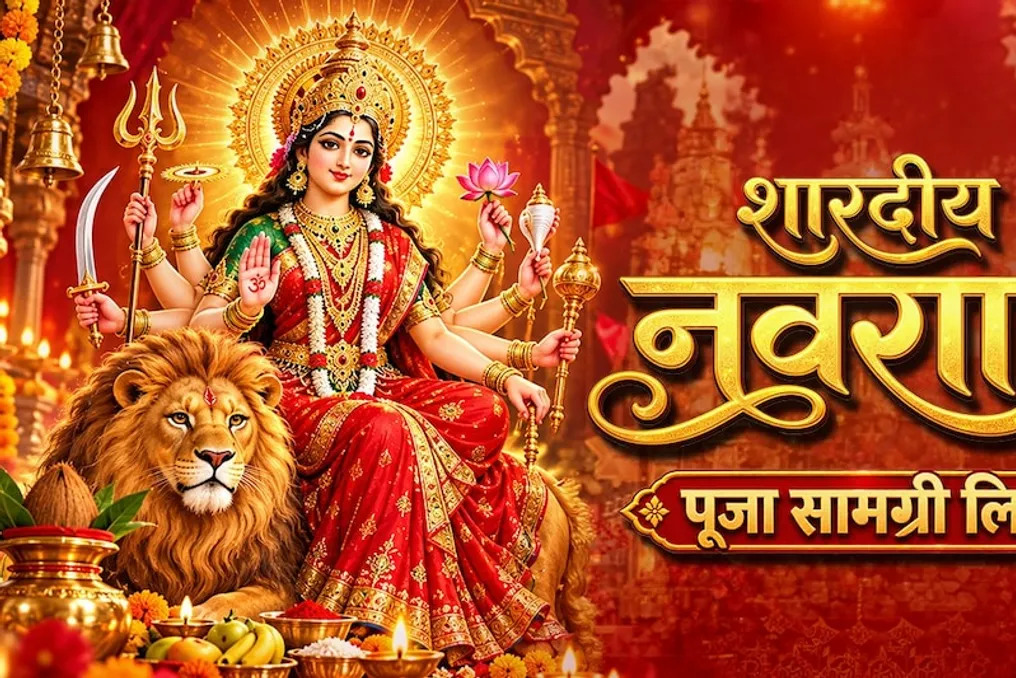

Dates for Mahaashtami and Mahanavami during Sharadiya Navratri 2026
Read more
www.aajtak.in

Dates for Mahaashtami and Mahanavami during Sharadiya Navratri 2026

Due to some uncertainty among people regarding the dates of Mahaashtami and Mahanavami during Sharadiya Navratri, especially for those observing fasts on Ashtami or performing puja and havan on Navami, experts have clarified the dates for these rituals.

In some families, worship is traditionally performed on Ashtami, while in others, the focus is on Navami. Questions arise about which day to observe the fast and worship on Ashtami, when the Mahanavami puja will take place, when it is auspicious to perform Kanya puja, and what the time for Sandhi puja is.

This year, Sharadiya Navratri will begin on October 11 and conclude on October 20 with the celebration of Vijayadashami. Expert Pandit Pravin Mishra provided information regarding the dates for Mahaashtami and Mahanavami.

Ashtami Tithi this year begins on October 18, 2026, at 8:27 AM and ends on October 19, 2026, at 10:51 AM. According to the waxing date, Ashtami will be considered on October 19. Thus, those whose traditions include special worship, havans, or Kanya puja on Ashtami can perform these rites on October 19.

If you are observing a fast on Ashtami, you should refrain from food on October 19 and worship the eighth form of Mother Durga, Mahagauri, according to all established rituals. People performing puja or feeding Kanyas can also perform this ritual during Ashtami Tithi on October 19. It is recommended to complete all Ashtami-related worship and Kanya puja before 10:51 AM.

For families where tradition dictates performing Mahaashtami at night, especially when worshipping Kuldevi or Mata Chamunda, they can conduct their family rituals on the night of October 18 after Ashtami Tithi commences.

After Ashtami Tithi ends on October 19 at 10:51 AM, Navami Tithi will begin. Consequently, Mahanavami puja, havan, and Kanya puja can be performed on October 19 after 10:51 AM.

If your family tradition involves performing Kanya puja on Navami, you can do so on October 19 after 10:51 AM. This means that Kanya puja can be performed on both Mahaashtami and Mahanavami on October 19.

Some people attach special importance to the waxing date and may perform Mahanavami puja and Kanya puja on October 20 as well. However, on this day, Navami Tithi lasts only until 12:50 PM. Therefore, devotees performing rituals according to Navami on October 20 must complete them before 12:50 PM.

Those whose traditions require observing a fast on Mahanavami can do so on the day of Navami, which is October 19. On this day, one should worship Mother Durga and observe the fast all day. It is considered appropriate to conclude the fast on the following day, Vijayadashami.

This year, the time for Sandhi puja is scheduled for October 19, 2026, from 10:27 AM to 11:15 AM, totaling only 48 minutes. This period, called Sandhi Kaal, comprises the last 24 minutes of Ashtami and the first 24 minutes of Navami.

In sacred scriptures, Sandhi Kaal is considered extremely important. According to religious beliefs, it was at this time that Mother Durga took the form of Chamunda and destroyed the demons Chanda and Munda. For this reason, the form of Chamunda of Mother Durga is specially revered during Sandhi puja. It is believed that worshipping Mother Chamunda at this special time brings the goddess's grace. Devotees offer the goddess lotus flowers and other items for worship according to their faith.

Popular