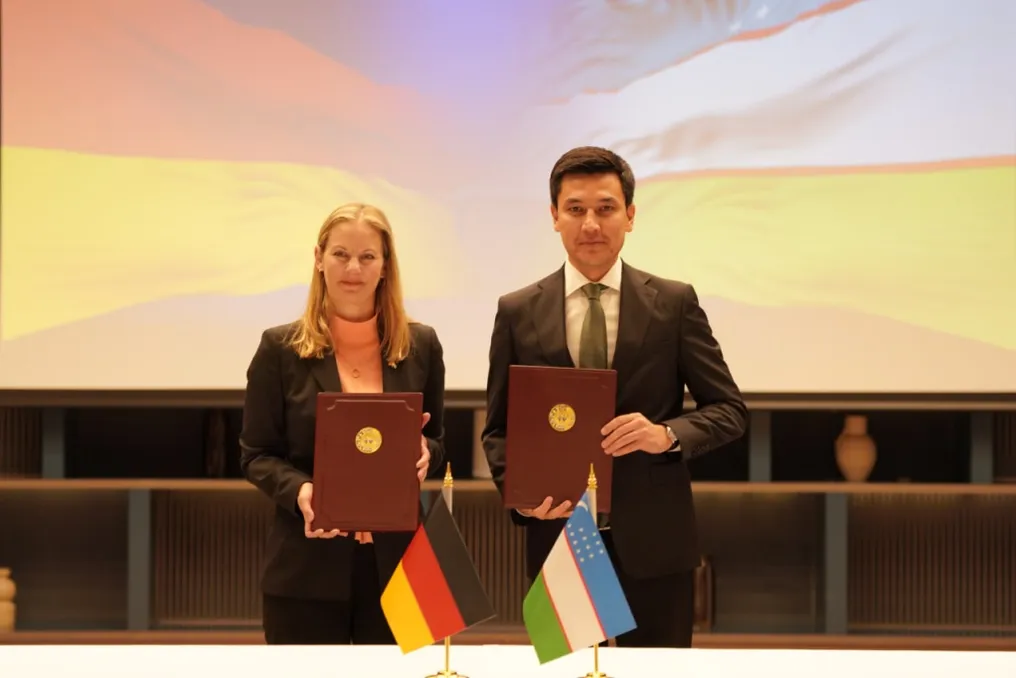
Germany to allocate 71 million euros for social and economic projects in Uzbekistan
Read more
Podrobno.uz [uz]
podrobno.uz

Germany to allocate 71 million euros for social and economic projects in Uzbekistan

Germany intends to allocate 71 million euros to support various projects in Uzbekistan. These funds will be directed towards economic development, strengthening social protection, reinforcing the rule of law, as well as projects in the fields of climate and energy.

According to Podrobno.uz from the German embassy, this decision was made following intergovernmental negotiations held on October 7. The parties confirmed their desire to continue cooperation, which has existed for over thirty years.

Furthermore, Germany expressed its readiness to support the implementation of the 'Uzbekistan-2030' strategy and contribute to achieving the UN Sustainable Development Goals.

Joint initiatives cover support for the private sector and trade relations, as well as the modernization of the vocational education system with the integration of the German dual system. There are also plans to develop renewable energy and increase electricity transmission grid capacities. An important aspect is improving the social protection system, especially for the most vulnerable segments of the population.

In the implementation of these projects, organizations such as the development bank KfW, the German Agency for International Cooperation (GIZ), and the Federal Physical Institute (PTB) participate on behalf of the German federal government.

Similar stories

JSW Motors prepares to launch the plug-in hybrid SUV Combat in India, capable of driving 90 km without gasoline
Read more
www.aajtak.in

JSW Motors prepares to launch the plug-in hybrid SUV Combat in India, capable of driving 90 km without gasoline

JSW Motors plans to introduce its first vehicle to the Indian market. This vehicle, which may be a plug-in hybrid crossover, will be named Combat. It is worth noting that JSW Motors produces vehicles in the Indian market in collaboration with JSW MG.

This crossover will have its own identity as it is based on the Jetour T2 model, which is available on the global market. This five-seater plug-in hybrid crossover model is being assembled at the company's plant located in Chhatrapati Sambhajinagar. The arrival of this vehicle in the Indian market could happen on December 4th.

On the global market, the Jetour T2 is available in both plug-in hybrid and fully electric versions. In the Indian segment, this vehicle may appear with a 1.5-liter turbocharged direct-injection petrol engine and an 18.4 kWh battery.

In this configuration, two electric motors can be installed, providing front-wheel drive, along with a three-speed specialized hybrid transmission. This entire system will generate 360 hp and 610 Nm of torque. The vehicle has a claimed range of 90 kilometers in fully electric mode.

When using gasoline, the combined range reaches 1100 kilometers, meaning that with a full tank and a full charge, the vehicle can cover this distance. A recently updated version of the Jetour T2 was launched in the Chinese market, but the Combat version intended for the Indian market will be based on the pre-updated model.

Changes may be made to the car's design to suit the market. According to photos taken by secret photographers, in addition to changed headlights, modifications to the front and rear bumpers were observed. The company may replace the Jetour emblem on the front with the Combat emblem.

The crossover will be equipped with 20-inch alloy wheels, protective cladding around the wheel arches, roof rails, a rear spare tire carrier, and vertical LED taillights. JSW Motors may launch the JSW Combat in the Indian market with a starting price of 35 to 40 lakh rupees.

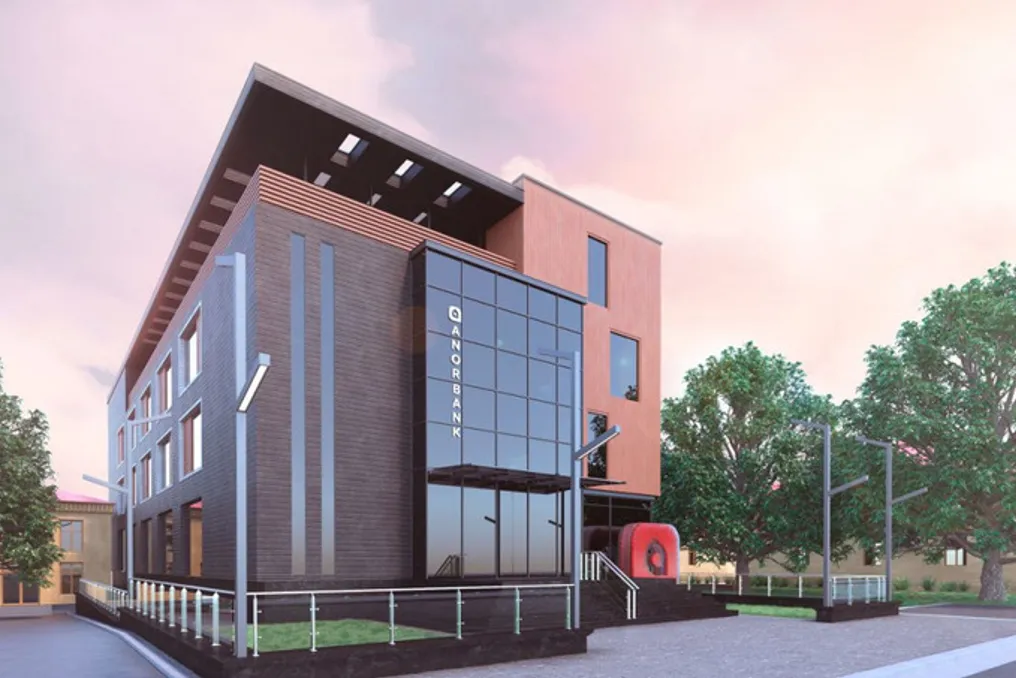
Anorbank shareholder Kakhramonjon Olimov submitted resignation from the supervisory board
Read more
gazeta.uz

Anorbank shareholder Kakhramonjon Olimov submitted resignation from the supervisory board

Kakhramonjon Olimov, a shareholder of Anorbank, submitted a statement on October 2 regarding his intention to leave the supervisory board of the financial institution. The general meeting of shareholders, scheduled for October 28, will decide on this decision.

In parallel, at the shareholders' meeting held on October 5, a decision was approved to issue additional shares totaling 100 billion soums. The bank intends to use these funds to attract investments, strengthen its capital, and address factors that previously led to a decline in its credit rating.

The official statement emphasizes that the further execution of the capitalization plan should not depend on circumstances concerning any single shareholder. The Anorbank press service clarified that the bank is currently undergoing all necessary legislative and corporate procedures related to the share issuance.

Anorbank also assured the public that it continues to operate normally, fully fulfilling its obligations to clients and maintaining all core banking services.

The situation intensified after Fitch Ratings downgraded Anorbank's rating from CCC+ to CCC on October 8. The reason for this decision was the uncertainty surrounding the capital replenishment process, linked to the actions of Kakhramonjon Olimov.

Previously, a 'red notice' was placed on Kakhramonjon Olimov's profile on the Interpol website, which signifies a request for his search and possible temporary detention for extradition review. However, this profile did not specify any charges or the state that initiated the request.

Following the appearance of the arrest information, Anorbank issued a statement noting that this information pertains to the private affairs of one of its shareholders and has no bearing on the bank's management, capital, or operational activities. The Central Bank also confirmed that Anorbank is operating normally and fulfilling its obligations to clients.

According to previously available data from the Unified State Register of Enterprises and Organizations, Kakhramonjon Olimov owned 49.4% of Anorbank shares, which are 50% owned by the Dutch company Bekamin B.V., as well as 0.6% of the insurance company Kapital Sug’urta.

Juspay's revenue grew by 30% in the 2026 fiscal year due to international business development and AI investments
Read more
yourstory.com

Juspay's revenue grew by 30% in the 2026 fiscal year due to international business development and AI investments

Juspay, a company specializing in global payment technologies, reported a 30% increase in revenue compared to the previous year for the fiscal year ending March 31, 2026. Revenue reached 664 crore rupees, up from 514 crore rupees in the 2025 fiscal year.

This revenue growth reflects steady progress across the company's core areas of operation. Over three years, revenue has more than tripled, rising from 213 crore rupees in the 2023 fiscal year, corresponding to an average annual growth rate of approximately 46%.

Despite the Bengaluru-based company maintaining a positive adjusted EBITDA of 33 crore rupees for the 2026 fiscal year (excluding non-cash ESOP expenses), increased capital expenditure for global market expansion and deep artificial intelligence infrastructure development led to a net loss of 90 crore rupees for the reporting period.

The Juspay platform processed 400 million daily transactions during the year, enabling the annual payment volume to exceed $1 trillion while maintaining a reliability level of 99.999%. Currently, the platform provides payment orchestration for over 500 enterprises and financial institutions worldwide, including companies such as Amazon, Swiggy, Flipkart, Google, IndiGo, Agoda, HSBC, IKEA, and Zurich Insurance.

During the 2026 fiscal year, Juspay intensified its international presence in North America, Europe, Latin America, the Middle East, and the Asia-Pacific region, while simultaneously continuing to scale and improve the profitability of its domestic payments division in India.

A significant portion of the capital deployed during the year was used to develop proprietary, open AI infrastructure tailored for enterprise workflows and agency commercial interactions. Among the key technological platforms developed during this period is Xyne—an open, model-agnostic, and data-sovereign AI framework for enterprises built on a Unix-like architecture.

Furthermore, the company launched Juspay Genius—a set of AI-powered intelligent payments designed to automate enterprise payment management, routing logic, and analytics. Breeze Buddy, a no-code voice AI platform for automated customer support, and Breeze Universal, which facilitates brand discovery within third-party AI ecosystems, were also introduced.

Commenting on the financial results, Sheetal Lalwani, Co-founder and COO of Juspay, emphasized that the 2026 fiscal year was a period of crucial investments aimed at building the infrastructure for the company's next phase of global growth.

Lalwani stated: 'The 2026 fiscal year was a year of investing in capabilities that will support the next phase of Juspay's growth. Our international payments business is scaling, and we are beginning to see activity in various markets. As we expand globally, we are also investing in AI as part of a broader strategy to create new enterprise solutions.'

She added: 'Xyne is one example of such an investment, which transfers our experience in building reliable enterprise-grade infrastructure into an open AI platform.'

Lalwani acknowledged the short-term impact of these capital expenditures on current net profit, noting that the strategy remains focused on building long-term opportunities, expanding technical talent, and creating sustainable value for corporate clients.

Founded in 2012, Juspay currently has a global workforce of over 1,500 employees operating in key international hubs, including Bengaluru, San Francisco, Dublin, São Paulo, Singapore, and Dubai.

Popular