Zoho Founder Shridur Vembu Calls on Indians to Return to India for Technological Development
Read more
Aaj Tak
www.aajtak.in

Zoho Founder Shridur Vembu Calls on Indians to Return to India for Technological Development

Indian professionals have made a significant contribution to transforming America into a technological superpower by working at giants such as Google, Microsoft, Meta, and Apple. Indians hold leadership positions in major tech companies and play a key role in software development and artificial intelligence. However, new discussions regarding the future of Indian IT professionals have recently begun in the US.

The US government has paused a significant part of the green card application process for several large technology and IT companies through the PERM program. Following this, Zoho founder Shridur Vembu appealed to Indians working in America, urging them to return to India and contribute to strengthening the country's technology industry.

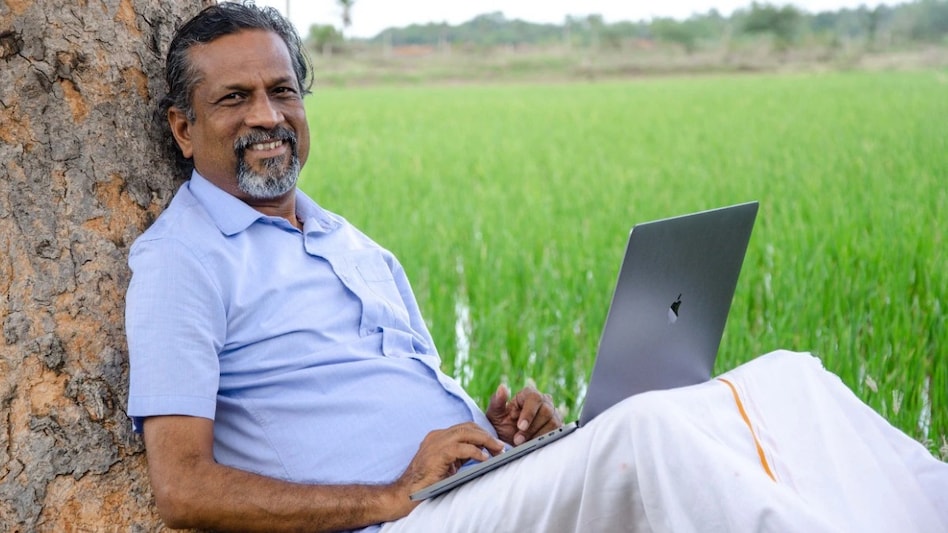
Vembu wrote on the social network X that Indians have significantly contributed to enhancing America's technological power, but now a large part of American society is unwilling to accept them. He noted that Indians residing on American visas may face difficulties related to abandoning lives and careers built through their own efforts. In this regard, he called on Indian specialists: 'Come back, let's build India.'

This appeal comes against the backdrop of tightening immigration rules in the US. Nevertheless, an important question arises: are opportunities for Indians in America truly shrinking, or is this a consequence of a decision limited to certain companies and a specific green card application process?

The US Department of Labor announced on October 8th the suspension of the PERM program for numerous large companies. This list included Microsoft, Adobe, Cognizant, as well as Indian IT companies such as Infosys, Tata Consultancy Services (TCS), Wipro, HCL, and Capgemini.

US officials claim that these companies improperly used the rules when hiring foreign employees and processing permanent residency documents. The US government insists that the purpose of the PERM procedure is to ensure that a foreign employee is not offered a job while ignoring a qualified and available American worker in that position.

As a result of these measures, the affected companies will be unable to file new PERM applications, and the review process for already submitted applications has also been halted. It is important to understand, however, that this decision does not mean the automatic cancellation of green cards for all Indians, nor is it an order for all Indians to leave America immediately.

A green card in the US grants a foreign citizen the right to permanent residence and work. There are several paths to obtaining a green card based on employment, and in some cases, PERM (Permanent Labor Certification) is a necessary step.

As part of this procedure, the company must prove that it could not find a suitable, interested, and available American worker for the position. Furthermore, it cannot be allowed that the attraction of a foreign specialist negatively affects the salary and working conditions of American workers performing similar work. However, even after PERM approval, the green card is not issued immediately; additional stages must be completed depending on the application category and employee status.

Therefore, the suspension of this program may affect Indian employees whose permanent residency process was advanced through the affected companies. This uncertainty can cause serious concern for those who have worked in America for many years, started families, and planned their futures.

In his post, Shridur Vembu also mentioned that people from countries such as China, Taiwan, and South Korea moved abroad in search of better opportunities, but these countries continued to develop at home. In his opinion, the work of Indians abroad and the development of India do not contradict each other. The real need is to create companies and opportunities where Indian talent would want to work in their own country.

Vembu also emphasized the practical aspect: specialists working abroad possess technical experience, understanding of global markets, and experience working in large corporations. If some of them return to India to start startups, conduct research, or bring Indian companies to the global level, it will benefit the country.

However, the call itself will not lead to people returning. For this, India needs good jobs, decent pay, research opportunities, a strong startup ecosystem, and the necessary conditions for doing business. For a person working abroad, issues of family, children's education, housing, salary, and permanent residence remain equally important.

Similar stories

Farmer from Lady Grey Diversifies Farm: From Broilers to Shisanyama Business
Read more
foodformzansi.co.za

Farmer from Lady Grey Diversifies Farm: From Broilers to Shisanyama Business

Tando Soroshi from Lady Grey in the Eastern Cape began his journey in agriculture, despite his family previously being involved in livestock farming, which had to cease due to cattle theft. His connection to farming was restored after years thanks to a gift of four chickens from a member of his church.

Today, Soroshi manages crop and livestock farming while overseeing other aspects of his business. Although he initially dreamed of becoming a doctor, his interest in farming arose after observing Boer breed farmers in Lady Grey who successfully ran their operations using nature and animals.

In 2018, when he was still in primary school, a member of his church gifted him four chickens. This person noted his caring nature and wanted to see what would come of it. By the end of that same year, through research gathered from social media and online platforms, those four chickens had grown to one hundred heads. From that moment, Soroshi saw the commercial potential in poultry farming and the opportunity for agricultural diversification.

He discussed the need to purchase incubators with his family, and they supported him. The nearest seller was in Gauteng, so he traveled there and bought incubators capable of holding about 360 eggs. However, the first incubation attempt was unsuccessful: 'All 360 eggs rotted. I didn't know what I was doing. My research was probably half-done,' he admits. He repeated the attempt and got 280 chicks, which formed the basis for his flock's growth.

In 2022, Soroshi enrolled in an agricultural college in the Free State. By this time, he already understood that he wanted to build a farming business. Nevertheless, practical work with poultry was not the main focus at the school. He started raising broiler chickens, and with support from his family at home, he was able to sell them.

When Soroshi returned home in 2024, the poultry enterprise he developed in school began taking shape as a full-fledged business. He registered the company Soroshi Empire Pty Ltd, and his parents, Mzwandile and Nombali, provided support by giving him more chicks. His flock grew from hundreds to approximately 2000 birds.

Soroshi was just getting started. Thanks to profits and further parental assistance, he acquired his first four pigs, and with a small additional investment, his herd grew to about 30 pigs. He now produces around 300 piglets per year, noting that his sows give birth three times a year. His older brother, Khave Soroshi, also provided financial assistance as the business grew.

The business expanded beyond poultry and pig farming to include a shisanyama venue, and he plans to open a butcher shop. Four permanent employees are employed in livestock management, and three others work at the shisanyama. During planting and harvesting, he hires about 30 seasonal workers on three hectares where he grows spinach, cabbage, and tomatoes.

Soroshi notes that convincing his parents to start a farming business was not easy, especially given their history of cattle theft. His parents began viewing the business differently when his cousin Lifalahle Makubela left his job in Gauteng to return home and work with him on the farm. He also received mentorship from his mentor, Joseph Nkopane, a commercial farmer in Lady Grey.

In August of this year, the business received support from DEDEAT in the form of chicken coops capable of housing 644 chickens.

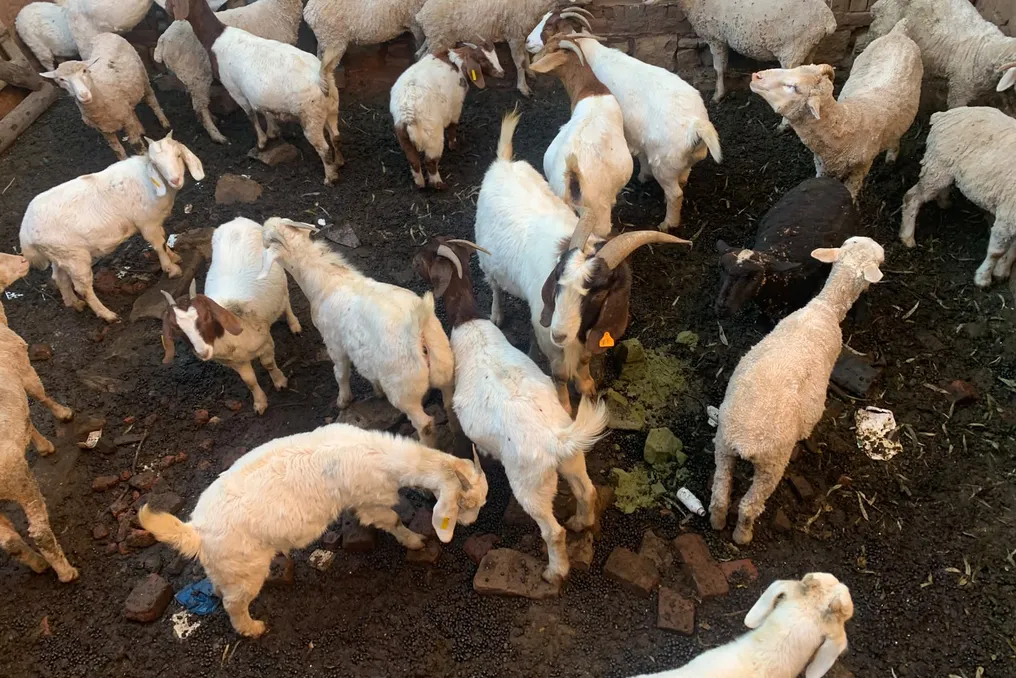
Soroshi told Food For Mzansi that his livestock and poultry include Merino sheep, local breeds of cattle, Large White pigs, Boer goats, Lohmann Brown chickens, and Ross 308 broilers, as well as White Leghorn chickens. Using local cattle breeds, he intends to crossbreed them with Bonsmara cattle for meat production.

The choice of Boer goats was also based on his research, which showed they reproduce well under proper livestock management conditions. 'They most often give birth to twins or triplets. This growth is a business for me,' he says. Merino, he says, has dual purposes, as the wool can be sold, and the sheep used for the meat market.

Regarding Ross 308 broilers, Soroshi points to issues with mortality and achieving desired weight in the birds. Other types of chickens, he says, grow well. His customer base has also expanded: local wholesalers and city buyers purchase chicken, eggs, pork, beef, and lamb from him.

Soroshi explains that his daily activities involve moving between different parts of the business. He starts the day by organizing affairs for the kitchen enterprise, and then goes to the farm to check all processes. This serves as proof that failure is just a step on the way to building an empire.

Juspay's revenue grew by 30% in the 2026 fiscal year due to international business development and AI investments
Read more
yourstory.com

Juspay's revenue grew by 30% in the 2026 fiscal year due to international business development and AI investments

Juspay, a company specializing in global payment technologies, reported a 30% increase in revenue compared to the previous year for the fiscal year ending March 31, 2026. Revenue reached 664 crore rupees, up from 514 crore rupees in the 2025 fiscal year.

This revenue growth reflects steady progress across the company's core areas of operation. Over three years, revenue has more than tripled, rising from 213 crore rupees in the 2023 fiscal year, corresponding to an average annual growth rate of approximately 46%.

Despite the Bengaluru-based company maintaining a positive adjusted EBITDA of 33 crore rupees for the 2026 fiscal year (excluding non-cash ESOP expenses), increased capital expenditure for global market expansion and deep artificial intelligence infrastructure development led to a net loss of 90 crore rupees for the reporting period.

The Juspay platform processed 400 million daily transactions during the year, enabling the annual payment volume to exceed $1 trillion while maintaining a reliability level of 99.999%. Currently, the platform provides payment orchestration for over 500 enterprises and financial institutions worldwide, including companies such as Amazon, Swiggy, Flipkart, Google, IndiGo, Agoda, HSBC, IKEA, and Zurich Insurance.

During the 2026 fiscal year, Juspay intensified its international presence in North America, Europe, Latin America, the Middle East, and the Asia-Pacific region, while simultaneously continuing to scale and improve the profitability of its domestic payments division in India.

A significant portion of the capital deployed during the year was used to develop proprietary, open AI infrastructure tailored for enterprise workflows and agency commercial interactions. Among the key technological platforms developed during this period is Xyne—an open, model-agnostic, and data-sovereign AI framework for enterprises built on a Unix-like architecture.

Furthermore, the company launched Juspay Genius—a set of AI-powered intelligent payments designed to automate enterprise payment management, routing logic, and analytics. Breeze Buddy, a no-code voice AI platform for automated customer support, and Breeze Universal, which facilitates brand discovery within third-party AI ecosystems, were also introduced.

Commenting on the financial results, Sheetal Lalwani, Co-founder and COO of Juspay, emphasized that the 2026 fiscal year was a period of crucial investments aimed at building the infrastructure for the company's next phase of global growth.

Lalwani stated: 'The 2026 fiscal year was a year of investing in capabilities that will support the next phase of Juspay's growth. Our international payments business is scaling, and we are beginning to see activity in various markets. As we expand globally, we are also investing in AI as part of a broader strategy to create new enterprise solutions.'

She added: 'Xyne is one example of such an investment, which transfers our experience in building reliable enterprise-grade infrastructure into an open AI platform.'

Lalwani acknowledged the short-term impact of these capital expenditures on current net profit, noting that the strategy remains focused on building long-term opportunities, expanding technical talent, and creating sustainable value for corporate clients.

Founded in 2012, Juspay currently has a global workforce of over 1,500 employees operating in key international hubs, including Bengaluru, San Francisco, Dublin, São Paulo, Singapore, and Dubai.

Germany to allocate 71 million euros for social and economic projects in Uzbekistan
Read more
podrobno.uz

Germany to allocate 71 million euros for social and economic projects in Uzbekistan

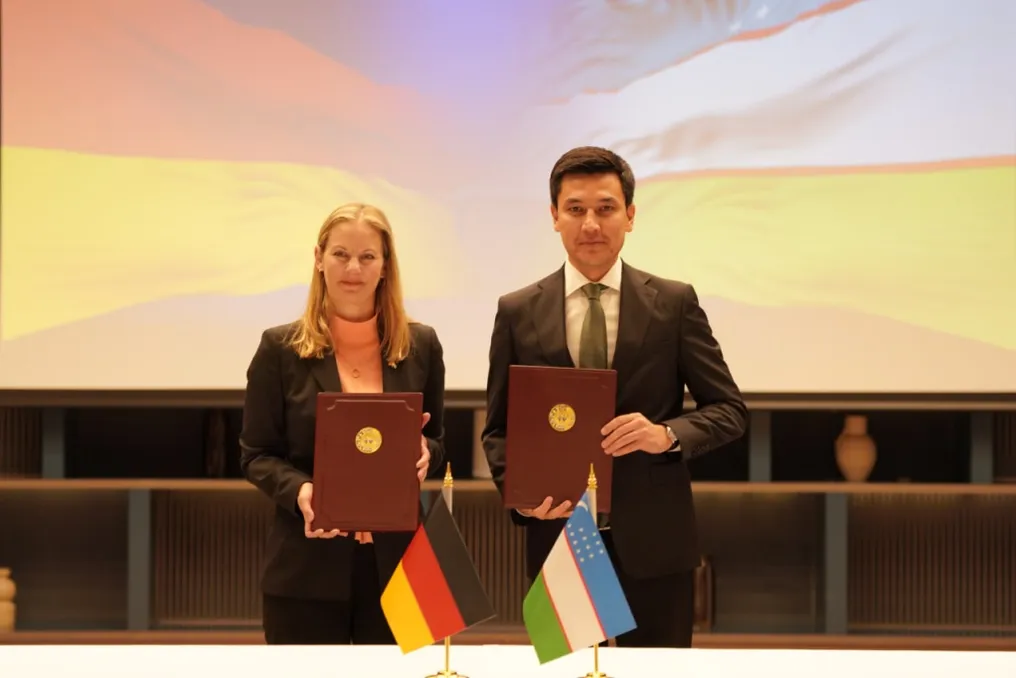
Germany intends to allocate 71 million euros to support various projects in Uzbekistan. These funds will be directed towards economic development, strengthening social protection, reinforcing the rule of law, as well as projects in the fields of climate and energy.

According to Podrobno.uz from the German embassy, this decision was made following intergovernmental negotiations held on October 7. The parties confirmed their desire to continue cooperation, which has existed for over thirty years.

Furthermore, Germany expressed its readiness to support the implementation of the 'Uzbekistan-2030' strategy and contribute to achieving the UN Sustainable Development Goals.

Joint initiatives cover support for the private sector and trade relations, as well as the modernization of the vocational education system with the integration of the German dual system. There are also plans to develop renewable energy and increase electricity transmission grid capacities. An important aspect is improving the social protection system, especially for the most vulnerable segments of the population.

In the implementation of these projects, organizations such as the development bank KfW, the German Agency for International Cooperation (GIZ), and the Federal Physical Institute (PTB) participate on behalf of the German federal government.

Popular