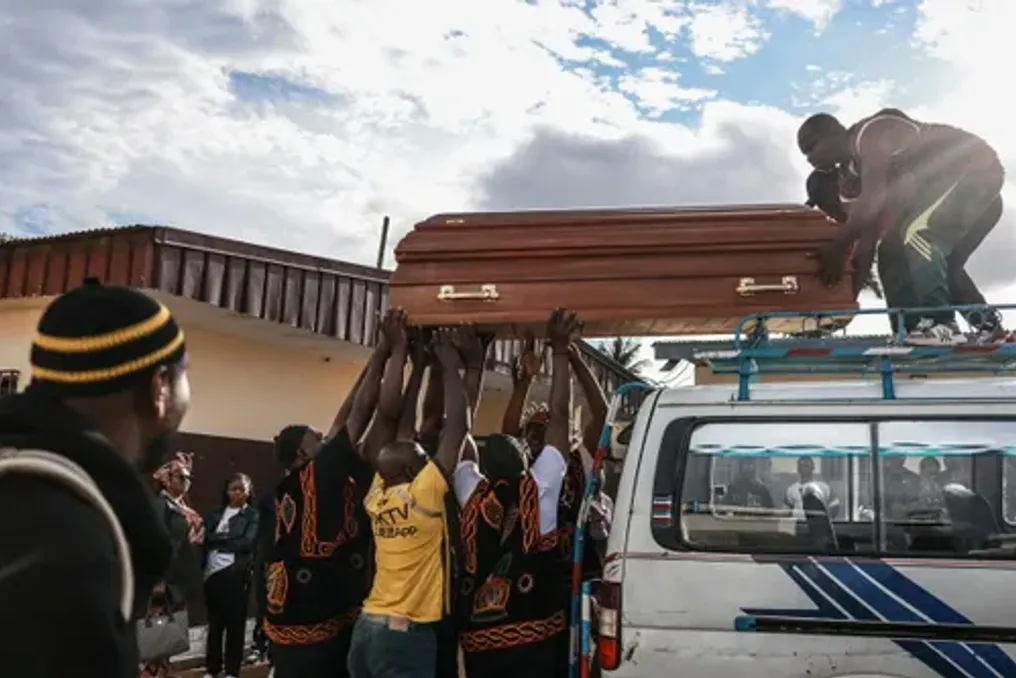
Gender-based violence and femicide represent a serious crisis in Africa. According to estimates, a woman or girl dies at the hands of an intimate partner or family member every twenty-three minutes. The United Nations Office on Drugs and Crime and UN Women calculated that in 2024, 22,600 women and girls in Africa were killed by their partners or relatives.
This figure is the highest among all regions in the world. Globally in 2024, about 50,000 women and girls died in the private sphere, which is approximately one person every ten minutes, with Africa accounting for nearly half of these victims.
Gender-based violence and femicide are inextricably linked to the high level of violence in Africa, which is driven by wars, economic devastation, structural poverty, and the collapse of governance systems. Furthermore, the home does not always serve as a sanctuary.
Feminist scholar Cynthia Cockburn describes a continuous spectrum of violence, extending from the bedroom to the battlefield, where women's bodies remain unprotected both in peacetime and wartime. What begins as 'discipline' can end in murder, and a military operation can turn into rape.
Sudan demonstrates this brutality. The UN Human Rights Office confirmed 546 cases of conflict-related sexual violence across 16 of Sudan's 18 states between April 1, 2023, and mid-April 2026. The vast majority of these incidents, about 87 percent, were committed by men in the Rapid Support Forces uniform.
At least 838 people were affected: 539 women, 284 girls, eight men, and seven boys. This includes rape, gang rape, sexual slavery, forced marriage, forced prostitution, sexual torture, and trafficking for sexual exploitation.
The confirmed cases likely represent only a small fraction of the real scale of the problem, as fear, stigma, displacement, and the collapse of clinics and courts lead to many women remaining unnoticed.
This issue is not limited to one war. The Democratic Republic of Congo has faced conflict-related sexual violence for decades, where rape has been used to intimidate communities and assert territorial control.
The increase in displaced persons in the Sahel region, the Horn of Africa, and the Great Lakes puts women at risk of human trafficking, forced marriage, and sexual and economic exploitation. Camps that should provide safety often reproduce the dangers women fled. Amid brutal resource extraction, minerals, land, and labor are appropriated, and women's bodies are treated as part of the spoils.
A study by Afrobarometer, covering 39 countries, conducted in 2021 and 2023, showed that gender-based violence was the most discussed issue regarding women's rights that citizens wanted their governments to address. Nearly four out of ten respondents stated that gender-based violence is prevalent in their community.
More than half of those surveyed believed that women who report violence would face criticism, persecution, or shame. Thirty-one percent considered a husband's use of force against his wife to be sometimes or always justified. Africans were almost evenly divided on whether domestic violence should be treated as a criminal case or a private family matter.
South Africa has become one of the continent's loudest voices on gender-based violence and femicide. Women have held marches, stopped workplaces, and demanded that the state confront this crisis. However, between April and June 2026, the police registered 569 murders of women and another 1,052 attempted murders. A total of 9,201 rape cases were recorded, of which 8,814 involved women and children.
The African Union and regional bodies are also actively involved. There is a significant legal framework, including the Maputo Protocol adopted in 2003, which serves as a powerful foundation for women's rights and protection against violence and harmful practices.
In February 2025, African states adopted the African Union Convention on Ending Violence Against Women and Girls—the first specialized, legally binding continental treaty dedicated exclusively to this issue. It addresses femicide, economic coercion, technology-based violence, and sexual violence in conflict. Its implementation strategy is based on prevention, protection, prosecution, and policy. However, only Gambia and Ghana have ratified it, which is regrettable.
Fifteen ratifications are required for entry into force, meaning thirteen more states must join. SADC has a Regional Strategy and Action Plan to combat gender-based violence. Its Gender and Development Protocol obligates member states to enact laws against gender-based violence, prosecute offenders, assist survivors, and address issues of trafficking and harmful practices.
Africa is rich in strategies, but their implementation is hampered. There is a severe lack of adequate funding, law enforcement, and consequences. Another shortcoming is that gender-based violence and femicide are viewed as social policy rather than an imperative of development, security, and governance. A state that cannot ensure the lives of its women is not a safe state.
The UN's '16 Days of Activism' begin on November 25. If the 2024 femicide estimate holds, approximately 3,000 women and girls could die from partners or relatives in Africa within 50 days starting in October.
Great liberation battles have been fought across Africa: Africans have struggled against colonial rule, apartheid, and dictatorship. Sovereignty loses meaning while women live in life-threatening insecurity. Treaties are written, protocols exist, but there is a lack of urgency in treating the killing of a woman with the same seriousness as any other threat to state survival. Time is running out; women and girls are dying. Africa fails them every 23 minutes.