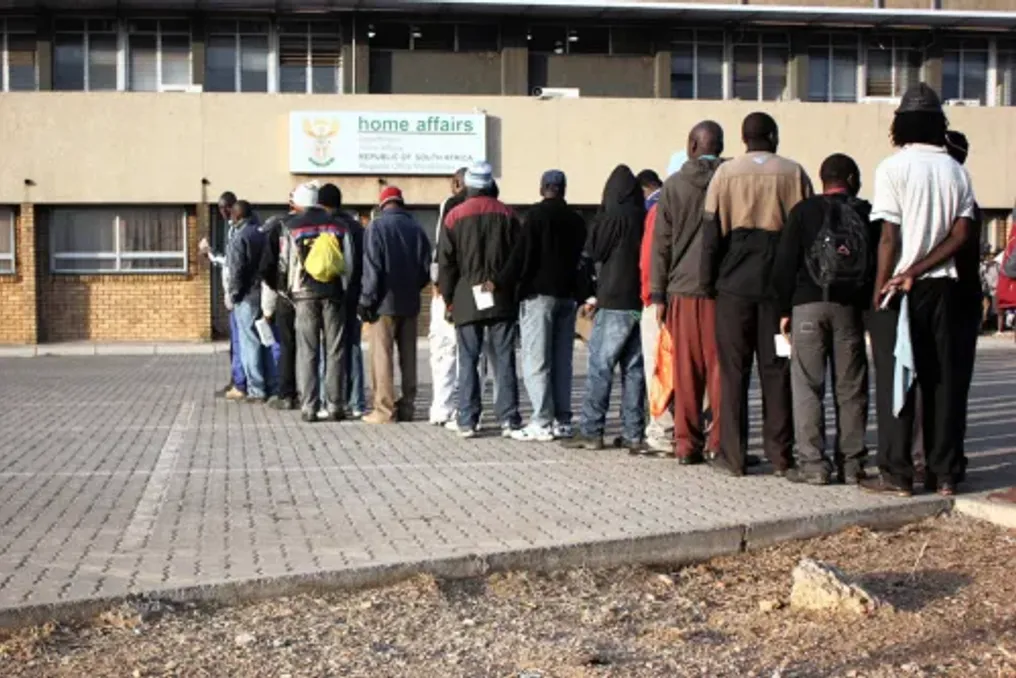
The Director-General of the Interior Department has withdrawn a directive issued by his department on September 28 regarding the acceptance of asylum applications.
This decision followed a ruling by the Constitutional Court on July 7 in the case between the Scalabrini Centre in Cape Town and the Interior Department. This landmark decision, delivered by Judge Steven Majeddt, established that asylum seekers and their children cannot be entirely excluded from refugee status due to procedural shortcomings.
The judicial decision questioned the constitutionality of the current procedure regulated by the Refugee Act of 1998. According to this Act, asylum seekers are required to enter South Africa through a designated crossing point where they are issued a five-day transit visa. Furthermore, the Act requires asylum seekers to appear at the Refugee Reception Office (RRO) within five days.
Unrest occurred in the Soweto and Durban areas when angry residents clashed with foreign nationals, setting fire to vehicles and state infrastructure belonging to foreigners. These disturbances were a reaction to the directive issued by the Interior Department.
On Friday morning, the Interior Department announced that the initial directive was sent to all Refugee Reception Offices (Refugee RROs) as a purely operational measure intended to support the implementation of the Court's ruling without the knowledge of the Minister of the Interior.
In a statement, the Interior Department emphasized that claims of political motivation for the decision are categorically false, as the directive arose in connection with the Constitutional Court case against which the Department objected.
Moreover, the department acknowledged that its attempt to immediately implement the court ruling led to serious consequences that could not have been foreseen in the Court's ruling. These consequences include an overload of work at the RRO in the days following the issuance of the directive, threats to Department staff, and the emergence of serious threats to public safety and order.
As a further plan, the Department intends to begin a new process to determine the most suitable operational approach that ensures compliance with the Constitutional Court's ruling.