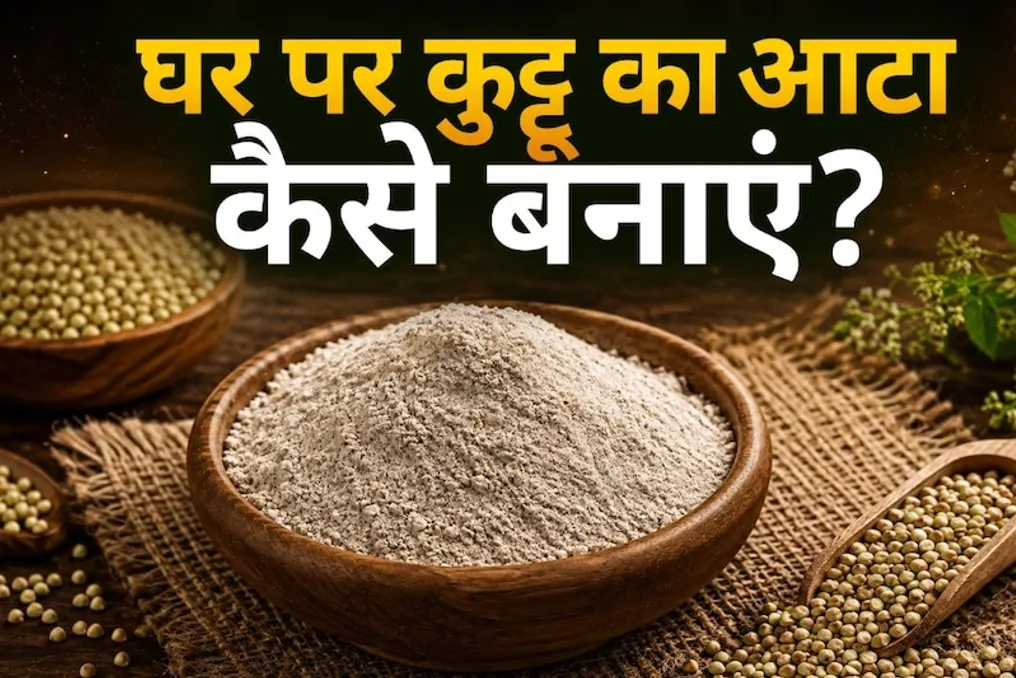
How to make Kuttu Atta at home for the Navratri fast: a simple recipe
Read more
Aaj Tak
www.aajtak.in

How to make Kuttu Atta at home for the Navratri fast: a simple recipe

During the Navratri fast, various dishes are made from Kuttu flour. If you prefer to make fresh Kuttu flour at home instead of buying it in the store, you can easily prepare it from whole grains. This article presents a simple way to make Kuttu flour at home.

During the Navratri fast, people enjoy consuming bread, puri, paratha, and pakora made from Kuttu flour along with vegetarian food. Most people buy Kuttu flour from stores. However, sometimes the quality of the flour is low, or there is suspicion of impurities. In such cases, you can make fresh flour using whole Kuttu grains at home. Dishes made from it turn out tastier, and this process does not require many ingredients. Below is a simple method for making Kuttu flour for the Navratri fast.

What is needed to make Kuttu flour?

To make Kuttu flour, you will need 1 cup of whole Kuttu grains (bulgur), or you can increase the amount as needed. First, you must thoroughly clean the whole Kuttu grains of any stones or other impurities. If the grains need washing, wash them in a small amount of water, and then dry them completely. It is important that no moisture remains in the grains, otherwise, it can cause problems during grinding and storage of the flour.

Next, place them on a dry pan and heat the Kuttu grains lightly over medium heat for 3–5 minutes, stirring constantly so they do not burn. Over-roasting can negatively affect the taste of the flour. If you want to make flour from unroasted Kuttu grains, you can skip this step. The main thing is that the grains are completely dry.

After this, let the grains cool down. Then, grind them in a blender or meat grinder until they reach a fine powder consistency. The finished powder must be sifted through a fine sieve. If large particles remain in the sieve, they should be ground and sifted again. Thus, your fresh Kuttu flour will be ready.

Kuttu flour should be stored in a clean, completely dry, airtight container in a cool and dry place. When preparing Kuttu flour, several points should be considered:

  • Before grinding the grains, they must be thoroughly cleaned and completely dried.
  • Do not put too many grains into the grinder at once.
  • When roasting the grains, maintain medium heat and do not overheat them.
  • The flour should only be used after thorough sifting.
  • The flour should be protected from moisture and its freshness checked before long-term storage.

Thanks to this method, you can easily make Kuttu flour for the Navratri fast, using it to prepare bread, puri, paratha, and pakora to your liking.

Similar stories

Recipe for Crispy Khachori with Green Beans, Served with Spicy Vegetable Ragout
Read more
www.aajtak.in

Recipe for Crispy Khachori with Green Beans, Served with Spicy Vegetable Ragout

If you are tired of monotonous food like simple dal and roti all week, then this weekend is a good time to prepare something special and aromatic. Regardless of the season or the desire for a special weekend breakfast, crispy khachori with green beans will be an ideal choice.

When the filling of fried beans, seasoned with asafoetida, fennel, green pepper, and other spices, is placed in a crispy semolina shell and fried, its aroma fills the entire house.

Serving these hot, spicy, and juicy khachori with rich potato ragout creates such a delight that it is impossible to stop. Below is a simple way to prepare khachori of restaurant quality.

For the khachori dough:

2 cups semolina (or 1 cup semolina + 1 cup wheat flour)

1/4 cup clarified butter or vegetable oil (for moina)

1/2 teaspoon ajwain

Salt to taste

Cold water (for kneading the dough)

For the bean filling:

1.5 cups green beans (fresh or frozen)

1 tablespoon oil

1/2 teaspoon asafoetida (hing)

1 teaspoon cumin (jeera)

1 tablespoon fennel (chopped)

1 tablespoon whole coriander (coarsely ground)

1-2 green peppers and 1 inch ginger (grated)

1 tablespoon chickpea flour (besan) (to absorb moisture and enhance flavor)

1/2 teaspoon turmeric and red pepper powder

1 teaspoon amchur powder and garam masala

Salt and black salt to taste

Oil for frying

Preparing the dough: In a bowl, mix the semolina, salt, ajwain, and moina oil. Rub well with your hands until the flour starts to form a lump. Then gradually add cold water and knead a soft and elastic dough. Cover it with a damp cotton cloth and leave it for 20 minutes.

Preparing the filling: Lightly crush the green beans in a blender without adding water to obtain a coarse crumble. Heat 1 tablespoon of oil in a pan. Sauté cumin, asafoetida, ground coriander, fennel, ginger, and green pepper. Add 1 tablespoon of chickpea flour and fry on low heat for one minute. Then stir in the crushed beans and all dry spices (turmeric, red pepper, amchur, garam masala, salt), frying for 4-5 minutes until the mixture dries out. Let the filling cool and form small balls.

Shaping the khachori: Take a piece of dough, stretch it at the edges to form a bowl shape. Place a ball of filling in the center and carefully seal the edges, thoroughly enclosing the filling. Press with your fingers to give the item a flat shape.

Frying: Heat the oil in the pan to a low or medium heat (the oil should not be too hot, otherwise the khachori will not become crispy). Place the khachori in and let them float gently. When they start to expand and take on a light golden color, increase the heat to medium and fry on both sides until a crispy and golden crust is achieved.

Serving: The finished, crispy, and hot khachori with green beans should be served with spicy and juicy potato ragout and green paste.

Popular