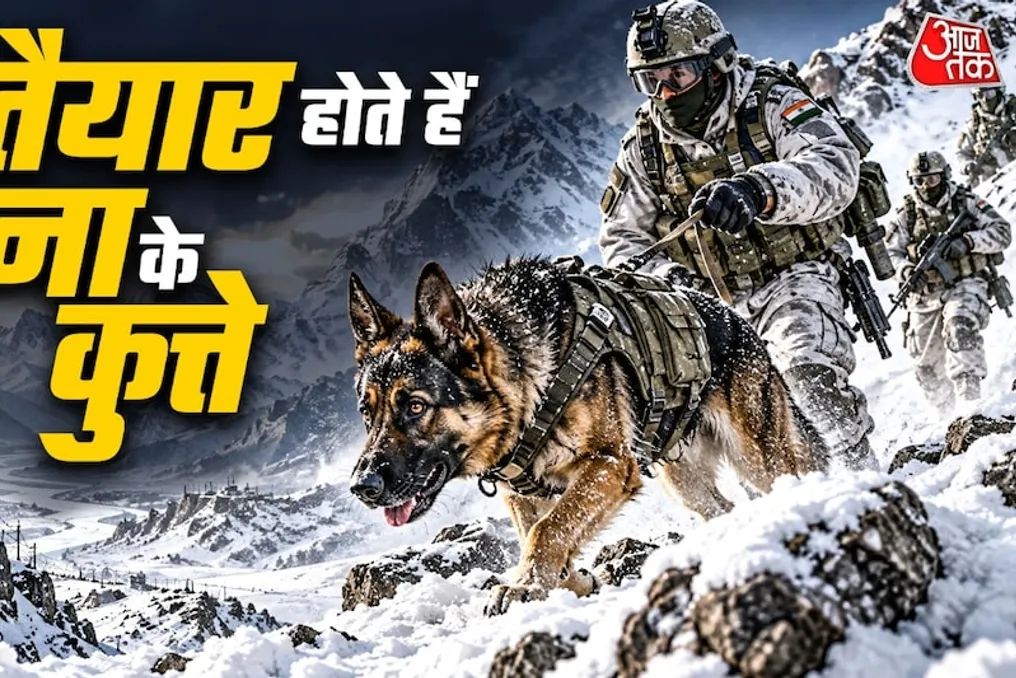
Ensuring safety in the high-altitude regions of Ladakh involves numerous difficulties. There is severe cold, snow everywhere, and oxygen levels decrease with increasing altitude. In such challenging conditions, specially trained dogs participate alongside Indian Army personnel to fulfill security tasks. These animals assist not only in patrolling but also in detecting suspicious individuals, searching for explosives, and monitoring border areas. This raises the question of how these dogs are prepared for work at an altitude of 14,000 feet and whether they undergo specialized training similar to humans.
According to a report, the Indian Army and the Indo-Tibetan Border Police (ITBP) employ specially trained dogs for monitoring and ensuring security in complex regions like Ladakh. Among the breeds used are mountain breeds such as the Bakharwal and the Tibetan Mastiff.
Working in high-altitude areas like Ladakh presents a serious challenge even for dogs. At high altitudes, oxygen content is lower compared to normal locations, which can lead to rapid fatigue and respiratory problems in the animals. Furthermore, harsh conditions, including snowy surfaces, strong cold winds, and rocky trails, compound the difficulties. Prolonged movement in the snow can cause paw pad injuries, and the risk of hypothermia and paw skin damage in severe cold is also present.
This is why these dogs are not sent directly to high-altitude areas to perform heavy duties. First, they adapt to the local climate and environment. This process is called acclimatization, meaning bringing the organism into conformity with the new conditions.
The preparation of these dogs is gradual. Initially, intensive running or traversing difficult routes is not expected of them. First, they are given time to be in an atmosphere with low oxygen concentration, cold, and at high altitude. After this, the volume of physical exercise and working time is increased according to their physical capabilities. During training, close attention is paid to how quickly the dog tires, whether its breathing is normal, and how long it recovers after work. If necessary, additional rest is provided, and the complexity of the training is reduced. Thus, the dog's body slowly prepares for work at altitude, and this process can take several weeks.
It is not enough to make military dogs physically strong. They are trained to understand the commands of their partner, i.e., the soldier, and to maintain focus on the task even in difficult circumstances. Their work is not limited to walking on mountain trails; they are also taught skills in recognizing suspicious objects, locating things using their sense of smell, and participating in security operations. Performing these tasks at high altitude can be more difficult due to oxygen deficiency, which leads to rapid canine fatigue. Therefore, it is crucial to maintain a balance between work and rest according to their abilities.
When caring for dogs deployed in Ladakh, special attention is paid to their paws, bodies, and nutrition. Constant movement over snow and rocks can cause cracks or paw injuries, so they are regularly examined, and protective measures are used if necessary. In cold weather, it is critically important to provide sufficient food to maintain body heat and sustain prolonged work, as well as enough water. At high altitudes, dry air and constant exertion can cause dehydration. If a dog begins to breathe unusually heavily, tires too quickly, or does not recover normally after work, its health status must be checked, and the workload must be reduced.
Bakharwal and Tibetan Mastiff are breeds associated with the Himalayan regions. They are used for surveillance and security tasks in high-altitude areas. Their structure and thick coat can be beneficial in cold climates. Nevertheless, having a mountain breed does not guarantee that the dog will easily cope with any altitude and weather. Proper training, gradual acclimatization to the environment, nutritious food, and regular care are necessary for this.
The role of these dogs in the remote areas of Ladakh demonstrates that border security relies not only on soldiers but also on trained animals. Preparing these dogs for service in extremely cold and challenging conditions requires extensive training and constant care.