
Women For Change faces new questions regarding financial reporting and program activities
Read more
IOL
iol.co.za

Women For Change faces new questions regarding financial reporting and program activities

Questions concerning the financial transparency and quality of services provided by the organization Women For Change (WFC) have resurfaced online ahead of a planned sit-in protest in November. WFC is known for its work combating gender-based violence and femicide (GBVF).

Previously, the organization led a nationwide campaign in November 2025 that gathered over 850,000 signatures in support of its initiatives. However, in 2026, content creator Brown Rodriguez returned to issues she claimed she first raised in 2025, following the publication of WFC's new public financial reports.

In a video currently circulating online, Rodriguez asserts that her previous inquiries were ignored. She stated that she raised the same questions last year but was denied answers, being told instead that she could receive a refund for her donation.

In her video, Rodriguez questions the organization's financial reporting. She points out a discrepancy between the amounts listed on the BackaBuddy crowdfunding page—which shows R585,305 and R391,390 as offline donations—and the R32,000 figure stated in the 2025 financial reports.

Furthermore, Rodriguez claims that employee salaries increased from R19,050 to R138,544 during 2025, and questions what proportion of funding is directly directed towards supporting victims. She also states that the survivors' support line is not operational 24/7 as advertised.

She noted that the survivors' support line only operates on weekdays, and that providing information on weekends is misleading and creates a crisis on its own. Rodriguez emphasized: 'If the organization positions itself as a voice for this crisis, it must be better.'

Rodriguez also questioned when the organization conducts educational programs, provides legal aid to survivors, engages with communities, and organizes workshops on GBVF. This dispute has expanded as other TikTok content creators have used Rodriguez's video to question whether Women For Change is providing real help to women on the ground.

One user, Sikhle, commented: 'I started hating them when they said they couldn't publish information about a child from Lesotho because he is not a South African citizen; that bothered me.' Rodriguez claims that when she raised a similar incident last year, the organization did not respond to her request.

This is not the first time the organization has faced public criticism. Last year, content creator Blaine Fortune, known as Tattooed Papi, raised similar issues on social media. Following this, Women For Change confirmed that it filed several defamation lawsuits against Fortune after he described publishing unfounded allegations.

At the time, Walter objected to the accusations. Speaking to IOL, she rejected claims that WFC is unregistered or profits financially from donations. She stated then: 'Spreading disinformation against an organization fighting for women's lives is not activism; it harms survivors.'

IOL did not respond to requests for comment regarding the renewed questions about financial accountability and program delivery.
Similar stories

Chief Economic Advisor calls for flexible norms to account for SME loans
Read more
business-standard.com

Chief Economic Advisor calls for flexible norms to account for SME loans

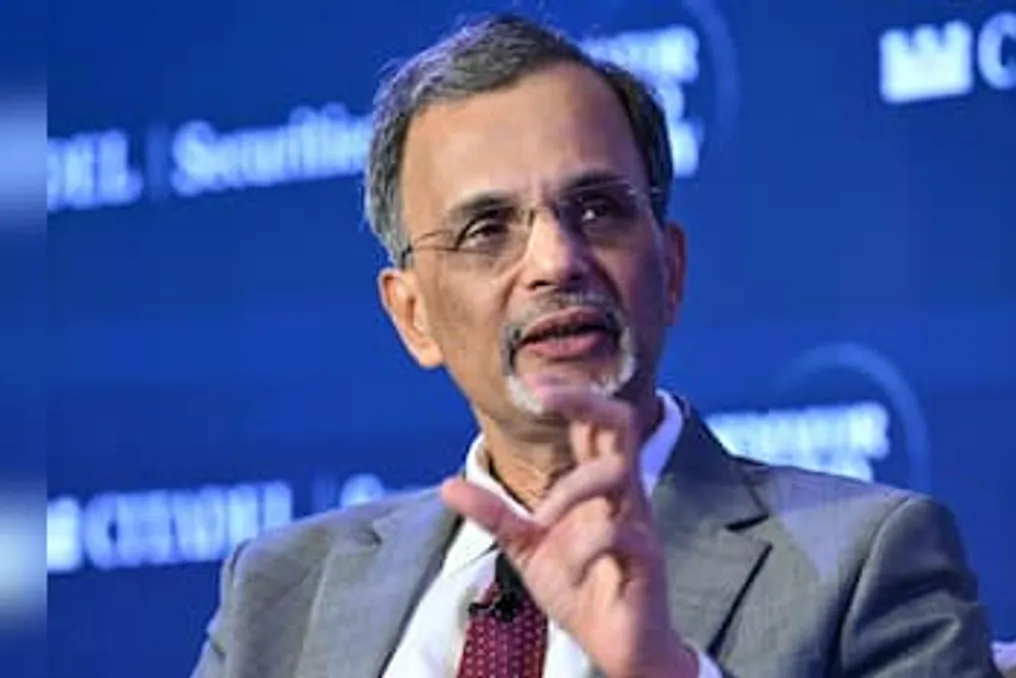
The government's Chief Economic Advisor (CEA), V. Anandha Nageswaran, called for a review of the rules for classifying micro, small, and medium enterprises (MSMEs) as Special Mention Accounts (SMA). He noted that a uniform 90-day delinquency period is not suitable for all MSMEs, as enterprises in different sectors have varying cash flow cycles.

At the Sa-Dhan conference, he stated that once an enterprise is classified as SMA, it effectively, and possibly legally, becomes a Non-Performing Asset (NPA). In his view, this requires changes. He emphasized the need to develop norms that align with real practices and cash flow models, rather than adopting a universal global standard.

Banks classify loan accounts as SMA based on the duration of payment delay: up to 30 days is SMA-0, 31 to 60 days is SMA-1, and 61 to 90 days is SMA-2. If the delay exceeds 90 days, the account is classified as a Non-Performing Asset (NPA).

Nageswaran clarified that Indian MSMEs operate across various industries, each having its own working capital cycles, making the standardized 90-day norm unacceptable for everyone. Furthermore, the CEA pointed out that the microfinance sector must avoid overleveraging its balance sheets.

He noted that from a purely financial perspective, savings and insurance should be prioritized, followed by lending; however, this order is inverted in this sector, which is the cause of frequent crises in the microfinance sphere.

India's microfinance sector experienced a period of significant strain in the 2024–25 fiscal year due to being characterized as overleveraged. Nevertheless, according to the Sa-Dhan Bharat Microfinance Report, the sector has begun showing signs of recovery, showing an 11 percent reduction in the loan portfolio in the 2026 fiscal year. Sa-Dhan is a self-regulatory organization appointed by the Reserve Bank of India (RBI) for the microfinance segment.

US Imposes Sanctions on Two Companies and Five Individuals from Mumbai for Alleged Smuggling of Iranian Petrochemical Products
Read more
www.aajtak.in

US Imposes Sanctions on Two Companies and Five Individuals from Mumbai for Alleged Smuggling of Iranian Petrochemical Products

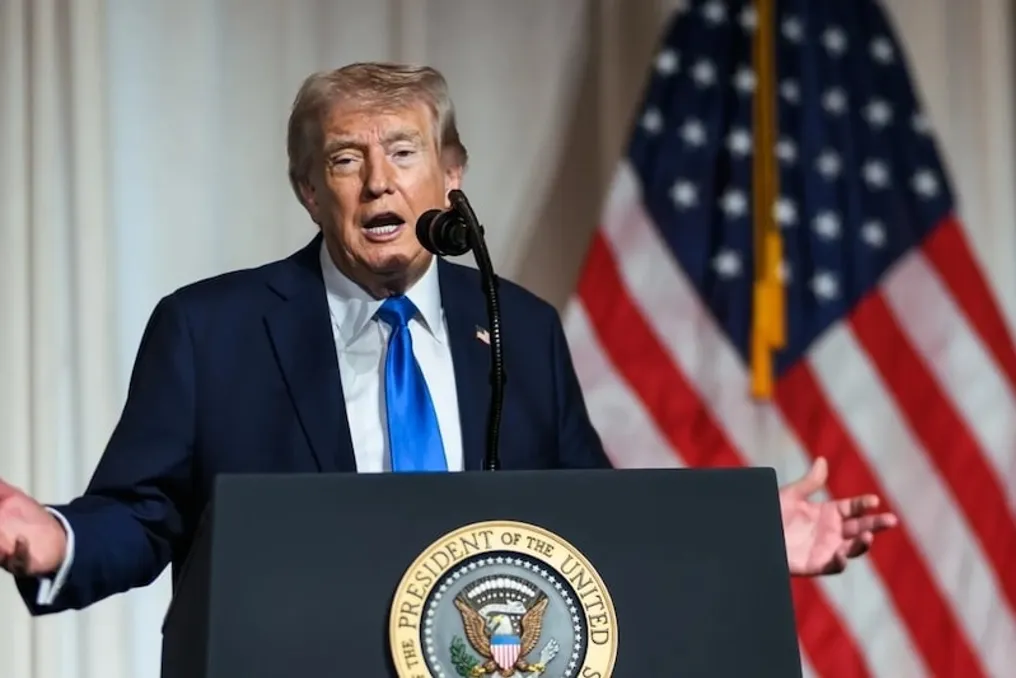
The United States has imposed restrictions on two companies based in Mumbai, as well as five individuals. These measures were taken under the 'Economic Outcast' operation led by President Donald Trump. The U.S. Department of the Treasury and the Department of State announced the imposition of major sanctions targeting international infrastructure.

The sanctions affected commercial enterprises from India, customs brokers, and corporate directors. These companies are accused of illicit trade in Iranian petrochemical and petroleum products. According to the US, these networks transferred millions of dollars to Iran, providing the Iranian regime with funds to continue military actions.

These steps taken by the US are viewed as a targeted attack on India. Various Indian entities and their leaders were targeted who intentionally participated in significant deals related to petrochemical products of Iranian origin.

SSPL Solutions Private Limited, a company involved in trading petrochemical products in India, imported two million dollars worth of petrochemical goods from Iran between February 2025 and July 2025. Consequently, the director of SSPL Solutions Private Limited, along with Indian citizens Dhani Nisarg Vora and Nisarg Samir Vora, were banned under Executive Order 13846.

Samudra Marine Services Private Limited, a customs broker in India, facilitated the import of numerous shipments of petrochemical products from Iran into India. As a result of these measures, Ketan Manohar Kochikar, Bhupendrasingh Dhal Singh Sahu, and Harishyam Hariharan Chundakattil—all Indian citizens and directors of Samudra Marine Services—were restricted.

This operation, focused on India, is part of a dual campaign that also involves Turkey, the United Arab Emirates, and China. Furthermore, it includes dozens of international front companies and service providers for ship and tanker management of the shadow fleet to stop other financial channels for Iran.

The U.S. government warned that any organizations or financial institutions that continue to assist the Iranian regime in conducting trade, logistics, or circumventing sanctions may face severe penalties, including secondary sanctions that would exclude them from the American financial system.

OPPO K14 Plus Review: Specifications, Price, and Features of the 8000 mAh Battery Smartphone
Read more
www.aajtak.in

OPPO K14 Plus Review: Specifications, Price, and Features of the 8000 mAh Battery Smartphone

Oppo recently launched the Oppo K14 Plus smartphone in the Indian market, and it is now available for purchase. The main feature of this device is its 8000 mAh battery.

This phone, with a starting price of around 30,000 rupees, is equipped with a 144Hz AMOLED display, an optical image stabilization (OIS) camera, 4K video recording capability, the Dimensity 7360 MAX processor, and IP69K protection.

OPPO K14 Plus Sales Start and Pricing Policy

Sales of the OPPO K14 Plus 5G began on October 8th on the Flipkart and OPPO India e-store platforms. The phone is offered in three different configurations. The model with 6GB RAM and 128GB storage costs 29,999 rupees. The variant with 8GB RAM and 128GB storage will cost 32,999 rupees, while the top model with 8GB RAM and 256GB storage is priced at 35,999 rupees.

Thanks to the Big Billion Days sale, the initial purchase has become more advantageous. On the first day, using certain bank cards and some UPI payments provides a discount of up to 4,000 rupees. As a result, the base model can cost only 25,999 rupees. The 8+128GB model can be acquired for an effective price of 28,999 rupees, and the 8+256GB model for 31,999 rupees.

8000 mAh Battery

A key feature of the OPPO K14 Plus is its 8000 mAh battery, which significantly exceeds the standard capacity of most modern phones, which usually range from 5000 to 7000 mAh. The company claims that the device can provide over 12 hours of continuous BGMI gaming and over 20 hours of YouTube video viewing. According to OPPO's own tests, the battery lasts about 2.95 days with normal use. The battery is designed to retain at least 80 percent of its capacity after 1800 full charge cycles. Fast charging is provided via 45W SUPERVOOC.

Display That Justifies the High Price

The phone is equipped with a 6.78-inch AMOLED display with a resolution of 2772x1272 pixels and a refresh rate of up to 144Hz. This ensures a very smooth screen experience during scrolling, social media usage, and gaming. According to OPPO, the display supports 10-bit color and 100% DCI-P3 color gamut coverage. The screen brightness is sufficiently high: the standard brightness reaches 800 nits, and the peak (HBM) brightness is 1800 nits, allowing comfortable use even outdoors.

The combination of AMOLED and 144Hz helps the K14 Plus justify its cost, making it more premium compared to if a standard LCD display were used with such a large battery.

50 MP Camera

The rear camera features a 50MP sensor and includes Optical Image Stabilization (OIS). Additionally, there is a 2MP monochrome camera. A 16MP front module is installed for selfies and video calls. The rear camera can record video in 4K resolution at 30 frames per second, and also offers a 1080p option at 60 frames per second. Thanks to OIS, the quality of photos and videos in low-light conditions should be improved.

However, it is noted that this smartphone lacks an ultra-wide-angle camera, which may limit users who frequently take group photos, landscapes, or wide-format shots.

How OPPO K14 Plus Handles Gaming

The MediaTek Dimensity 7360 MAX processor is used for gaming on the OPPO K14 Plus. This chip is built on a 4nm process and supplemented by a large vapor chamber cooling system with an area of 5000 mm², designed to maintain stable temperatures during long gaming sessions or intensive operation. Despite the large 8000 mAh battery, the phone weighs about 207 grams and has a thickness of about 8.4 mm, meaning it is not excessively bulky.

Android 17 Support

The smartphone runs on ColorOS 16.5, and the sales listing indicates support for Android 17. OPPO has also integrated AI-based functions into the phone, including AI Eraser, AI Recompose, AI Writing, and Translation tools.

Popular