Penguins, known for their comical gait and tuxedo-like plumage, have long been subjects of public attention due to films such as 'Tá Dando Onda' and 'Os Pinguins do Papai'. Until 2023, it was believed that there were only 18 species of these birds in the world.
However, a new study published in April in the scientific journal Communications Biology showed that the situation is different: scientists identified new penguin species for the first time in over a hundred years, and these animals have been studied by science throughout this time.
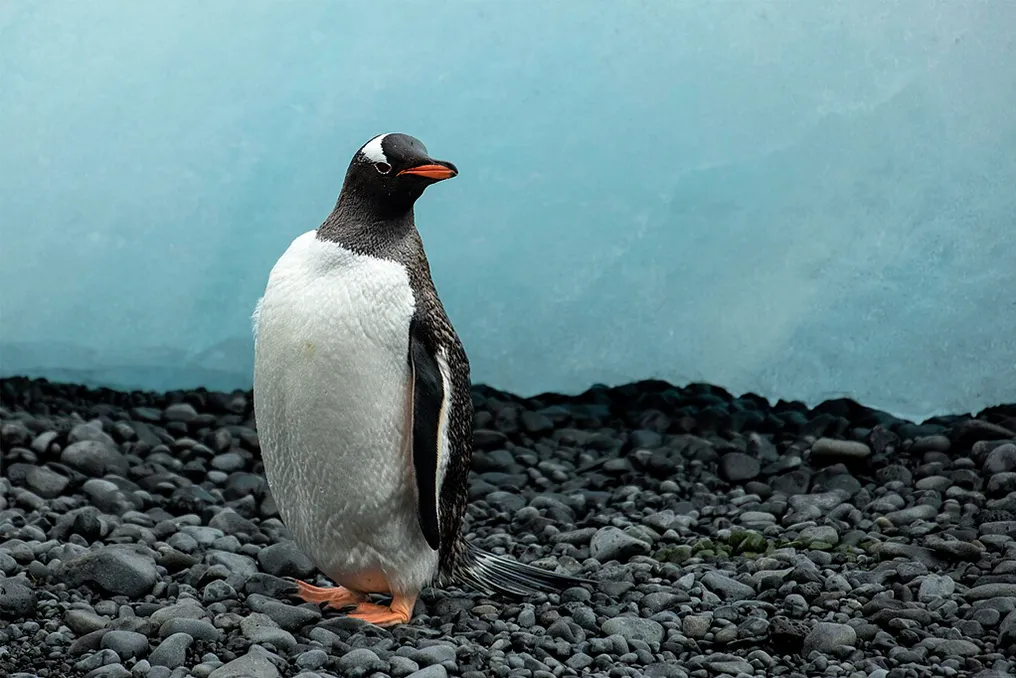
The research established that Gentoo penguins, inhabiting various islands in the Southern Hemisphere and the Antarctic Peninsula, are actually four different species, not one as previously assumed. One of these species has not yet had a scientific name.
An international expert group on penguins conducted genetic analysis of 64 Gentoo individuals collected from ten different locations. As a result, they discovered that three previously known subpopulations of Gentoo are actually separate species with different evolutionary lines.
The first species is the Eastern Gentoo penguin (Pygoscelis taeniata), which lives on Crozet, Marion, and Macquarie Islands. It possesses genetic adaptations related to metabolism and energy efficiency, which is due to life at sea with nutrient deficiency.
The Northern Gentoo penguin (Pygoscelis papua) inhabits the Falkland and Martillo Islands and has adaptations for finding and consuming food in water. The Southern Gentoo penguin (Pygoscelis ellsworthi) lives in Antarctica and shows more genes related to fat accumulation and heat production, which is an adaptation to polar temperatures.
Genome analysis allowed researchers to notice a fourth evolutionary line among the samples belonging to a species that had not yet been documented by science. This species was named the Southeast Gentoo (Pygoscelis kerguelensis) and inhabits the Kerguelen Islands, an isolated region in the Indian Ocean. The new species is very similar to other Gentoo, differing only slightly in size and call to an untrained person; the main differences are only evident at the genetic level.
These animals have been studied by science all this time because the first specimen of the new species was collected in 1897.
For scientists, the diet of Gentoo penguins has been a key factor in these evolutionary processes. These birds are not selective and eat any prey they can catch in the water. Because of this, they rarely move away from their colony sites, and generations live in the same area for years, which promotes adaptation.
Despite the recent discovery, these species are already under threat due to global warming, which is expected to severely affect three of them. The exception is Pygoscelis ellsworthi, which lives in Antarctica. The other species will face a strong impact on their natural habitat by 2050. Therefore, researchers are calling for nature conservation measures.
The study authors note: 'Future projections indicate a serious loss of habitat for three lineages. We propose a taxonomic revision recognizing four distinct Gentoo penguin species, including Pygoscelis kerguelensis, which has important implications for nature conservation.'